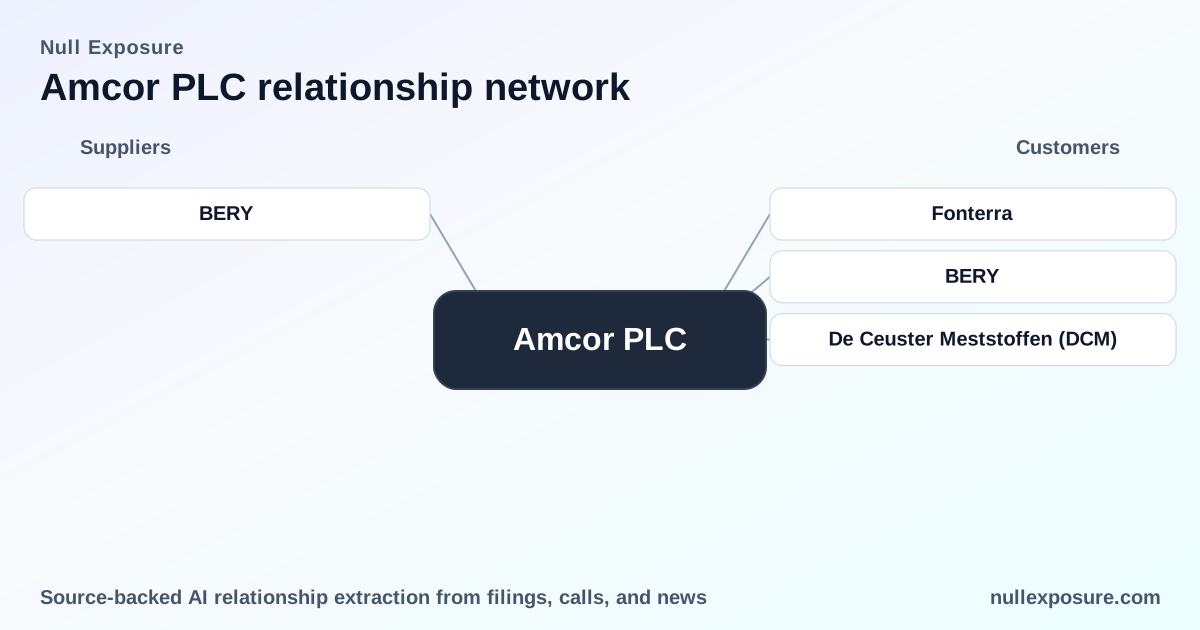
AMCR Supplier Landscape: What the Berry Global Combination Reveals About Amcor’s Procurement Posture
Amcor operates as a global packaging manufacturer that monetizes scale through high-volume sales of flexible and rigid packaging to consumer goods companies, underpinned by broad raw-material sourcing and centralized purchasing commitments. Its operating model relies on short-term supplier contracts, geographic diversification of inputs, and legally binding purchase obligations that stabilize supply and working-capital needs while limiting supplier-level concentration. For investors and procurement operators, the strategic implication is clear: Amcor runs a high-throughput, low-concentration supplier network with contractual commitments that trade supplier flexibility for predictable input availability and cost control.
Learn more about supplier analytics and strategic exposure at https://nullexposure.com/.
One-line investor thesis: combination and procurement mechanics
Amcor’s announced combination activity with Berry Global accelerates scale consolidation in packaging and reinforces a procurement posture that favors broad global sourcing, short contractual tenors, and enforceable purchase commitments. That mix delivers buying power and operational predictability while creating specific working-capital and integration execution risks for operators and counterparties.
Deal and relationship snapshot: Berry Global
Amcor disclosed that it successfully closed a transformational combination with Berry Global earlier than anticipated, completing the transaction in record time during the period referenced in its 2025 Q3 earnings commentary. According to Amcor’s 2025 Q3 earnings call transcript (published March 2026), management described the closure of the combination with Berry Global as a defining milestone for the company and emphasized the accelerated timetable.
Source: Amcor 2025 Q3 earnings call, quoted in the March 2026 earnings transcript.
Takeaway: This is a strategic consolidation that immediately reshapes Amcor’s supplier and customer footprint and strengthens its purchasing scale; suppliers and counterparties should assume increased aggregate procurement volume and tighter coordination requirements across the combined enterprise.
What Amcor’s supplier constraints reveal about its operating model
The company disclosures include explicit signals about contract structure, supplier geography, materiality, and role in the supply chain. These are company-level characteristics that define the procurement architecture:
- Short-term contracting posture. Amcor negotiates payment terms and supplier arrangements that are short in tenor and consistent with industry norms. That contracting posture supports pricing agility and inventory turnover but reduces the strategic lock-in for suppliers. Evidence: management language around payment terms and short-term arrangements in supplier program descriptions.
- Global sourcing and low supplier concentration. Amcor sources raw materials across global industry suppliers and states it is not significantly dependent on any single supplier. This indicates a deliberate diversification strategy to mitigate single-vendor risk and to preserve negotiating leverage.
- Immaterial single-supplier exposure. Management explicitly frames reliance on individual suppliers as immaterial, reinforcing a model built on fungible commodity inputs—polymer resins, films, inks, solvents, adhesives, aluminum, linerboard, paper, and chemicals—rather than bespoke, single-source components.
- Buyer position with binding purchase commitments. Amcor functions principally as a buyer with legally binding, non-cancellable purchase obligations, including minimum purchase commitments across categories. Those obligations increase predictability for internal planning and suppliers but also embed contractual liabilities on Amcor’s balance sheet.
Collectively, these constraints outline a procurement model that values scale, flexibility, and contractual clarity. For investors, that combination drives predictable gross margins through purchasing leverage while focusing operational risk on supply-chain execution and commodity price flows.
Implications for investors, suppliers, and operators
The Berry Global transaction amplifies existing procurement dynamics and introduces integration-specific considerations:
- For investors: The consolidation increases purchasing scale that should drive margin improvement through raw-material negotiating power and rationalized sourcing. Monitor working-capital trends closely because legally binding purchase commitments can elevate inventory and payables volatility during integration.
- For suppliers: Expect larger, shorter-tenor contracts and continued competition to meet global volume needs; suppliers that can offer logistics reliability, cost competitiveness, and scale will retain relevance.
- For operators integrating the deal: Integration is as much a procurement exercise as an operational one. Harmonizing payment terms, supplier panels, and minimum purchase agreements across the combined company will be the critical path to realizing synergies.
Mid-analysis resource: consult broader supplier exposure resources at https://nullexposure.com/ for comparative supplier risk models and integration checklists.
Practical diligence checklist for counterparties
When evaluating a supplier relationship or partnership with Amcor after this combination, prioritize the following items:
- Confirm contract tenor and payment-term mechanics; short-term contracts are the norm.
- Map the global supplier footprint for the specific commodity categories relevant to your offering; low concentration at the company level does not eliminate regional pinch points.
- Review Amcor’s purchase-commitment clauses and non-cancellable obligations to understand revenue stability and potential order volatility.
- Validate logistics and lead-time expectations during integration windows; accelerated M&A closings often compress supplier onboarding and change management timelines.
These checks are operationally decisive for both small suppliers and large strategic vendors.
Final takeaways and next steps for investors
The Berry Global combination materially increases Amcor’s scale and intensifies a procurement model built on global sourcing, short contracting tenors, and binding purchase obligations. That model delivers negotiated cost advantages and revenue predictability while concentrating execution risk around integration and commodity exposure. Investors should weight the prospects for margin expansion against near-term working-capital movements and integration execution timelines.
For operators and counterparties, the message is operational: position offerings around reliability, scale, and margin-smoothing capabilities to remain competitive under Amcor’s buyer-led, short-term contracting regime. For a structured view of supplier exposures and strategic counterparty analysis, visit https://nullexposure.com/ to benchmark procurement posture and prepare integration playbooks.
Appendix — documented relationship
- Berry Global: Amcor announced that it closed its transformational combination with Berry Global earlier than anticipated and in record time; this was stated on Amcor’s 2025 Q3 earnings call as referenced in the March 2026 earnings transcript. Source: Amcor 2025 Q3 earnings call (transcript, March 2026).
Bottom line: The transaction expands Amcor’s procurement scale and reinforces a buying strategy that prizes global sourcing and contractual predictability—fundamental considerations for valuation, supplier negotiations, and integration planning.