AMH-P-G: Credit relationships matter — and they cut both ways for investors
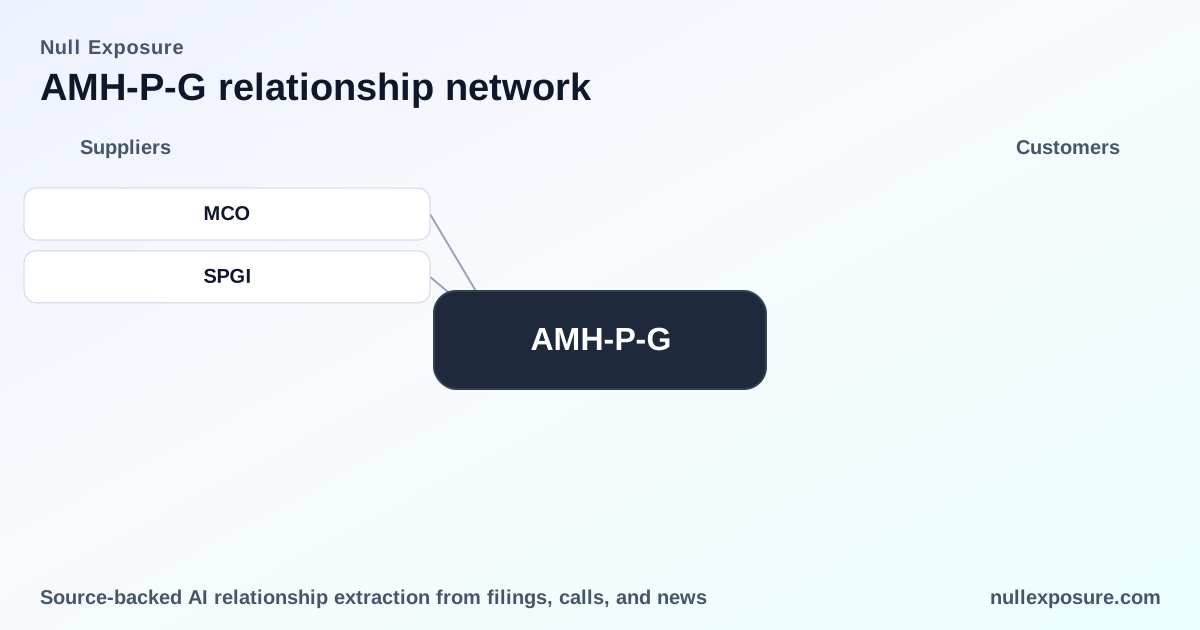
American Homes 4 Rent (ticker AMH-P-G) operates as a large single-family rental REIT that monetizes through recurring rental cash flows, portfolio appreciation and access to capital markets (equity, debt and preferred securities). For investors evaluating supplier and counterparty exposure, the most material supplier-grade relationships recorded in the recent feed are with the two major rating agencies — Moody’s and S&P — relationships that directly influence funding costs and capital structure flexibility.
Explore deeper company-to-counterparty mappings at the NullExposure homepage: https://nullexposure.com/
Quick investor take: why these relationships are relevant now
American Homes’ cost of capital and preferred-share pricing are directly sensitive to investment-grade ratings. The records in the feed show the company holds investment-grade ratings from both Moody’s and S&P, which is a structural advantage for preferred security holders and lenders. For an investor or operator, that dynamic reduces refinancing risk, supports lower coupon requirements for new issuance, and drives portfolio-level return expectations.
What the records show — every relationship in the results
-
Moody’s (inferred symbol: MCO) — an ad-hoc-news item dated March 9, 2026 states American Homes 4 Rent holds an investment-grade credit rating from Moody’s, underlining the company’s access to lower-cost debt markets and more favorable terms with institutional lenders. Source: ad-hoc-news.de, March 9, 2026.
-
S&P (inferred symbol: SPGI) — the same March 9, 2026 ad-hoc-news report notes that American Homes 4 Rent also carries an investment-grade rating from S&P, reinforcing the bilateral validation of the firm’s credit profile across the two largest global ratings providers. Source: ad-hoc-news.de, March 9, 2026.
-
Moody’s (duplicate record) — a second feed entry replicates the Moody’s mention from the March 9, 2026 ad-hoc-news article and confirms the same investment-grade rating detail, showing consistent third-party reporting across indexed news captures. Source: ad-hoc-news.de, March 9, 2026.
-
S&P (duplicate record) — a parallel duplicate entry records the S&P investment-grade statement from the March 9, 2026 ad-hoc-news article; the duplication reflects multiple captures of the same news item rather than distinct contractual disclosures. Source: ad-hoc-news.de, March 9, 2026.
Key takeaway: the dataset flags consistent reporting that both Moody’s and S&P rate the company investment-grade — an actionable signal for capital-cost modeling and counterparty risk assessment.
No supplier contract constraints were disclosed — what that signals
The feed contains no explicit contractual constraints or supplier-level contract excerpts for AMH-P-G. That absence is itself instructive at the company level:
-
Contracting posture: The lack of disclosed supplier constraints suggests the company’s supplier relationships (at least as represented in this feed) do not include unusually restrictive or atypical contractual obligations that would be material to investors. This aligns with a standard REIT contracting posture where service and vendor agreements are routine and primarily operational.
-
Concentration: No disclosures of concentrated single-supplier dependencies are present, which is a positive company-level signal for operational resilience and bargaining leverage with vendors.
-
Criticality: While supplier contracts are not highlighted, the relationship with rating agencies is clearly critical because ratings influence capital access and pricing; therefore, ratings providers function as high-impact counterparties even absent formal supplier contract artifacts.
-
Maturity: Investment-grade ratings from both agencies indicate a mature capital structure and an established reporting and governance cadence necessary to sustain ratings oversight.
These company-level signals reduce one class of operational tail risk — contractual dependency — while simultaneously underscoring that ratings relationships are the primary counterparty levers for financing stability.
Mid-report resource: if you want to map these signals into a counterparty monitoring workflow, visit the NullExposure homepage: https://nullexposure.com/
Operational implications and risk considerations for investors and operators
-
Lower funding costs, but not immunity. Holding investment-grade ratings from both Moody’s and S&P translates into meaningful funding advantages for new debt and preferred issuance, reducing coupon burden on capital structure. However, investors should model scenarios where ratings pressure could raise the marginal cost of capital — especially in a rising-rate environment or if operating performance weakens.
-
Ratings are a critical supplier relationship. Unlike a typical vendor, rating agencies exert asymmetric influence on capital access; their assessments change market pricing and covenant sensitivity overnight, so maintain active monitoring of rating agency commentary and methodology changes.
-
Duplication in intelligence captures is intentional. Multiple feed entries replicating the same source show persistent coverage rather than contradictory signals; this improves confidence in the underlying fact that both agencies rate AMH at investment grade.
-
No disclosed contract constraints reduces short-term operational surprise risk. The absence of contract-level red flags in the feed suggests limited disclosed counterparty lock-ins, allowing operators to pursue refinancing or restructuring options more freely if needed.
Actionable next steps for investors and operators
-
Incorporate the dual investment-grade ratings into cost-of-capital and preferred-security valuation models, and stress-test scenarios where ratings shift one notch lower.
-
Maintain a structured monitoring cadence for Moody’s and S&P commentary and watch for methodological changes that could alter sector comparatives.
-
For operators: use the credit ratings as a lever in negotiations with lenders and counterparties but maintain contingency plans for incremental coupon pressure.
For a walkthrough of counterparty mappings and supplier signal integrations, go to https://nullexposure.com/
Conclusion — what to do with this signal set
American Homes 4 Rent’s relationships with Moody’s and S&P are the most consequential supplier-grade links surfaced in the feed: both agencies provide investment-grade validation that materially supports the company’s capital strategy and preferred-security profile. The absence of explicit contractual constraints is a secondary positive signal that reduces disclosed supplier dependency risk. For capital allocators and operators, the pragmatic response is to bake these credit relationships into funding forecasts, maintain active monitoring of rating agency output, and preserve flexibility in funding options to respond if ratings or market conditions change.
If you want a tailored counterparty intelligence package for AMH-P-G or similar tickers, start here: https://nullexposure.com/