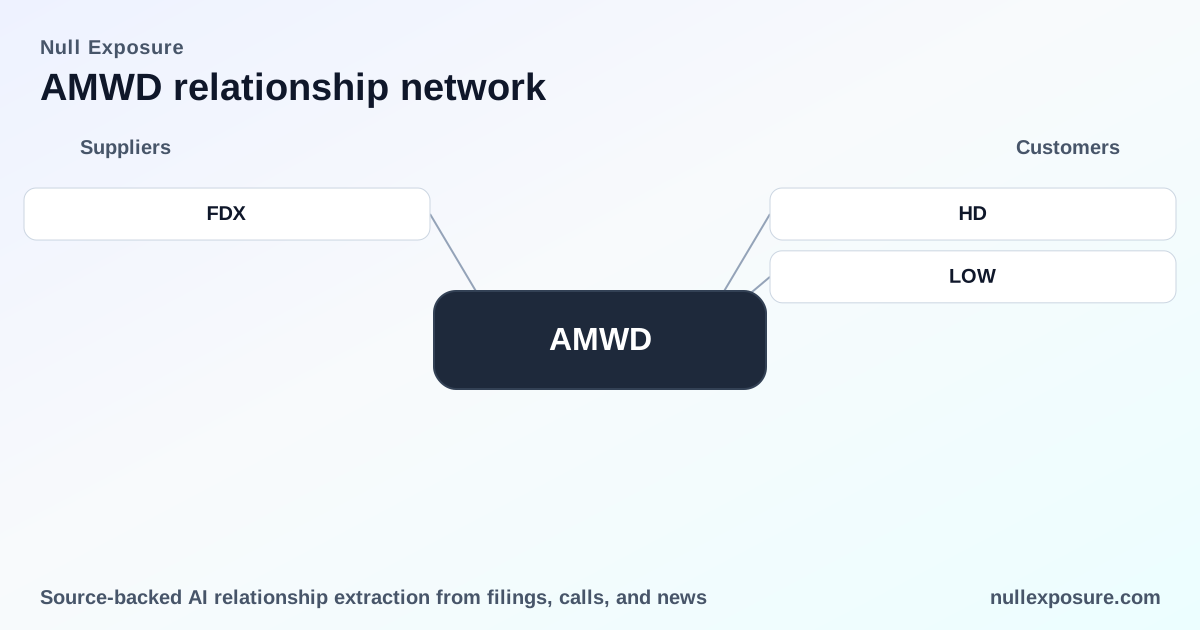
American Woodmark (AMWD): supplier profile and operational risks investors should price in
American Woodmark manufactures and distributes kitchen, bathroom and home-organization products for remodeling and new construction and monetizes by selling finished cabinetry and components to dealers, remodelers and builders across the U.S. The company operates a vertically integrated manufacturing and distribution footprint while sourcing a portion of components from suppliers in Asia and Europe; its supplier relationships are governed predominantly on a purchase-order, short-term basis, leaving procurement exposed to market price swings and regulatory shocks. For investors and operators, the key question is how AMWD translates that sourcing posture and regional exposure into margin stability and operational continuity. Visit https://nullexposure.com/ for a deeper supplier-risk model that complements this read.
How AMWD’s procurement posture shapes operating leverage
AMWD’s supplier disclosures show a deliberate contracting choice: the company does not typically enter into long-term supplier contracts, instead obtaining most raw materials and sourced goods on a purchase-order basis. According to company filings, this creates a procurement profile that is short-term and spot-oriented, which has three investor-relevant consequences:
- Price exposure and margin volatility. Short-term and spot buying increases sensitivity to raw-material price spikes and logistics cost swings; with thin ongoing operating margins (operating margin TTM around -0.17%), cost shocks compress earnings quickly.
- Supplier switchability but lower lock-in. Purchase-order relationships increase ability to re-source quickly, reducing long-term supplier concentration risk, but they lower supplier commitment to capacity or priority during tight markets.
- Operational responsiveness vs. predictability trade-off. The posture supports flexibility in demand-driven markets (remodeling cycles, housing starts) but reduces predictability for multi-quarter manufacturing planning.
Those contract-characteristics are company-level signals drawn directly from the firm’s public disclosures; they are not tied to any single trading or logistics partner.
Regional sourcing and regulatory stress: APAC and EMEA are material
AMWD discloses sourcing of components from third parties in Asia and Europe, and company filings reference administrative proceedings tied to hardwood plywood imports assembled in Vietnam. The firm has remitted deposits of $3.8 million through fiscal 2025 pursuant to a Final Determination related to antidumping/countervailing duties—a clear, realized regulatory cash outflow reported in filings. These points imply:
- Regulatory and tariff exposure is a direct cash risk. The $3.8 million in deposits through FY2025 evidences ongoing financial impact from AD/CVD processes rather than hypothetical exposure.
- Supply-chain complexity and substitution risk. Reliance on APAC manufacturers creates vulnerability to shipping disruptions and trade policy, while European sourcing adds currency and logistics variability.
- Moderate supplier spend bands. The firm’s remitted deposits place some supplier-related cash flows in the $1M–$10M band, indicating material but not dominant single-supplier spend.
These are company-level operating characteristics and should be considered when modeling downside scenarios for EBITDA and working capital.
Publicly flagged external relationship: FedEx incident
A local news report links a FedEx delivery driver fatality to a cabinet-manufacturing facility that received a safety citation. According to ABC15 (March 2026), a cabinet-manufacturing company was cited for a worker-safety violation after a FedEx driver was killed while making a delivery there; the incident highlights workplace safety and logistics interface risks in manufacturing-to-delivery workflows. Source: ABC15 local news report (March 9, 2026) — https://www.abc15.com/news/local-news/investigations/kingman-business-fined-156k-over-safety-violation-after-delivery-driver-is-killed.
- The article establishes a public-safety and regulatory event involving a delivery carrier at a cabinet facility; investors should treat this as an operational-risk datapoint that affects EHS diligence for logistics providers and manufacturing sites.
Why these signals matter to investors and operators
Putting the contract posture, regional sourcing, regulatory payments and the logistics-safety incident together yields a concise operational thesis for valuation and operational diligence:
- Concentration and criticality. AMWD’s use of short-term purchase orders reduces single-supplier lock-in but increases the importance of a broad and reliable supplier base; regulatory actions against APAC manufacturers make some component sources functionally critical when substitution is non-trivial.
- Maturity and predictability. The procurement approach favors flexibility—useful in cyclical markets—but reduces predictability for multi-period margin modeling and working-capital forecasts.
- Contracting posture and contingency. Short-term procurement necessitates robust contingency contracts with freight and distribution partners; events like the FedEx delivery fatality underscore the practical importance of logistics safety protocols in preserving uptime and avoiding fines or work interruptions.
- Near-term cash exposure. Recorded deposits of $3.8M under AD/CVD proceedings are a concrete, quantifiable cash impact that investors must include in scenario analysis for FY2026–FY2027.
Key takeaway: AMWD’s supplier model is deliberately flexible but exposes the company to price risk, regulatory cash demands, and operational interruptions; these flow directly to earnings and working-capital volatility.
Practical steps for investors and operators
- Perform focused procurement stress tests that assume raw-material price shocks and increased duty payments; include the recorded $3.8M deposit trajectory in cash-flow scenarios.
- Audit logistics and vendor safety programs through the delivery chain; prioritize carriers and inbound-receiving protocols to reduce EHS exposures that can trigger fines or shutdowns.
- Monitor APAC trade-policy developments and the Final Determination process for hardwood plywood; these items directly influence sourcing costs and supplier eligibility.
- Verify contractual terms with major suppliers and carriers to ensure capacity reservations or price collars where necessary to protect margins during spikes.
For a structured, investor-grade map of these supplier risks and to see how they change over time, explore our analysis hub at https://nullexposure.com/.
Final investment framing and next steps
American Woodmark’s business is straightforward: manufacture and sell cabinetry and related products. However, the company’s spot-oriented procurement, material APAC/EMEA sourcing, regulatory duty payments, and publicized logistics-safety incidents create a cluster of operational risks that directly affect margin stability and cash flow. Investors should price in higher earnings volatility and maintain active operational due diligence until the company demonstrates either longer-term supplier commitments, successful duty-resolution outcomes, or improved EHS controls across its logistics footprint.
To turn this analysis into action items for portfolio managers or operators, review supplier agreements, stress-test duty contingencies, and validate carrier safety programs today. Learn how our supplier-risk scoring integrates these variables at https://nullexposure.com/.