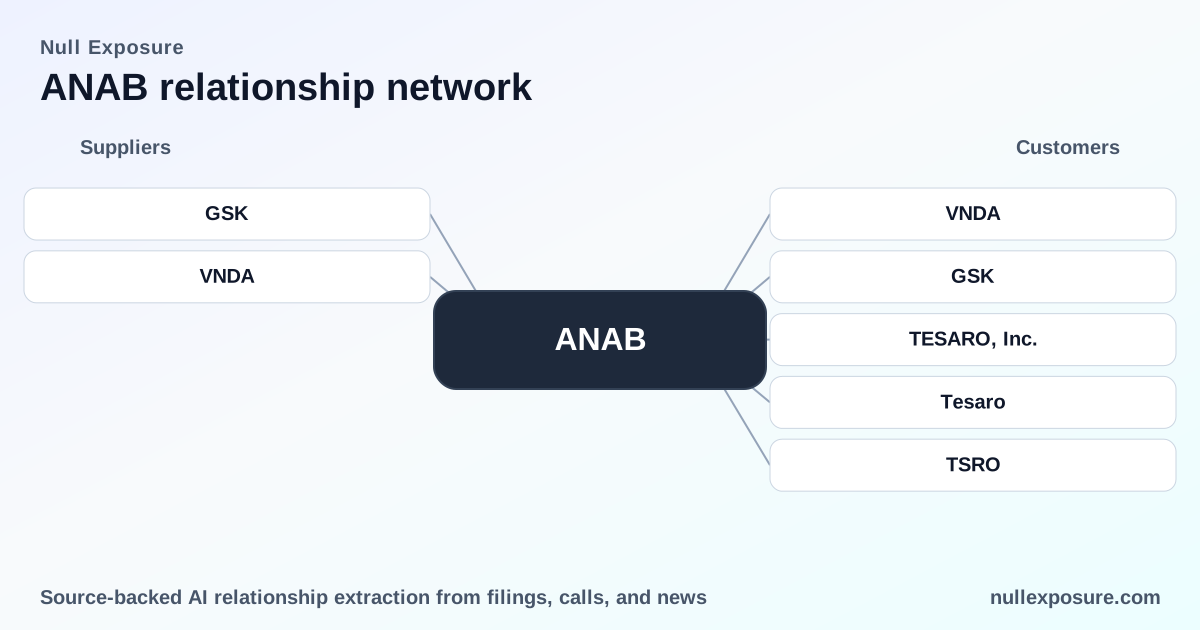
AnaptysBio (ANAB): supplier relationships drive a licensing-and-outsourcing operating model
AnaptysBio is a clinical-stage biotechnology company that monetizes primarily through out-licensing of antibody programs and milestone-driven collaborations while outsourcing virtually all manufacturing and clinical execution. The company’s reported trailing twelve‑month revenue of $234.6M reflects realized collaboration receipts and partnership economics rather than commercial product sales; near-term value for investors derives from license economics, clinical readouts, and the ability of third‑party manufacturers and CROs to scale programs. For practitioners managing supplier risk, the company’s posture is clear: asset-centric R&D with third‑party execution and concentrated supplier exposure. Learn more about supplier intelligence at https://nullexposure.com/.
Counterparty roll call: what the public record shows
Anaptys’ latest public commentary and conference materials confirm a small set of high‑visibility downstream partners and licensees. The two counterparties identified in the public results are GSK and Vanda Pharmaceuticals; both relationships are out‑license or collaboration outcomes rooted in Anaptys’ discovery platform.
GSK — downstream license of a PD‑1 antagonist
Anaptys discovered and out‑licensed a PD‑1 antagonist that is commercialized as Jemperli (dostarlimab‑gxly) to GSK, representing a material example of the company’s discovery-to-license monetization route. According to a SAHM Capital note referencing Anaptys’ JP Morgan presentation (FY2026), Jemperli is listed as one of several antibody programs Anaptys has discovered and licensed to external partners. (SAHM Capital, Jan 7, 2026)
Vanda Pharmaceuticals — IL‑36R antagonist (imsidolimab)
Anaptys also out‑licensed an IL‑36R antagonist, imsidolimab, to Vanda Pharmaceuticals; this is another instance where Anaptys captures value at the discovery/license stage rather than through internal commercialization. The same SAHM Capital write‑up from its FY2026 JP Morgan summary cites Vanda as the licensee for imsidolimab. (SAHM Capital, Jan 7, 2026)
Why these relationships matter for investors and operators
The GSK and Vanda transactions are representative, not exceptional: Anaptys’ strategic model is to advance antibody programs through discovery and early development, then monetize via licensing or partnerships. That model produces a revenue profile concentrated on collaboration receipts and future contingent payments rather than recurring product revenue. For supplier and procurement teams, the model means the company’s success depends heavily on the performance and resilience of third‑party service providers and manufacturers that support clinical supply and GLP/GMP operations.
- Contracting posture: Anaptys relies on licensing agreements for monetization and on service/manufacturing contracts for execution. The company’s filing language documents an active use of exclusive license agreements (e.g., a named Centessa agreement) and extensive outsourcing to CROs and CMOs.
- Concentration and criticality: Corporate disclosures emphasize a dependence on a small number of suppliers for raw materials and cGMP manufacturing inputs; loss of a supplier would materially affect program timelines and commercial potential.
- Geographic exposure: The company explicitly notes reliance on manufacturers based in China for certain manufacturing activities, creating an APAC supply‑chain dependency that requires active mitigation.
- Maturity and scalability: Anaptys does not currently internalize large‑scale manufacturing capability; the business model assumes continued reliance on third parties through late‑stage development and potential commercialization.
A closer reading of company filings reinforces these signals: on November 24, 2023, Anaptys executed an exclusive license agreement identified in filings as the Centessa Agreement and disclosed related upfront and reimbursement payments, illustrating the licensing cash‑flow mechanics that underlie reported revenue. (Company filing describing Centessa Agreement, Nov 24, 2023)
If you need a structured assessment of counterparty exposure and supplier concentration for ANAB, see tailored supplier profiles at https://nullexposure.com/.
What the constraints tell a buyer and a procurement leader
The constraint excerpts in Anaptys’ filings provide a practical lens into operational risk:
- Licensing is a core contract type for monetization — the Centessa Agreement is explicit evidence of the company’s licensing posture and the cash flows that licensing generates.
- Manufacturing and service roles are outsourced: the company explicitly relies on CROs, CMOs, and third‑party manufacturers to produce cGMP cell lines, drug substance, and drug product.
- Supplier concentration is material and critical: filings state that losing a small number of these suppliers would materially and adversely affect the business.
- Geography: Anaptys relies on manufacturing capacity in APAC (including suppliers in China), which creates regional supply‑chain risk and regulatory complexity.
- Segment signal: manufacturing is a distinct outsourced segment where operational failure propagates directly to clinical timelines and partner payments.
These constraints collectively create a predictable operating profile: high value at the discovery/licensing node, with execution risk concentrated in a relatively small set of external manufacturers and service providers. Procurement and legal teams should therefore prioritize contractual remedies that protect timelines, supply continuity, and IP transfer when negotiating with CMOs and CROs.
Risk / opportunity checklist for investors and operator teams
- Supply continuity is the dominant operational risk — prioritize counterparty redundancy, long‑lead inventory, and dual‑sourcing where feasible.
- Licensing economics drive upside — milestone and royalty structures are the primary channels for value realization; tracking counterparties’ commercial execution (e.g., GSK) is essential.
- Regional concentration requires mitigation — China/APAC manufacturing reliance implies trade, export control, and regulatory contingencies that operators must plan for.
- Counterparty selection matters — partnerships with large pharma (e.g., GSK) reduce commercialization risk but create dependency on partner trial and launch execution.
- Contract design is an asset protection lever — ensure strong supply warranties, change‑of‑control protections, and manufactured‑goods indemnities in CMOs/CROs agreements.
Bottom line and recommended next steps
AnaptysBio’s supplier footprint confirms an out‑licensing monetization model combined with aggressive outsourcing of manufacturing and clinical services, which creates concentrated execution risk but also scalable upside through partner commercialization. For investors, the value path is driven by partner milestones and the company’s ability to keep development timelines intact; for operators, the focus is on securing manufacturing continuity and diversifying APAC dependencies.
Explore detailed supplier analyses and counterparty risk profiles at https://nullexposure.com/ to inform due diligence and contract strategy. For direct support mapping supplier concentration and contractual exposure for ANAB, visit https://nullexposure.com/ and request a tailored report.