AngioDynamics (ANGO) as a Supplier: Commercial Footprint, Third‑Party Manufacturing, and Near‑Term Risk Signals
Thesis: AngioDynamics generates revenue by designing and selling vascular access and specialty medical devices while outsourcing a meaningful portion of manufacturing and logistics to third‑party contractors; monetization is product sales and aftermarket service, and operating leverage depends on consistent supplier performance and regulatory compliance across those contractors. For investors and operators, the combination of ongoing supplier contracts in Latin America and recent product‑related litigation together drive idiosyncratic supply‑chain and legal risk that can affect margins and working capital.
Explore verified supplier intelligence and relationship detail at https://nullexposure.com/.
How AngioDynamics actually operates and gets paid AngioDynamics sells devices (catheters, ports, interventional technologies) through a traditional med‑tech commercial model: direct sales to hospitals and distributors, followed by aftermarket consumables and procedure‑level revenue. A significant portion of physical production and inventory handling is handled by contract manufacturers rather than captive plants, which converts fixed capital into variable supplier spend while introducing vendor concentration and regulatory dependency. Company disclosures show explicit supply agreements with outsourced manufacturers that are FDA‑registered and ISO 13485 certified, which helps stabilize quality but does not eliminate operational concentration in specific geographies.
Key takeaways: product revenue is the primary monetization route; third‑party manufacturing is central to the operating model; supplier compliance certifications (FDA/ISO) are material to continuity of supply.
Supplier relationships and notices you must know Below I cover every relationship flagged in the public results and summarize the investor‑relevant facts.
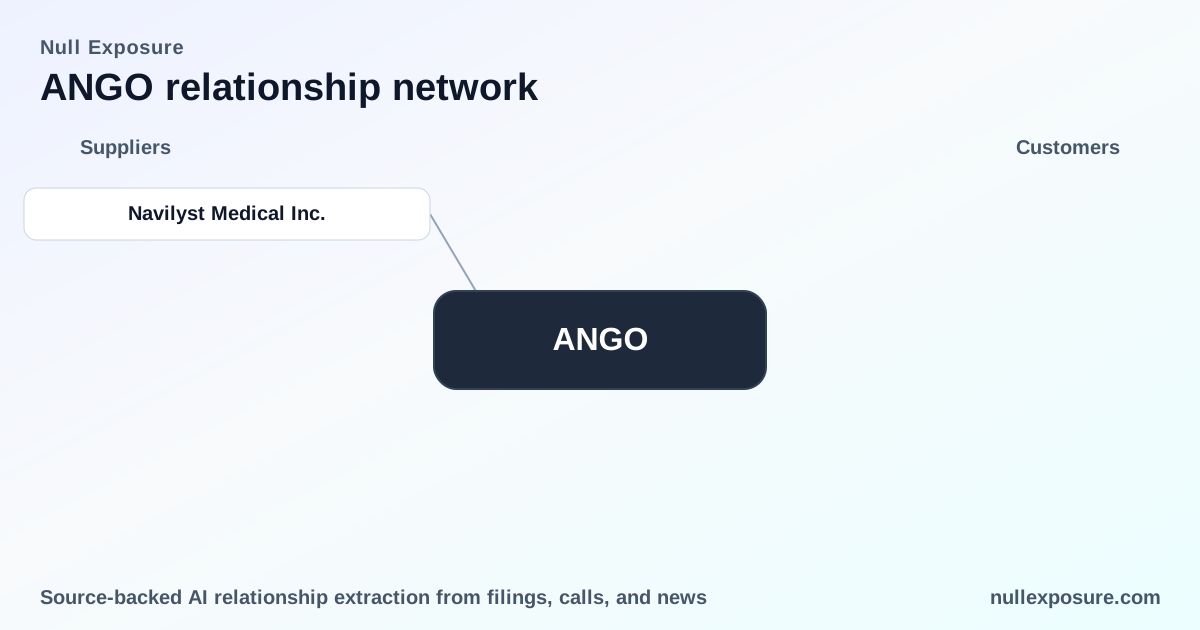
Navilyst Medical Inc.
AngioDynamics and Navilyst Medical are named together in a civil complaint alleging a defective SmartPort product that migrated and required surgical removal; the suit was filed by a plaintiff on October 1 and surfaced in press coverage. According to an AboutLawsuits report that cites the complaint, the filing alleges the SmartPort was “unreasonably dangerous and defective,” a product‑liability claim that can lead to indemnity exposure, recall costs, and reputational damage. (AboutLawsuits, complaint reported / first surfaced March 2026.)
How to interpret the relationship map and supplier constraints Company disclosures and the extracted constraints reveal structural traits that drive risk and opportunity for AngioDynamics as a supplier to health systems and OEM partners.
-
Contracting posture — outsourced manufacturing is the default. AngioDynamics has explicit supply agreements with third‑party manufacturers and “relies on other third‑party manufacturers for the manufacturing of certain products,” signaling a strategic choice to limit capital expenditures and scale through partners rather than expand in‑house production capacity. This posture controls fixed cost but increases vendor management needs.
-
Geography and concentration — a meaningful Latin America manufacturing footprint. AngioDynamics has an active supply agreement with Biomerics (previously Precision Concepts) in Alajuela, Costa Rica; Biomerics manufactures, stores, and handles certain products for the company. The presence of production in Costa Rica concentrates part of the physical supply chain in LATAM, which reduces U.S. labor cost exposure but creates geopolitical, currency, and logistical single‑region dependencies.
-
Supplier role and maturity — contract manufacturers with regulatory credentials. The named contractor, Biomerics, is FDA‑registered and ISO 13485 certified per company disclosures, which demonstrates mature quality management and lowers—but does not eliminate—regulatory risk. Certification supports continuity for regulated device production and simplifies supplier qualification for U.S. customers.
-
Relationship stage and operational criticality — active, production‑critical partnerships. The supply agreement with Biomerics is active and involves manufacturing, storage, and handling of finished goods; failure or disruption at this provider would have immediate implications for AngioDynamics’ ability to meet demand and for inventory turns.
(These constraints derive from company disclosures describing the Biomerics arrangement and broader supplier reliance in filings and regulatory statements.)
Mid‑analysis note: if you want continuous visibility into supplier contracts and litigation that affect device makers, visit https://nullexposure.com/ for subscription access.
What this means for valuation and operational risk Three investor‑grade implications flow from the relationship map and recent headlines:
-
Litigation exposure is actionable and near‑term. The Navilyst‑related SmartPort complaint converts product performance issues into financial uncertainty — legal fees, indemnity, and potential product remediation are all quantifiable line items that can pressure margins or require reserves.
-
Outsourcing compresses fixed costs but amplifies counterparty risk. Contract manufacturing in Costa Rica and reliance on other third‑party producers reduces capital intensity but concentrates supply risk; single‑region production and limited supplier redundancy are asymmetric risks to revenue continuity.
-
Certified suppliers reduce but do not eliminate regulatory friction. FDA registration and ISO 13485 certification at contractors are strong governance signals and make rapid corrective action feasible, but certification does not immunize the company from recalls or post‑market liability.
Investor actionables and what operators should do next
-
For investors: stress‑test revenue and working capital assumptions for scenarios that include supplier disruption or a recall tied to the SmartPort litigation; quantify potential reserve size and impact to free cash flow. Track legal filings for case outcomes and any 10‑Q/10‑K disclosure updates that quantify liability.
-
For supply‑chain operators: accelerate dual‑sourcing or inventory buffers for SKU families produced in Costa Rica and confirm corrective action plans and audit schedules with Biomerics and other contractors to shorten recovery time in a disruption.
-
For risk managers: require immediate confirmation of indemnity language, recall procedures, and insurance coverage terms from third‑party manufacturers to ensure liabilities are contractually assigned where appropriate.
Final verdict: actionable signals and next steps AngioDynamics runs a capital‑light manufacturing model that monetizes product sales but carries meaningful counterparty and legal risk—specifically, ongoing product‑liability litigation named alongside prior supplier arrangements and an active manufacturing relationship in Costa Rica. Investors should calibrate valuation models to include supplier concentration and potential litigation costs; operators must prioritize supplier redundancy and tighten audit/risk protocols.
For a deeper read and ongoing supplier monitoring, visit https://nullexposure.com/ — the supplier landscape is the single most impactful operating lever for med‑techs with outsourced production.
If you want a tailored briefing on how litigation and supplier concentration impact projected cash flow at AngioDynamics, request a supplier‑focused diligence pack at https://nullexposure.com/ and we will assemble the relevant filings, timelines, and contingency scenarios.