ANIX (Anixa Biosciences) — supplier relationship brief for investors
Anixa Biosciences operates as a clinical-stage oncology biotech that licenses foundational intellectual property from major research institutions and develops those assets through partnered clinical programs, monetizing via milestone and royalty-bearing licenses, potential commercialization of therapeutic products, and value uplift from clinical data that can unlock partnering or out-licensing opportunities. The company’s business model is license-and-develop: it acquires exclusive worldwide rights to university-invented technologies, funds and manages clinical development (often in collaboration with cancer centers), and retains commercial upside subject to royalty provisions to original licensors. For a concise view of related supplier and research relationships, see NullExposure for more depth: https://nullexposure.com/
H2: What investors need to know up front Anixa’s operating posture is partner-centric and IP-dependent. The company’s core assets are not internally invented but exclusively licensed from research institutions, which creates a capital-efficient R&D footprint but also concentrates commercial risk around licensing terms and partner performance. Recent public releases show clinical milestones and patent allowances driving narrative value rather than large CapEx investments.
- Contracting posture: Evidence points to multi-year, long-term licensing commitments with milestone and royalty obligations.
- Geographic reach: Licenses are described as worldwide, supporting a global commercialization thesis if products reach market.
- Spend profile: Near-term contractual commitments reported are modest (low six-figure to mid-six-figure bands), consistent with a lean balance sheet that outsources much preclinical work.
- Operational partners: Clinical development is executed with established cancer centers that assume material development roles (reducing Anixa’s near-term cash burden but increasing dependency on clinical partners).
Explore full relationship intelligence on the company page: https://nullexposure.com/
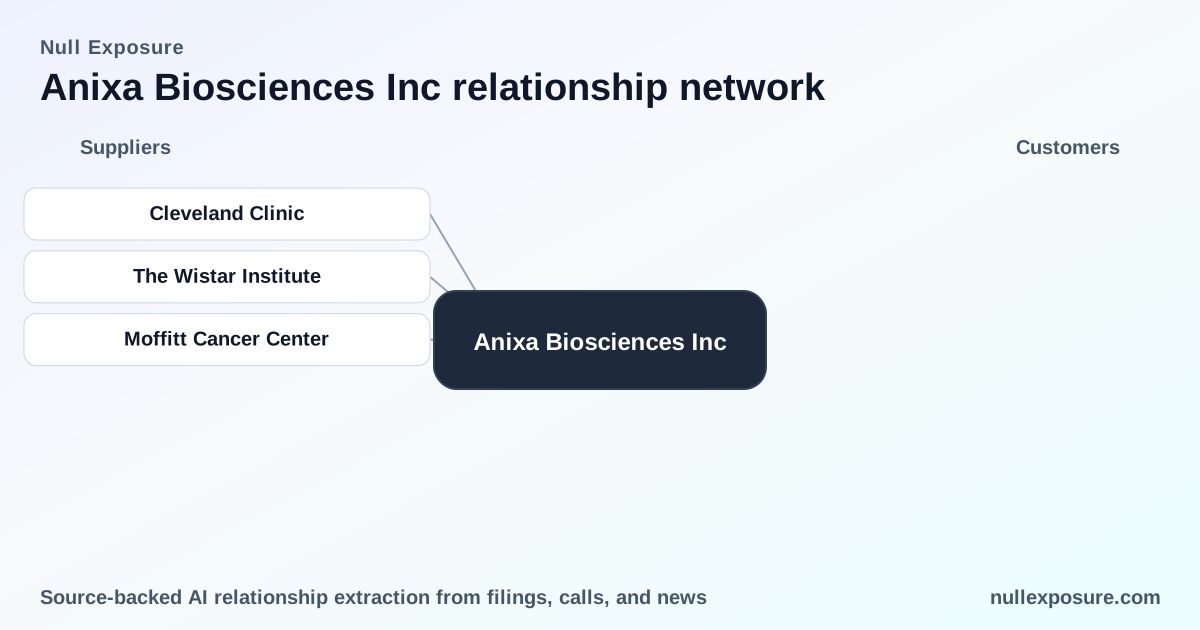
H2: How the partner network actually functions in practice Anixa’s supplier and collaborator network is built around three research institutions that provide either licensed IP or clinical development support. Each relationship is a strategic node: they supply the technology, clinical capacity, or both, and are contractually positioned to receive royalty or other commercialization consideration. The transactions are licensing-first with clinical collaboration layered on top.
H3: Cleveland Clinic — the IP engine behind the vaccines Anixa holds an exclusive license to breast and ovarian cancer vaccine technology developed at Cleveland Clinic, and Cleveland Clinic is contractually entitled to royalties and other commercialization revenues from Anixa’s vaccine programs. PR Newswire and multiple investor releases in FY2025–FY2026 document patent allowances, IND transfers, and a data transfer agreement that moved clinical sponsorship to Anixa, showing the Clinic as a formal licensor and counterparty to commercialization economics (PR Newswire; Intellectia.ai; Yahoo Finance, FY2025–FY2026).
H3: The Wistar Institute — a license for CAR-T/CER-T technology Anixa holds an exclusive worldwide license to FSHR-targeting CAR‑T technology from The Wistar Institute, which underpins lira‑cel (liraltagene autoleucel) and related CAR‑T/CER‑T constructs. Public filings and press coverage in FY2025–FY2026 identify Wistar as the original IP owner that licensed the chimeric endocrine receptor approach to Anixa (PR Newswire; Finviz, FY2025–FY2026).
H3: Moffitt Cancer Center — the clinical development partner on ovarian CAR‑T programs Anixa’s ovarian immunotherapy programs are being developed in collaboration with Moffitt Cancer Center, which is executing clinical trials (including dose-escalation cohorts) and has obtained IRB approvals that enable major protocol amendments; press releases in FY2025–FY2026 highlight encouraging survival observations and regulatory permissions for dose escalation, with Moffitt acting as principal clinical partner (PR Newswire; StockTitan; Finviz, FY2025–FY2026).
H2: Contracting and commercial constraints that shape valuation These are company-level signals drawn from public disclosures and press reporting:
- Long‑term licensing and multi‑year obligations: Anixa discloses potential payments tied to development milestones and multi‑year commitments (e.g., approximately $1.8 million in contingent payments over up to four years for certain agreements as of Oct 31, 2025), indicating a contractual timeline that extends beyond a single fiscal cycle.
- Licensing-first model with royalty economics: Multiple excerpts confirm exclusive, royalty-bearing, worldwide licenses—this structurally makes royalties and milestone triggers critical value drivers for future revenue realization.
- Global commercialization scope: Licenses are explicitly worldwide, which supports a broad addressable market assumption if regulatory success is achieved.
- Service-provider relationships reduce near-term cash needs: Certain programs leverage external research infrastructure (for example, NCI/PREVENT facilities performing preclinical and IND‑enabling work), which lowers immediate cash burn but increases operational reliance on institutional partners.
- Spend concentration is modest but real: Contracted commitments reported in the near term are in the $150k to low‑mid six‑figure range for the next twelve months, with real estate and lease costs in the low‑five‑thousand‑dollar per month band—consistent with a small, development‑stage balance sheet.
H2: What the relationships imply for risk and upside
- Upside: Exclusive IP licenses paired with positive Phase 1 data and patent allowances create binary value inflection points—successful late‑stage development or a partnering deal would reprice the company materially. Clinical data flow and patent life extension are core catalysts.
- Risk: The model concentrates strategic dependency on a handful of institutional licensors and clinical partners; failures in partner trials or adverse licensing terms would have outsized negative impact. Execution at partner sites and milestone payments are therefore primary operational risks.
If you want a tailored supplier risk score or to track upcoming milestone windows for ANIX, start here: https://nullexposure.com/
H2: Investor takeaways and next steps
- Anixa is a license‑and‑develop biotech with concentrated institutional supply relationships (Cleveland Clinic, The Wistar Institute, Moffitt Cancer Center) that underpin its vaccine and CAR‑T/CER‑T programs.
- Licensing terms and clinical partner execution are the dominant levers for enterprise value; short-term contracted spend is limited but multi‑year contingencies exist.
- For decision-ready intelligence and alerts on milestone events, licensing changes, or partner disclosures, visit NullExposure’s ANIX hub: https://nullexposure.com/
Strong call to action: subscribe at NullExposure to capture license milestones and clinical readouts as they publish — https://nullexposure.com/