ANSC: A SPAC for agriculture assets — how it sources advisers and who gets paid
Agriculture & Natural Solutions Acquisition Corporation (ANSC) is a blank‑check company that raises capital through a public offering, holds proceeds in a U.S. trust account and generates value by effecting a business combination in the agriculture and natural‑resources space; it monetizes through sponsor economics, contractually agreed administrative reimbursements and the economics of a successful merger and subsequent public listing. For investors and operators, the commercial footprint is dominated by short‑term, sponsor‑linked service relationships and concentrated transaction costs tied to a single business combination.
Learn more or start a supplier evaluation at https://nullexposure.com/.
How ANSC operates and where the revenue levers sit
ANSC is a NASDAQ‑listed special purpose acquisition company (SPAC) headquartered in New York that raised roughly $345 million into a U.S.-based trust account from its public offering and private placement in connection with a targeted business combination, according to the company’s filings. The SPAC model monetizes via sponsor fees, underwriting fees and by completing a merger that converts trust capital into operating assets; until a business combination closes, recurring income is negligible and costs are concentrated in offering and transaction fees.
Key financial signals: market capitalization around $468 million and a trailing PE near 56x (reflecting nominal operating earnings and SPAC economics), with no substantive operating revenue to date. Administrative operating relationships are structured as monthly subscription payments to sponsor affiliates (the company reported a $10,000 per month reimbursement for office and support), while transaction execution produced material, one‑time underwriting and offering costs (transaction costs above $20 million). These structural facts drive counterparty priorities: short‑term, high‑value transaction providers and low‑margin, ongoing administrative vendors.
Explore supplier profiles and contract intelligence at https://nullexposure.com/.
Who ANSC contracts with — advisor and counsel relationships you need to know
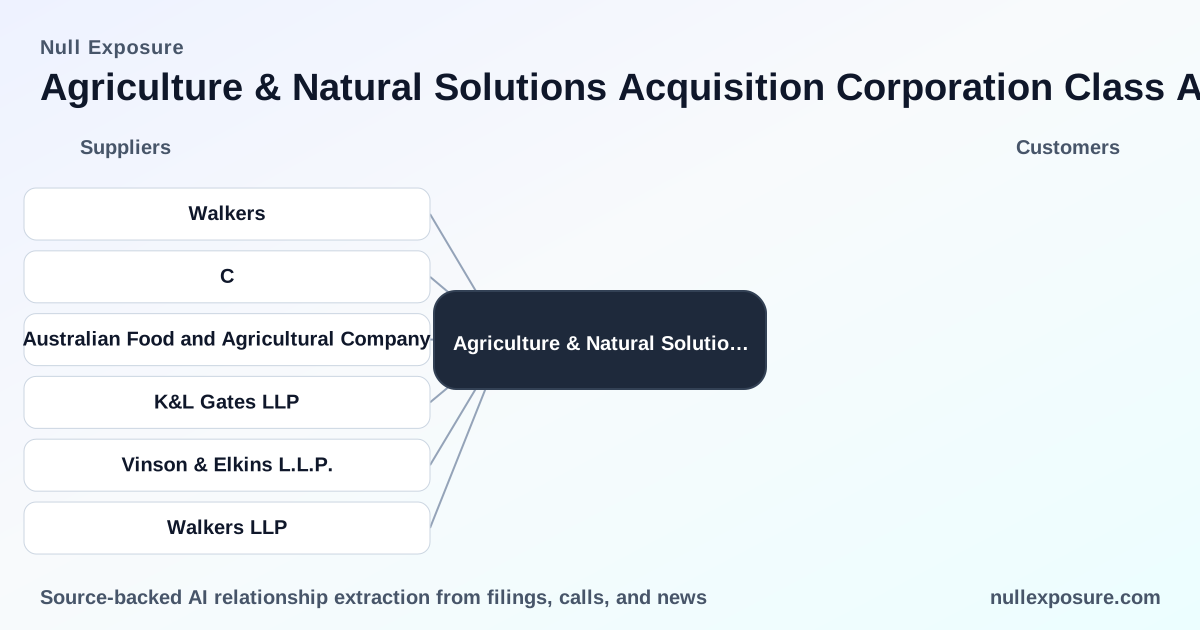
Below are the supplier and advisor relationships pulled from public press and announcement sources. Each relationship summary is a plain‑English capsule with a concise source reference.
Citigroup Global Markets Inc.
Citigroup is acting as capital markets advisor to ANSC in connection with the announced $510 million business combination. This places Citigroup in a core transaction advisory role that influences pricing, syndication and deal execution. (PR Newswire, March 9, 2026 — company announcement: https://www.prnewswire.com/news-releases/agriculture--natural-solutions-acquisition-corporation-announces-us510-million-business-combination-combined-company-to-be-publicly-listed-in-the-us-302233666.html)
Walkers / Walkers LLP
Walkers’ Cayman Islands corporate team is listed as advising ANSC on the transaction; the firm (also referenced as Walkers LLP in the PR release) serves as offshore counsel on deal mechanics and entity structuring. This gives Walkers a role in the cross‑border legal structuring of the combination. (Mondaq press release and PR Newswire, March 9, 2026 — https://www.mondaq.com/pressrelease/146206/acting-for-agriculture-natural-solutions-acquisition-corporation-on-us%24510-million-business-combination; PR Newswire link above)
K&L Gates LLP
K&L Gates is named among the counsel acting for ANSC on the business combination, serving in a U.S. legal advisory capacity for transaction documentation and regulatory work. Their involvement signals standard U.S. transactional and securities counsel support. (PR Newswire, March 9, 2026 — see PR Newswire link above)
Vinson & Elkins L.L.P.
Vinson & Elkins is also listed as counsel to ANSC; the firm’s role typically covers industry‑specific regulatory, tax and transactional advice for larger combinations and asset transfers. Their participation supplements the U.S. legal capability on the deal. (PR Newswire, March 9, 2026 — see PR Newswire link above)
Australian Food and Agricultural Company
Press reporting identified the Australian Food and Agricultural Company as the target counterparty in a large farmland transaction that ANSC—backed by Riverstone Investment Group and Impact Ag Partners—had agreed to buy, covering major NSW properties and 225,000 hectares. This relationship signals ANSC’s intended asset footprint and cross‑jurisdictional acquisition exposure. (RealEstateSource reporting, FY2025 coverage summarized March 2026 — https://www.realestatesource.com.au/farmland-deal-worth780m-falls-through/)
Operational constraints and what they mean for counterparties
ANSC’s operating model and supplier posture create several practical constraints that matter to vendors, advisers and buyers:
- Contracting posture — short‑term and subscription‑style: ANSC’s third‑party obligations are concentrated in short‑term arrangements and monthly reimbursements to sponsor affiliates (for example, a $10,000/month administrative fee), which creates steady, low-dollar recurring spend alongside big transactional outlays.
- Spend concentration and transaction intensity: Annual reporting shows transaction costs exceeding $20 million (including deferred and upfront underwriting fees), placing disproportionate economic impact on underwriting and capital markets providers while most vendors occupy sub‑$1m bands or nominal monthly reimbursements.
- Geography and regulatory locus: The trust account and corporate operations are U.S.‑centric — funds were placed in a U.S. trust account invested in short‑maturity U.S. government securities — which focuses regulatory, custody and counterparty risk in U.S. banking and transfer agents.
- Relationship role and criticality: ANSC relies on service providers for core functions (administration, custody, legal and capital markets advice). For counterparties, this translates into being critical during the deal window and peripheral otherwise.
- Stage and maturity: The company is active in transaction execution (working capital notes outstanding and active counsel/advisors engaged), so counterparties should price for concentrated, high‑intensity workstreams rather than long‑term platform services.
The filings explicitly name the trust arrangement and trustee: Continental Stock Transfer & Trust Company acts as trustee and the trust proceeds are invested in U.S. government securities of 185‑day maturity or less, which constrains available liquidity and investment returns for the SPAC (company filings, FY2024).
Investment and supplier implications — what operators and investors should do next
For investors and operators evaluating ANSC relationships, the commercial picture is clear: short, highly transactional supplier engagements account for the majority of economic activity, while a small set of legal and capital markets advisers absorb most deal costs. Risk to suppliers is timing and concentration; risk to investors is execution risk on the announced business combination and limited recurring revenues.
- Operators offering capital markets, legal or trustee services should value the deal window highly and price for high‑intensity, milestone‑driven work.
- Providers of routine back‑office services should expect modest, subscription‑style revenue and close alignment with sponsor affiliates for contract renewal or termination.
If you are assessing counterparty exposure, due diligence checklists should prioritize transaction documentation, trustee custody arrangements, and the sponsor’s economic ties. For detailed supplier intelligence and to benchmark ANSC relationships, visit https://nullexposure.com/.
Final takeaway and next steps
ANSC’s model is transaction‑driven: concentrated costs, short‑term supplier commitments, and U.S. trust account constraints define the commercial landscape. That structure benefits advisers and underwriters with deal execution expertise and limits opportunities for long‑term vendors unless the combined company establishes ongoing operating revenues.
For a deeper supplier risk assessment or to map counterparties for bid or advisory opportunities, start your analysis at https://nullexposure.com/.