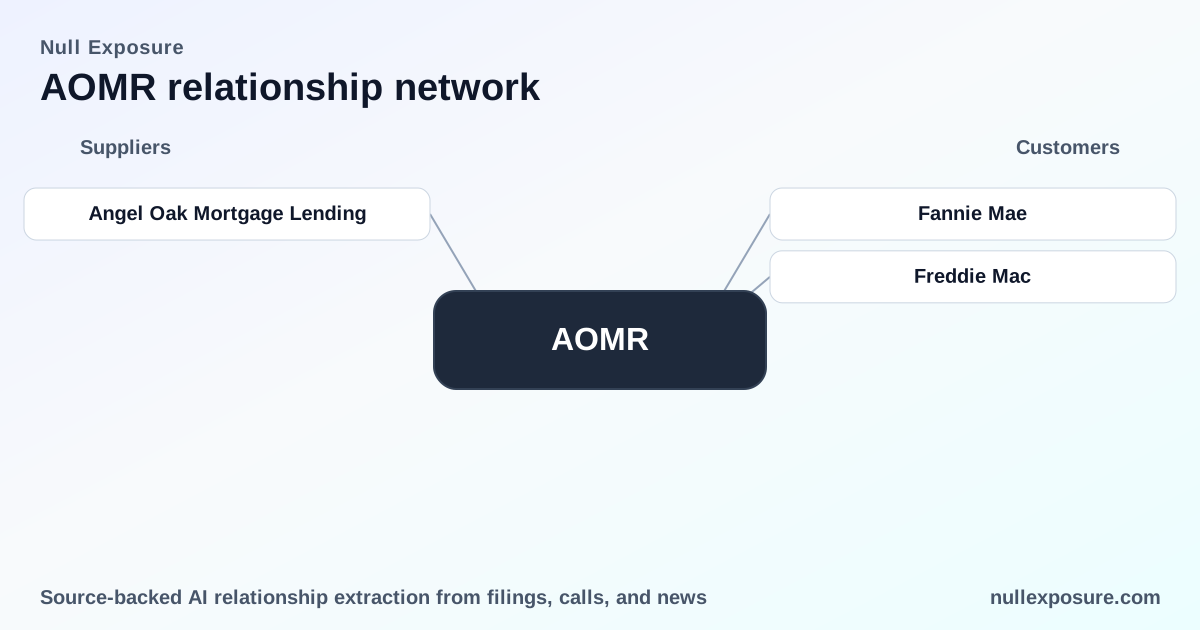
Angel Oak Mortgage Inc. (AOMR): Supplier relationships, funding posture, and what institutional investors should know
Angel Oak Mortgage Inc. operates as a mortgage REIT that acquires, finances, and manages first‑lien non‑QMs and other mortgage-related assets, monetizing through net interest income on loan portfolios, securitization spread capture, servicing fees and secondary-market trading gains. The firm relies on a vertically integrated Angel Oak platform for origination flow and uses a mix of long‑term securitization and short‑term repurchase financing to optimize funding cost and leverage. For investors evaluating supplier and counterparty relationships, the core question is how concentrated and critical those supplier links are to AOMR’s ability to source assets and finance them profitably.
If you want a consolidated view of counterparties and risk signals for buy‑side diligence, start here: https://nullexposure.com/
How AOMR sources assets and the commercial logic behind its supplier ties
Angel Oak’s economic model depends on access to newly‑originated non‑QM loans with predictable underwriting and the ability to warehouse and securitize those assets. The company sources a substantial portion of its target assets from Angel Oak Mortgage Lending, which provides proprietary flow and underwriting transparency that supports AOMR’s credit selection and securitization strategy. To finance inventory, AOMR layers long‑term term securitizations with short‑term repurchase facilities and uncommitted bank lines, allowing active balance sheet management and opportunistic spread capture while accepting financing volatility as part of the funding trade.
- Primary monetization levers: net interest margin on owned loans, securitization gain on sale or spread over funding, and servicing/ancillary fees.
- Funding posture: a blend of long‑term term securitization to lock funding cost and short‑term repurchase and uncommitted bank facilities to provide warehouse liquidity.
- Concentration and criticality: the relationship with Angel Oak Mortgage Lending is a source concentration of supply and operational transparency; the management/outsourcing arrangement introduces counterparty and operational dependency.
Explore a structured catalog of counterparties and risk flags at https://nullexposure.com/ to support investment memos and vendor diligence.
The single supplier relationship on record — and what it means for investors
Angel Oak Mortgage Lending — As disclosed in AOMR’s FY2024 10‑K, Angel Oak Mortgage Lending is a primary source of newly‑originated first‑lien non‑QM loans and provides AOMR with proprietary access and insight into underwriting, though it is not contractually obligated to sell loans exclusively to AOMR. This relationship supplies the bulk of AOMR’s intended acquisition flow and gives the REIT visibility into originations that align with its credit and return targets (FY2024 10‑K).
Source: FY2024 Form 10‑K, Angel Oak Mortgage Inc., referenced in the company’s FY2024 filings.
Relationship summaries and direct source notes
-
Angel Oak Mortgage Lending — The 2024 Form 10‑K states AOMR’s strategy is to invest primarily in newly‑originated non‑QM loans substantially sourced from Angel Oak Mortgage Lending, and it also highlights that Angel Oak Mortgage Lending provides proprietary access and underwriting transparency. (FY2024 10‑K)
Source: Angel Oak Mortgage Inc., FY2024 Form 10‑K (document aomr‑2024‑12‑31). -
Angel Oak Mortgage Lending — The 10‑K also flags a technology and modernization dependency: AOMR and Angel Oak Mortgage Lending share exposure to the pace of technological improvements and digital platform upgrades required by counterparties and distribution partners. (FY2024 10‑K)
Source: Angel Oak Mortgage Inc., FY2024 Form 10‑K (document aomr‑2024‑12‑31).
These two excerpts cover the full set of supplier mentions in the company disclosures; both come directly from AOMR’s FY2024 reporting.
What the constraint signals imply for operating risk and contracting posture
Use the constraints as company‑level signals of AOMR’s operating model and supplier risk profile:
-
Contracting posture — mixed tenor: AOMR utilizes long‑term securitization funding when assets accumulate (contractual long‑term facilities with note issuance and term securitizations) alongside short‑term repurchase facilities and uncommitted bank lines that are renewable and rolling (evidence: repurchase facility renewals and uncommitted lines extended through mid‑2025). This mix delivers funding flexibility but introduces refinancing and liquidity risk during stress.
-
Concentration and criticality — material dependency on the Angel Oak platform: The firm discloses reliance on its Manager and key personnel for sourcing and servicing strategy, and the supply of target assets is substantially sourced from Angel Oak Mortgage Lending. That creates single‑source exposure for the REIT’s core product flow, elevating operational and strategic dependency risk.
-
Counterparty profile — large financial counterparties: Lending and financing counterparties are described as global money‑center and large regional banks, which provides deep market liquidity but links AOMR to global funding dynamics and counterparty credit events.
-
Geographic exposure — U.S. mortgage market: The book is focused on U.S. first‑lien non‑QM loans, concentrating credit and regulatory exposure in the U.S. mortgage ecosystem.
-
Materiality — high for certain operational functions: Several constraints note potential material impact from servicer performance, indemnity/repurchase failures and Manager disruption; operational failures or indemnity shortfalls could have material adverse effects on returns and asset values.
-
Spend and balance sheet scale: Public reporting shows borrowing capacity approaching $1.1 billion across uncommitted lines and tens of millions in outstanding repo and senior note financings, signaling that supplier and financing relationships are large-dollar and economically material to operations.
Deal implications for investors and operators
- Underwriting and sourcing control is the strategic asset. Angel Oak Mortgage Lending’s flow and transparency materially affect yield and loss assumptions; investors should model scenarios where flow tightens or unilateral origination priorities shift.
- Funding design is a managed risk tradeoff. The mix of term securitizations and short‑term repo financing captures spread while requiring active liquidity management; stress scenarios should include repo roll‑off and widening of pricing spreads on bank lines.
- Operational dependency warrants contractual protections. Given the Manager and servicer dependencies, investors should demand clear indemnity provisions, repurchase triggers and transition playbooks in downside scenarios.
If you want a concise counterparty risk pack or a supplier‑level heat map for AOMR, start with our centralized profiles: https://nullexposure.com/
Conclusion — actionable investor checklist
- Confirm the degree of exclusive flow and any formal purchase commitments from Angel Oak Mortgage Lending.
- Stress test the funding stack for repo renewal and uncommitted line roll‑forwards under widened spreads.
- Validate servicer performance metrics and repurchase/indemnity history and terms.
- Price in the operational dependency on the Manager and ensure contractual remedies and transition plans are documented.
For a practitioner’s pack that aggregates counterparty clauses, contract dates, and materiality scoring for AOMR and its suppliers, visit https://nullexposure.com/ and build your diligence checklist.