AOUT Supplier Profile: How supplier posture shapes margins and operational risk
AOUT monetizes by designing, marketing, and distributing outdoor and firearm-related products through branded lines and bundled promotions, outsourcing most manufacturing to third parties in Asia while retaining control of distribution and brand marketing. Revenue comes from finished-goods sales and accessory bundles; costs and fulfillment depend heavily on third‑party manufacturers and multi‑year real estate commitments, creating a mix of operational flexibility and fixed-cost leverage that investors must price into valuation and risk assessments. For a quick look at broader supplier intelligence, visit https://nullexposure.com/.
Why supplier relationships matter for AOUT’s cash flow and margins
AOUT’s profitability is driven by product mix and unit economics, but supplier posture determines lead times, input costs, and exposure to regional disruptions. The company combines short-term supplier agreements with long-term property leases, which amplifies operating leverage: procurement is flexible, but occupancy and related obligations are fixed. That combination gives AOUT the ability to adjust sourcing quickly while locking in real estate cost structure for years—important for forecasting both downside and upside scenarios.
The supplier landscape in plain English
AOUT sources most of its manufacture and assembly from third parties located in Asia—primarily China, with Taiwan, Vietnam, Myanmar, and the Philippines also in the mix—and does not maintain long-term supply contracts that guarantee prices or guaranteed capacity. Company disclosures as of April 30, 2025 show meaningful purchase obligations due within one year and several inventory suppliers each representing double-digit percentages of purchases, signaling concentration risk in procurement. According to public filings, operating lease obligations are material and sit squarely in the $10–100M band, reinforcing the fixed-cost profile.
- Concentration and criticality: As of April 30, 2025, three inventory suppliers each exceeded 10% of total inventory purchases, creating single-supplier risk that can affect production and pricing if a supplier is disrupted.
- Contracting posture: The company explicitly states it does not have long-term agreements with contract manufacturers for guaranteed capacity or pricing, while it holds at least one lease that extends to November 26, 2038—illustrating a hybrid model of flexible procurement and long-term real estate commitments.
- Geographic exposure: Most third-party manufacturers are based in Asia, with China the primary source, which concentrates geopolitical, logistics, and tariff risk.
- Service relationships: The company engages third-party service providers for security testing and other functions, indicating reliance on external vendors for non-core technical controls.
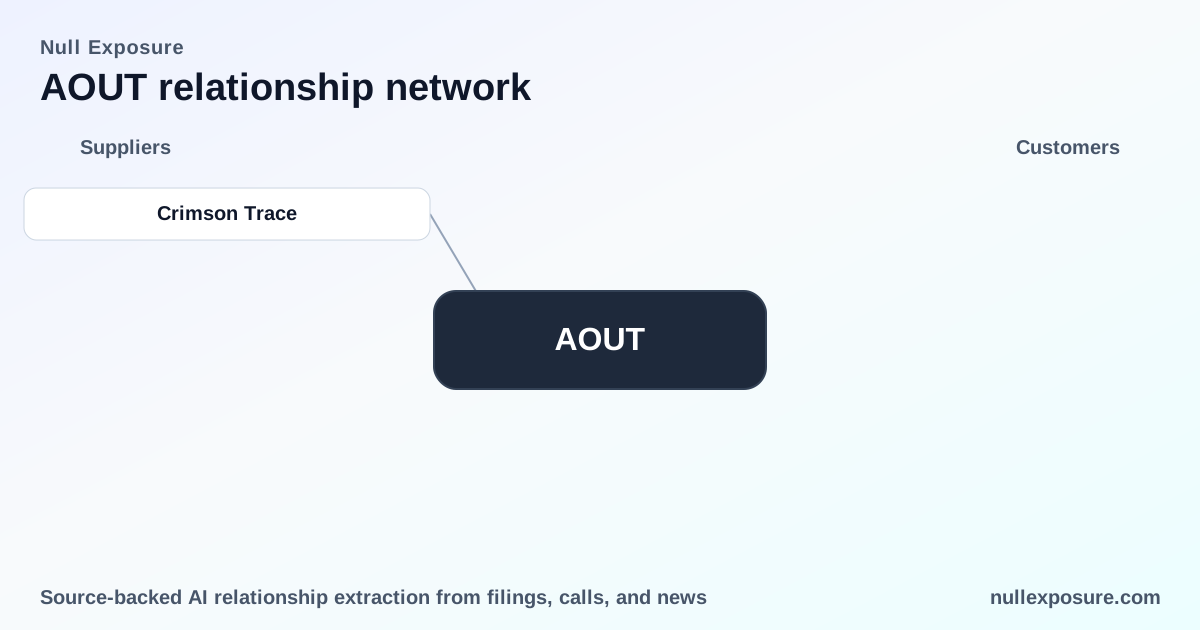
Relationship breakdown: Crimson Trace
Crimson Trace is referenced as a bundled accessory partner in the company’s consumer promotions: AOUT’s firearms business has benefited from bundling firearms with Crimson Trace products, driving cross-sell and improving average transaction value during promotional periods. This relationship is described in an earnings call transcript covering FY2019 activities. (Source: earnings call transcript published by The Motley Fool, December 2019.)
Contract and constraint signals that shape strategy
The company-level constraints disclosed provide a clear picture of operational levers and exposures:
- Long-term fixed obligations coexist with short-term supplier arrangements. Company disclosures include a lease that ends November 26, 2038, while procurement contracts with manufacturers are not long-term and do not guarantee capacity, lead times, or prices. This structure gives pricing and sourcing flexibility but forces the company to absorb real estate and lease cost volatility over the long run.
- Purchasing concentration is material. Three suppliers each represent more than 10% of inventory purchases as of the latest reporting period, elevating supplier concentration risk that can translate to margin volatility or disrupted supply if any of those suppliers fail to perform.
- Asia-centric manufacturing amplifies supply-chain and geopolitical exposure. Sourcing from China and neighboring Asian markets reduces input cost in normal conditions but increases exposure to tariffs, shipping disruptions, and regional instability.
- Operating-lease scale matters for leverage. The disclosed operating lease obligations (reported in thousands) place the company’s lease commitments in the $10–100M spend band, which increases fixed-cost leverage and makes margin recovery dependent on maintaining volume or improving per-unit economics.
- Outsourced services are part of the control environment. Use of external vendors for functions like vulnerability scanning and penetration testing indicates reliance on specialist suppliers for security and compliance, which is a recognizable cost and control tradeoff for mid-market manufacturers.
(These constraints are presented as company-level signals derived from recent public disclosures as of April 30, 2025.)
What this means for investors and operators
- Up-side engine: Bundling accessories (e.g., Crimson Trace) increases basket size and improves gross margin on a per-transaction basis; this is a direct commercial lever that management can scale through promotions and channel placement.
- Down-side risk: Supplier concentration and Asia-focused manufacturing create meaningful single-point and regional risk; absent long-term supply contracts, price and availability can swing quickly in response to shocks.
- Operational leverage: Long-dated leases create a structural fixed-cost base that magnifies earnings sensitivity to volume changes; investors should model scenarios where volume recovers slowly versus rebounds quickly.
- Governance and continuity: Reliance on third-party service providers for security and manufacturing underscores the importance of contract management and contingency planning—areas where operators can extract value by diversifying suppliers or hedging logistics.
For deeper supplier risk scoring and continuous monitoring tools that quantify these trade-offs, see https://nullexposure.com/.
Practical watchlist: Events that will move the thesis
- Supplier replacement announcements or diversification outside China will reduce concentration and geopolitical risk.
- New long-term supply contracts with guaranteed capacity or price floors would convert procurement flexibility into supply certainty and shift risk profile.
- Material changes to operating lease structure—sales of real estate, lease renegotiations, or subleasing—will alter fixed-cost leverage and EBITDA sensitivity.
- Any operational disruption at a top-three inventory supplier will be a high-impact event for near-term production and margins.
Final take: balancing flexibility with fixed costs
AOUT operates a flexible manufacturing model concentrated in Asia, supplemented by promotional relationships like the Crimson Trace bundle to lift sales per transaction. That flexibility in procurement translates to short-term agility, but material supplier concentration and multi‑year lease obligations create asymmetric downside risk that investors must model explicitly. Operators can reduce risk by diversifying suppliers and converting opportunistic purchase relationships into stronger contractual commitments where sensible.
Stay current on supplier developments and risk signals—visit https://nullexposure.com/ for ongoing supplier intelligence and scenario-driven analysis.