APA Corporation: supplier posture and what the Nasdaq Texas listing signals for counterparties
APA Corporation (holding company for Apache Corporation) explores, produces and sells hydrocarbons and monetizes through upstream production sales, third‑party commodity purchases/resales and hedging. With a market capitalization near $12.2 billion and trailing revenue of roughly $8.7 billion, APA generates cash from oil and gas production, supplements volumes by purchasing third‑party product to meet delivery commitments, and manages price and interest‑rate exposures with derivative contracts placed with major financial institutions. For suppliers and counterparties, the business is cash‑flow driven, capital‑intensive, and actively engaged with large financial counterparties and commodity sellers. Learn more at https://nullexposure.com/.
What the Nasdaq dual‑listing news changes for counterparties
APA announced a dual listing that connects its familiar NasdaqGS ticker with the newly launched Nasdaq Texas exchange. This is a corporate capital markets development that improves local liquidity and investor access in Texas, but it does not alter the company’s supplier contracts or operational counterparties directly. The listing is a market‑access and liquidity event that can change trading behaviour for institutional and local investors, which in turn affects the company’s cost of equity and public signaling to large counterparties.
Nasdaq Texas — local market access and trading implications
APA announced a dual listing on Nasdaq Texas, positioning the company for local market participation and potentially enhancing trading interest among Texas‑focused investors and brokers. This listing strengthens local liquidity corridors and investor visibility relevant to counterparties that value regional market presence. Source: Simply Wall St reporting dated March 9, 2026.
NasdaqGS — continuity for established trading relationships
The company will retain its NasdaqGS ticker while adding Nasdaq Texas, maintaining continuity for existing institutional and market‑maker relationships on NasdaqGS. The move preserves established trading and settlement channels that counterparties and custodians use today. Source: Simply Wall St reporting dated March 9, 2026.
Every supplier relationship reported
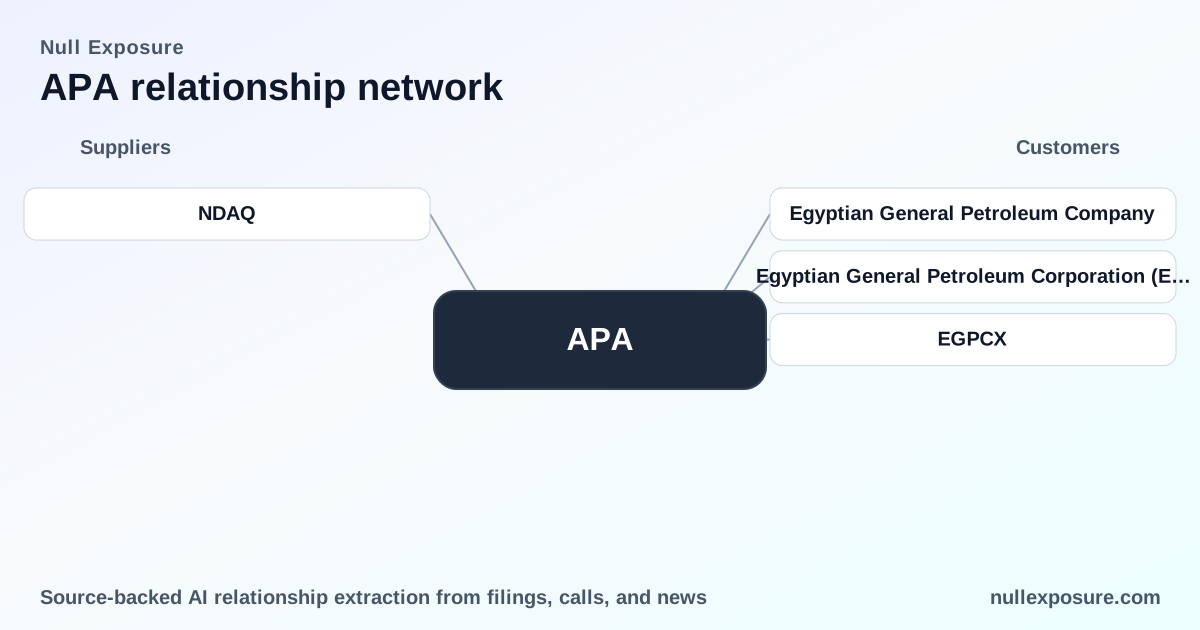
The sourced relationships in public coverage for APA in the supplier scope are limited to these two market/exchange entries; both are market‑structure relationships rather than operational suppliers.
- Nasdaq Texas — APA’s announcement of a dual listing connects its ticker and trading profile with a Texas‑focused exchange, which influences local liquidity and investor access for counterparties tracking the stock. Source: Simply Wall St, March 9, 2026.
- NasdaqGS — The company continues to trade on Nasdaq Global Select Market (NasdaqGS), preserving established market‑maker and institutional trading relationships while adding the Texas listing. Source: Simply Wall St, March 9, 2026.
Constraints that define APA’s supplier and counterparty model
Public filings and disclosures provide company‑level signals about how APA contracts, where counterparty exposure is concentrated, and what is operationally critical.
- Counterparty type — large financial institutions. APA places derivative contracts with major banks and institutional dealers to hedge commodity price, interest‑rate and FX exposure, indicating a contracting posture that leverages sophisticated, large‑enterprise financial counterparties rather than numerous small providers. This elevates counterparty credit and operational integration as key supplier risks.
- Buyer posture — active purchaser of third‑party commodities. APA routinely purchases third‑party natural gas and crude oil to satisfy delivery commitments and sales contracts, and it reports meaningful purchased oil and gas costs (reported line item of 1,047 in the financial summary). This demonstrates operational reliance on commodity sellers to meet pipeline delivery obligations and takeaway requirements.
- Service provider use and cybersecurity governance. Filings highlight protocols for managing cybersecurity risks tied to third‑party service providers, indicating a mature supplier/risk management program that treats external IT and operational vendors as control points.
- Geographic operating focus — North America orientation. Excerpts reference purchases and deliveries in fulfillment of pipeline agreements, signaling a North American logistics and supplier footprint for commodity fulfillment.
- Materiality signal — cybersecurity incidents immaterial to date. The company reports that cybersecurity threats have not materially affected its business as of the last filing, which is a company‑level signal about historical resilience but not a guarantee against future events.
- Spend concentration — large spend bands. The presence of significant purchased oil and gas costs points to counterparty spend in the $100m+ band for commodity purchases, elevating the importance of supplier creditworthiness, contract terms, and logistics coordination.
Together these constraints describe a supplier model that is concentrated, commercial, and transactional (large counterparties, high single‑contract values), with criticality focused on commodity sellers and financial dealers, and an organizational maturity that includes explicit third‑party risk protocols.
Learn how these signals map to counterparty exposure and supplier risk profiling on our platform: https://nullexposure.com/.
What investors and operators should monitor in supplier exposure
APA’s supplier posture creates discrete operational and financial watchpoints for investors and procurement teams.
- Counterparty credit is the primary operational risk given derivative placements with major institutions and high‑value commodity purchases; stress to a bank or seller can transmit through hedges and purchase pipelines.
- Logistics and pipeline obligations matter because APA supplements production with purchased volumes to satisfy delivery commitments; disruptions in supply lines or price shocks can increase working capital and margin pressure.
- Market‑access changes from the dual listing alter shareholder base composition, which affects governance and disclosure dynamics that counterparties use to assess counterparty stability.
- Third‑party service resilience is an operational force multiplier: cyber and service interruptions at critical vendors could disrupt trade confirmations, treasury operations, and field connectivity even if past filings report immaterial incidents.
Actionable takeaways for investors and operators
- Stress‑test counterparty credit terms with major financial dealers and commodity sellers; confirm collateral, netting and margin triggers in hedging arrangements.
- Validate supply contracts and delivery flex: ensure purchase agreements include operational remedies and substitution clauses to manage takeaway or pipeline constraints.
- Incorporate market‑structure shifts into liquidity planning: the Nasdaq Texas listing changes investor access and could alter stock volatility and governance momentum—factoring into counterparty risk assessments is prudent.
- Confirm vendor cyber protocols and SLAs: rely on the company’s documented third‑party cybersecurity program and require reporting cadence and evidence for critical suppliers.
For a deeper, actionable view of APA’s supplier exposure and counterparties, visit our research hub: https://nullexposure.com/.
Final thought
APA operates as a production‑centric upstream company that supplements volumes through purchases and manages price risk via large financial counterparties; the Nasdaq dual listing is a capital markets development that changes how investors access the stock but does not substitute for day‑to‑day supplier and logistics risks. For counterparties and investors, the critical priorities are counterparty credit, delivery obligations, and third‑party operational resilience. Learn more about supplier risk mapping and counterparty intelligence at https://nullexposure.com/.