A Paradise Acquisition Corp. Rights (APADR): Supplier relationships, legal counsel, and what investors should price in
A Paradise Acquisition Corp. Rights represents a SPAC rights instrument tied to A Paradise Acquisition Corp., a Hong Kong‑based blank‑check vehicle that monetizes through IPO proceeds, underwriting arrangements and sponsor/private placement economics associated with business combinations. The security’s value is driven not by operating cash flows but by the success and structure of the SPAC transaction — underwriting economics, sponsor commitments, conversion mechanics and the counterparty network that executes the listing and deal process. For investors and operators evaluating supplier exposure, the relevant signal set is concentrated: advisory and legal relationships plus transaction fees and vendor dependence that influence deal execution and post‑combination governance.
For a concise analyst overview of related supplier signals and document coverage, visit https://nullexposure.com/.
Business model in plain English: how the rights instrument is monetized
A Paradise, like other SPAC sponsors, raises capital through an IPO that creates common units and associated rights; sponsor and underwriter economics — underwriting discounts, private placement purchases, and working capital loans convertible into post‑deal units — determine the pool of value available to rights holders and public investors. Revenue for stakeholders in this structure is transactional rather than operational: value accrues through successful business combinations, sponsor rollovers and conversion of sponsor or lender commitments into post‑combination equity. The rights instrument itself benefits only if the SPAC completes a qualifying merger or if complex redemption/conversion terms trigger value.
Who the company is contracting with — relationship roll call
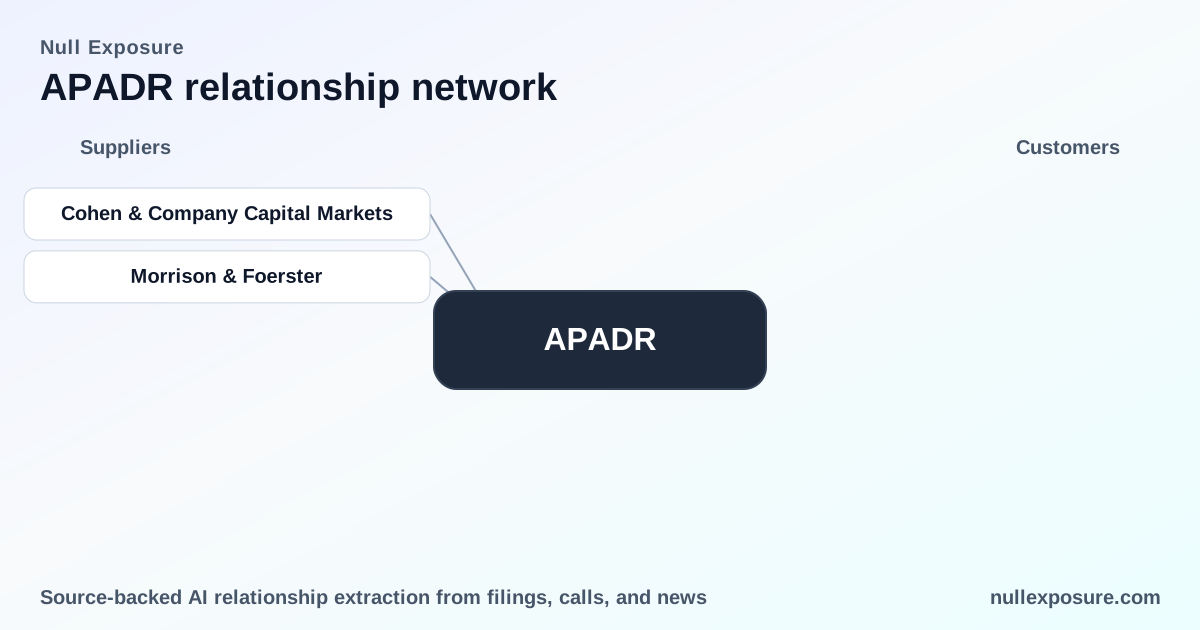
The corpus of monitored supplier relationships for APADR in our coverage is small but strategically important: financial advisor services and legal counsel tied to the business combination process. Below are every relationship captured in the available results, each with a concise summary and source.
Cohen & Company Capital Markets — financial advisor to A Paradise
Cohen & Company Capital Markets is acting as financial advisor to A Paradise in connection with its business combination activities, including the transaction that will take Enhanced public via the SPAC structure. This advisory role includes structuring, underwriting coordination and transaction execution support. According to news reports citing FY2025 coverage, Wibqam and StockTitan identified Cohen & Company Capital Markets as A Paradise’s financial advisor (Wibqam, Nov 2025; StockTitan, Mar 2026).
Morrison & Foerster — legal counsel to A Paradise
Morrison & Foerster is serving as counsel to A Paradise, providing transactional and securities law support necessary for the SPAC’s business combination and listing processes. Legal counsel is central to registration statements, disclosure accuracy, and regulatory compliance throughout the transaction lifecycle. A StockTitan report (Mar 2026) lists Morrison & Foerster as counsel to A Paradise.
What these supplier ties imply about contracting posture and concentration
The captured supplier set demonstrates a transaction‑focused operating posture: the SPAC relies on a small group of high‑leverage service providers for deal execution. From the company‑level constraints and disclosures, investors should note the following structural signals:
- Contracting posture: APADR’s documentation indicates the use of paid underwriters and convertible working capital loans to finance the IPO and bridge deal financing, reflecting a typical SPAC contracting model that prioritizes short‑term, high‑value vendor engagements (company filing excerpts referencing a 2% underwriting discount and $4.0M underwriting cash fee).
- Concentration: The relationship universe is concentrated — a handful of advisors and counsel — which accelerates decision velocity but increases single‑counterparty dependence during critical transaction windows.
- Criticality: Advisory and legal suppliers are mission‑critical for completing a business combination and securing a public listing for the target. Interruptions or disputes with these providers could directly delay or derail closure.
- Maturity and spend: Spend signals fall in the $1m–$10m band, anchored by disclosed underwriting fees ($4.0M) and convertible working capital loan terms up to $1.5M, indicating material transactional spend without long‑term recurring vendor contracts.
These are company‑level signals available from the APADR disclosures and not assigned to a single vendor unless the excerpt explicitly names them.
Operational and risk constraints investors should price
Two constraint narratives from the filings deserve explicit attention for supplier‑risk modeling:
- Cybersecurity exposure is a material operational risk. The company acknowledges dependence on third‑party digital technologies and a lack of internal cybersecurity resources, stating that sophisticated attacks or breaches of third‑party systems could have material adverse consequences and financial loss. This elevates third‑party tech providers to a substantive operational risk vector for the SPAC and any merged entity (company filing excerpt, FY2025).
- Balance‑sheet and liability profile is light on long‑term obligations. The filing signals no material long‑term debt or lease obligations beyond transaction‑related commitments, supporting a short‑duration liability posture consistent with SPACs. This is a company‑level indicator of limited structural leverage outside transaction finance.
Together these constraints shape investor actions: prioritize counterparty diligence for transaction service providers and stress‑test cyber‑resilience assumptions for any post‑combination platform.
Key takeaways for investors and operators
- Concentrated supplier network: Advisory and legal partners are few but critical — failures here affect deal timing and pricing.
- Transaction economics matter more than operating metrics: Underwriting discounts, private placement purchases and convertible working capital loans determine immediate dilution and available capital.
- Cyber risk is a material company‑level constraint: reliance on third‑party tech without robust internal defenses elevates operational risk to an outsized position for a transaction vehicle.
For deeper supplier risk screening and to monitor changes to APADR’s advisor roster, consult https://nullexposure.com/.
Practical next steps and actions
- For investors: model scenarios that stress advisor fee outcomes, private placement conversions and the impact of any delay in completing the business combination on redemption rates and rights value.
- For operators assessing vendor risk: obtain contractual copies or summary terms for underwriting fees, engagement letters with financial advisors and counsel, and confirm cyber‑risk allocation in vendor agreements.
If you want continuous monitoring of supplier shifts or need a tailored review of APADR’s counterparty risk profile, start with our homepage: https://nullexposure.com/.
Closing view
APADR is fundamentally a transaction vehicle whose value is governed by a small set of service providers and by discrete financing mechanics. Advisory and legal suppliers like Cohen & Company Capital Markets and Morrison & Foerster are not peripheral vendors — they are execution nodes whose performance and contractual terms materially influence investor outcomes. Investors should underwrite supplier risk explicitly when valuing the rights instrument and incorporate the company‑level cybersecurity and transactional finance constraints into downside scenarios.
Explore ongoing supplier intelligence and vendor exposure tools at https://nullexposure.com/ to stay ahead of deal‑execution risk and supplier concentration for APADR and comparable securities.