APC supplier relationships: legal counsel and internal fuel consolidation drive the commercial posture
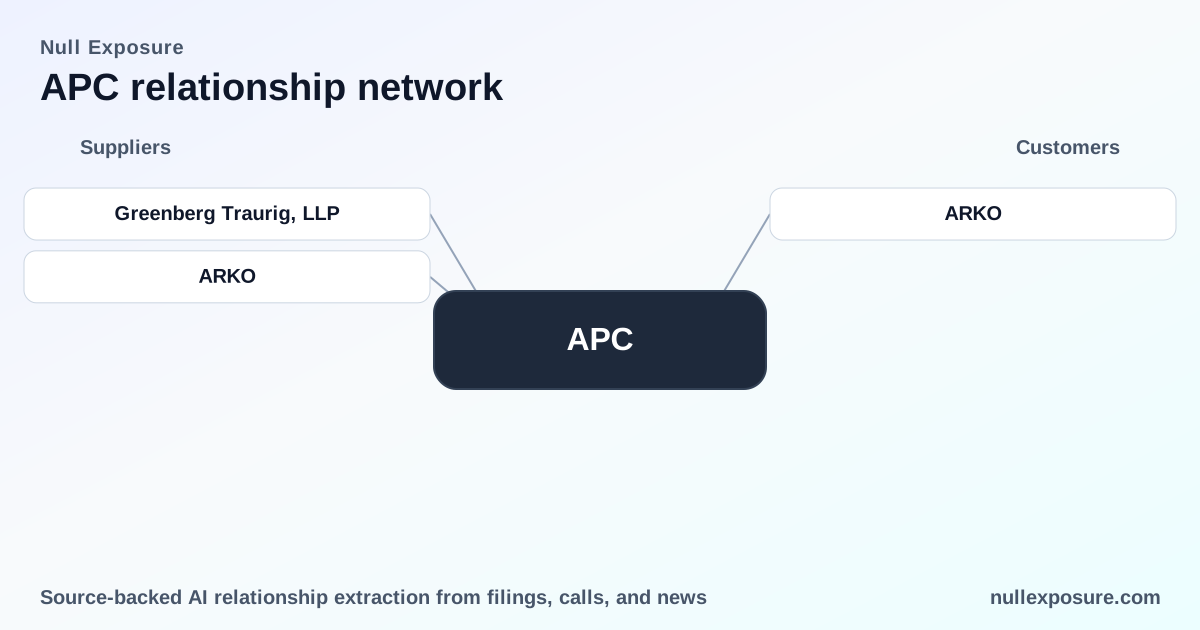
An investor-focused thesis: the supplier record tied to the APC symbol centers on a wholesale fuel distributor (ARKO Petroleum Corp) that monetizes through retail wholesale fuel sales and internal supply arrangements, and that monetization has been supported by recent corporate finance activity (a $200 million IPO) and a formalization of internal fuel distribution contracts. These developments create a supplier ecosystem that is highly internalized and legally instrumented, with implications for external supplier access and counterparty risk for operators and investors.
For direct inquiries or a deeper, validated supplier map, visit https://nullexposure.com/.
What the record actually documents — two legal notices and an internal supply agreement
The relationship records returned under APC contain three items: two announcements that a global law firm represented the wholesale distributor in its IPO, and one notice documenting a revised internal fuel distribution agreement. Each entry is summarized below.
-
Greenberg Traurig, LLP (Stocktitan report, Mar 9, 2026): The law firm represented ARKO Petroleum Corp. in connection with a $200 million initial public offering for the wholesale fuel distributor operating under Nasdaq: APC. This is a classic signal of transactional legal support tied to capital markets activity. (Source: Stocktitan news report, first seen Mar 9, 2026.)
-
ARKO (TradingView summary, Feb 13, 2026): ARKO Petroleum entered a Third Amended and Restated Fuel Distribution Agreement, described as consolidated and governing internal fuel supply arrangements, effective Feb 13, 2026, with an at-will termination posture. This contract formalizes internal supply governance and suggests greater central control over fuel distribution flows. (Source: TradingView news summary, Feb 13, 2026.)
-
Greenberg Traurig, LLP (Sahm Capital release, Feb–Mar 2026): A separate press distribution repeated that Greenberg Traurig represented ARKO Petroleum Corp. in the $200 million IPO, reinforcing that the firm served as lead legal counsel for the transaction. The duplicate circulation underscores the legal advisory role in the IPO. (Source: Sahm Capital press release, Feb 2026.)
Reconciling a material data mismatch investors must validate
The company profile in the supplier record lists Anadarko Petroleum Corporation as APC, but the relationship entries explicitly reference ARKO Petroleum Corp. (Nasdaq: APC) and its IPO activity in FY2026. This is a data mapping inconsistency that creates immediate due-diligence requirements: confirm ticker mapping, legal entity identifiers, and which corporate entity these supplier relationships actually attach to before relying on the record for contract negotiation or counterparty exposure analysis. Public filings and the IPO prospectus are the primary documents to reconcile entity-level risk.
Operating model signals and how they shape supplier economics
There are no formal “constraints” published in the supplier record; that absence is itself an actionable company-level signal. From the available relationship evidence you should treat the following as operational characteristics of the entity tied to these supplier records:
-
Contracting posture — centralized and internal: The Third Amended Fuel Distribution Agreement is framed as internal consolidation and is effective on an at-will basis, indicating the company prefers internal counterparty management rather than distributed external supplier contracts.
-
Supplier concentration — high internal concentration: Consolidation of fuel supply arrangements implies a limited addressable set of external suppliers for core fuel flows; external suppliers are likely transactional or niche rather than principal counterparties.
-
Criticality — core to operations: Fuel distribution is operationally critical for a wholesale fuel distributor; internal governance of that function raises the bar for continuity and supplier performance oversight.
-
Maturity — transactional maturation post-IPO: Legal counsel involvement in a $200 million IPO and the formalization of internal distribution contracts indicate a company transitioning to more standardized, investor-facing governance.
Those signals are presented at the company level because no constraint entries explicitly tag a specific counterparty in the constraints field.
For teams tracking commercial exposure, validate this posture using the IPO filings and the executed distribution agreement text where available. If you need a verified supplier map tied to legal entity identifiers, see https://nullexposure.com/.
Practical implications for investors and operators
-
For investors: The legal and contractual moves indicate management prioritizes consolidated control and investor-standard governance after the IPO. That lowers certain market governance risks but concentrates operational dependency inside the corporate group — monitor intercompany receivables, transfer pricing, and any revolving credit or liquidity facilities tied to the internal supply chain.
-
For external suppliers and procurement teams: Expect limited headroom for large-volume supply contracts unless you qualify as a strategic partner; the at-will internal distribution agreement implies the company can pivot supply sources without long-term external commitments.
-
For risk teams: The duplicate press coverage of the law firm’s role is a signal that the company has invested in high-quality external counsel for capital markets work — treat legal sophistication as a factor when negotiating dispute resolution or jurisdiction terms.
Next steps: what to validate and how to act
- Obtain and review the IPO prospectus and any related SEC filings for ARKO Petroleum Corp. to confirm the $200M structure and the legal counsel engagements.
- Request the executed Third Amended and Restated Fuel Distribution Agreement or a redacted summary to determine termination mechanics, pricing formulas, and intercompany settlement terms.
- Confirm ticker/entity mapping between APC in the supplier record and the actual legal entity you will contract with; mismatched entity data is a red flag for downstream operational mistakes.
If you want a validated supplier relationship map and entity-level reconciliation, start here: https://nullexposure.com/.
Conclusion — executive takeaway
Key takeaway: the supplier record under APC documents a company that has formalized internal fuel distribution and engaged top-tier legal counsel for an IPO, indicating a governance shift toward centralized, investor-grade contracting. For investors and operators, that translates into greater internal control, higher supplier concentration, and an imperative to validate entity mapping before acting on the record.
For a verified, transaction-ready supplier profile and entity reconciliation, visit https://nullexposure.com/ and request the detailed relationship pack.