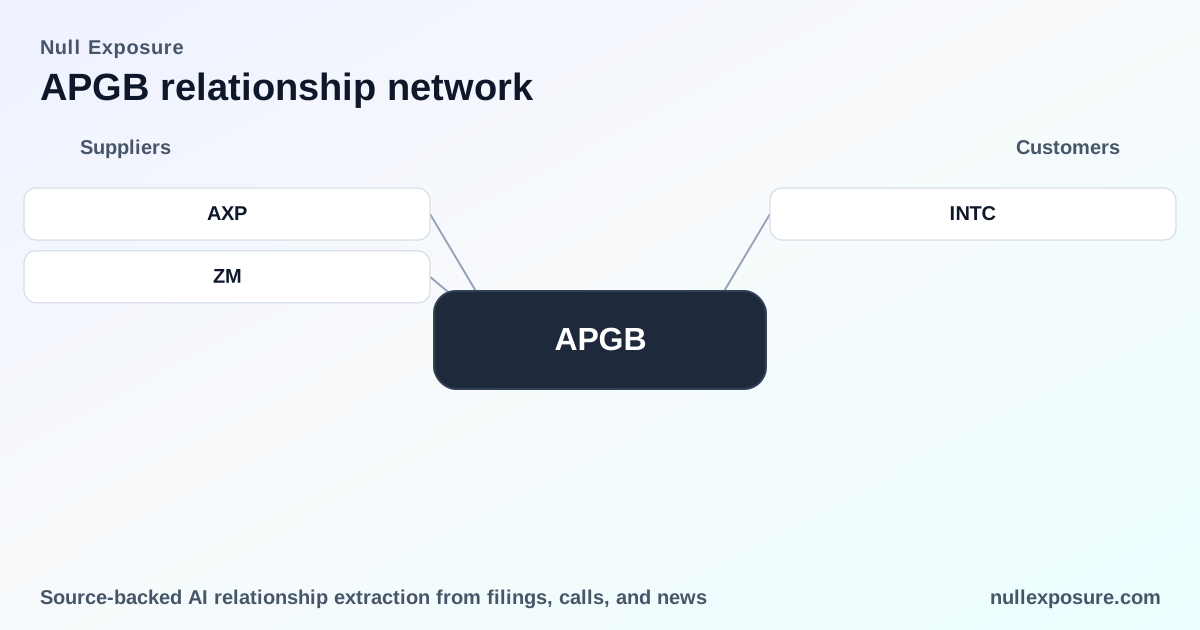
APGB supplier relationships: strategic brand and technology partners that shape revenue visibility
APGB operates as a supplier in the corporate travel and meetings ecosystem, monetizing through long-term commercial arrangements and technology integrations that convert brand licensing and platform partnerships into recurring revenue and cross-sell channels. For investors and operators, the key is that APGB’s commercial posture is built around multi-year commitments and high-touch collaboration with large enterprise partners, which both stabilizes cash flow and concentrates counterparty exposure.
For a quick gateway to deeper supplier analytics and ongoing monitoring, visit https://nullexposure.com/.
How APGB structures its economics and what that means for returns
APGB earns through negotiated supplier agreements that lock in brand use, distribution rights, and services integration. These arrangements create predictable revenue streams while requiring operational alignment with partners’ strategic priorities. The commercial model emphasizes:
- Duration over volume: contract terms skew long, favoring revenue visibility over short-term flexibility.
- High counterparty concentration: business flows through a small set of large partners rather than a fragmented base of small customers.
- Integration-led value capture: technology and co-branded offerings drive incremental monetization beyond base fees.
These are company-level signals about APGB’s operating model: its contracting posture is conservative and long-dated, concentration risk is material, partner relationships are operationally critical, and the supplier model is mature enough to prioritize negotiated stability over rapid expansion.
Why the Amex and Zoom links matter for valuation and risk
APGB’s public supplier relationships highlight two distinct commercial levers: brand licensing that sustains premium positioning, and tech partnerships that expand serviceable markets. Together, these relationships define both upside (cross-sell, pricing power) and downside (partner concentration, dependency on third-party platforms). For investors, the calculus is straightforward: stable multi-year deals increase free cash flow certainty, but concentration requires active counterparty monitoring and scenario planning.
Explore supplier risk dashboards and partner performance histories at https://nullexposure.com/.
American Express — long-term trademark and brand license
American Express provides an 11-year trademark license for use with the American Express Global Business Travel and American Express GBT Meetings & Events brands that will take effect on transaction close, creating an extended brand alignment window for APGB’s services. A Conference News report covering the transaction noted the 11-year agreement as a material element of the deal structure (Conference News, March 9, 2026; https://www.conference-news.co.uk/news/amex-global-business-travel-go-public-through-ps4bn-merger/).
Zoom — collaboration on meetings and events technology
APGB is partnering with Zoom to integrate Zoom Events into its meetings and events offering, positioning APGB to leverage Zoom’s event platform to broaden its meeting services for corporate customers. The same Conference News coverage quoted APGB’s collaboration with Zoom, highlighting a strategic focus on customer experience and joint technology-enabled services (Conference News, March 9, 2026; https://www.conference-news.co.uk/news/amex-global-business-travel-go-public-through-ps4bn-merger/).
Operational constraints and business-model characteristics investors should treat as ongoing facts
With no explicit constraints filed separately for APGB, present company-level signals are the best source of inference:
- Contracting posture — Long-term, negotiated: The disclosed 11-year brand arrangement signals a preference for extended commitments that deliver multi-year visibility into revenues.
- Concentration — High: The supplier model routes meaningful activity through a small set of large corporate partners, creating counterparty concentration that requires active credit and strategic monitoring.
- Criticality — Partner dependencies are core to go-to-market: APGB’s market access and customer perception depend on co-branded or integrated partner offerings rather than pure stand-alone distribution.
- Maturity — Commercially evolved: The presence of multi-year brand and technology deals is consistent with a mature supplier approach that prioritizes durable relationships and integration-led monetization.
These characteristics form the baseline for operational due diligence: investors should quantify cash flow sensitivity to partner renewals, stress-test scenarios for a loss of a major partner, and ensure governance and contractual protections (termination clauses, minimum guarantees, performance SLAs) are robust.
Risks and mitigants that move valuation
- Concentration risk is the principal valuation lever. While long-term deals improve predictability, losing or renegotiating a significant partner would compress revenue and raise customer-acquisition costs.
- Execution on integration matters. Technology partnerships deliver upside only when integrations are executed cleanly; vendor or implementation failures reduce expected cross-sell.
- Regulatory and brand control issues can constrain flexibility. Long brand licenses are powerful but can embed operational requirements that limit pricing or strategy shifts.
Mitigants include diversification of partner mix, contractual guarantees (minimum payments or revenue shares), and investing in proprietary capabilities that reduce dependency on any single partner.
Practical next steps for investors and operators
- Request the full commercial schedules and termination clauses for APGB’s major supplier agreements to quantify downside exposure and revenue covenants.
- Monitor partner health indicators—brand performance metrics for American Express and adoption and uptime metrics for Zoom Events—because partner degradation directly transmits to APGB.
- Model scenarios where key partner contributions are reduced by 25–50% to understand balance-sheet and liquidity implications.
For ongoing tracking and supplier intelligence, check the analyst resources at https://nullexposure.com/.
Bottom line
APGB’s supplier strategy trades volatility for visibility: long-dated brand licenses and technology collaborations create dependable revenue runs but concentrate risk in a few large partners. That mix is attractive for investors seeking stable cash flows, provided they apply active counterparty monitoring and stress testing as part of investment governance. For operators, the priority is rigorous partner management and incremental capability building to reduce reliance on any single external provider.
For detailed supplier reports and continuous alerts on APGB partner developments, go to https://nullexposure.com/.