Apollomics (APLM) supplier map: clinical CROs, listing logistics, and investor touchpoints
Apollomics is a development-stage biotechnology company that discovers and advances oncology therapies and monetizes through licensing, strategic partnerships, and eventual product commercialization and royalties. The company currently generates negligible product revenue, funds operations through equity and funding events, and outsources critical clinical development to regional CROs and licensing partners — a model that concentrates operational risk in service providers during the trial phase. If you track supplier risk or partner concentration for investment decisions, start your diligence at the company-level supply map on Null Exposure: https://nullexposure.com/.
How Apollomics runs its R&D engine and where suppliers fit in
Apollomics focuses on mono and combination oncology therapeutics with an organizational footprint in the US, China, and Australia. Near-term value depends on clinical progression and partner/license execution rather than product sales, so suppliers that run trials and support regulatory filings are functionally critical to the company’s path to value. The balance sheet and public metrics reflect this operating stage: market capitalization roughly $45 million, trailing revenue of about $198,000, and a deep net loss per share (diluted EPS around -52.8), which forces reliance on equity raises and partner-funded programs.
The supplier and partner list — who Apollomics works with now
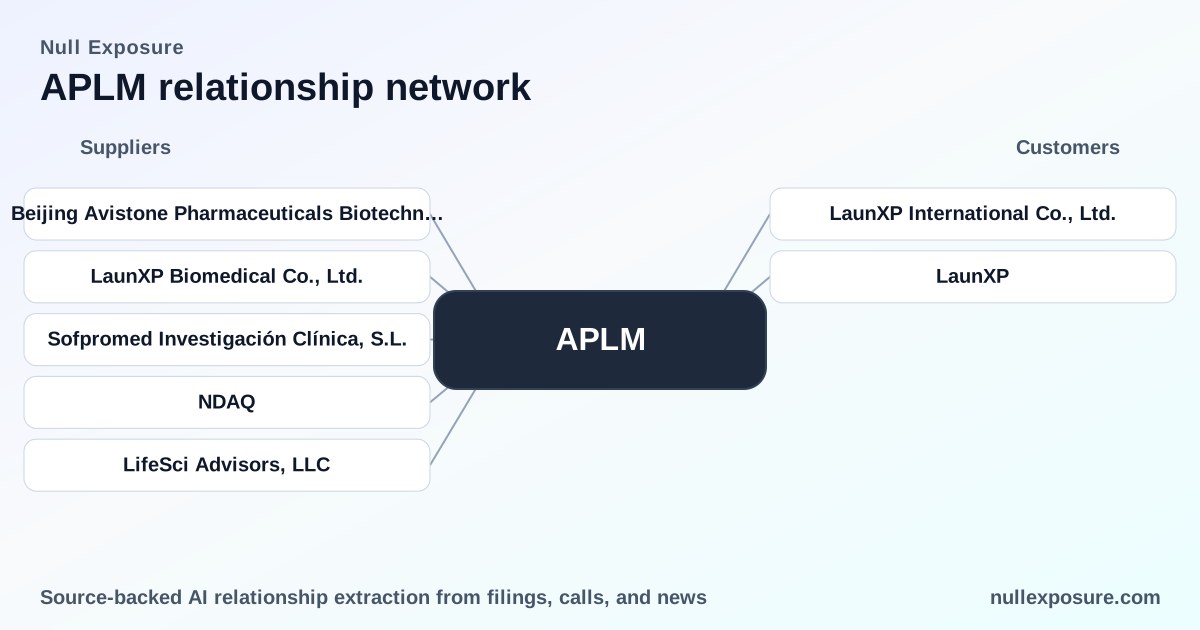
Below I cover every relationship returned in the source set. Each listing includes a plain-English summary and a concise source citation.
Beijing Avistone Pharmaceuticals Biotechnology Co., Ltd
Apollomics notified Beijing Avistone — its China CRO and licensing partner — about leadership transition and continuity of clinical trials following a new funding round; this indicates an active operational relationship for Chinese trial execution. According to a QuiverQuant report covering Apollomics’ operational update (first seen March 9, 2026), the company explicitly listed Beijing Avistone among the parties informed after the September 3 funding event.
LaunXP Biomedical Co., Ltd.
LaunXP is identified as Apollomics’ licensing partner in Taiwan and was likewise notified of management changes and ongoing trial continuity, signaling an active regional commercial or development collaboration in Taiwan. This detail is included in the same QuiverQuant operational update (fiscal period FY2025) that described the company’s outreach to licensing partners after new funding.
Sofpromed Investigación Clínica, S.L.
Sofpromed is cited as the CRO associated with the SPARTA trials of vebreltinib, indicating a European clinical operations role that supports Apollomics’ pivotal programs; the company confirmed communications with its CRO network during the operational update. The QuiverQuant report dated March 2026 lists Sofpromed among the CROs notified of leadership transitions and trial continuity.
Nasdaq Stock Market (NDAQ)
Apollomics’ ordinary shares were confirmed to continue trading on the Nasdaq under the symbol APLM after a share-class restructuring, reflecting a normal exchange relationship required for public liquidity and regulatory compliance. A company press release posted on Yahoo Finance notes the New Shares began trading on a split-adjusted basis on the Nasdaq at the open of trading on November 25, 2024.
LifeSci Advisors, LLC
LifeSci Advisors is referenced as the investor relations contact listed in Apollomics’ public release, serving as the company’s external IR interface for capital-markets engagement. The Yahoo Finance release includes investor contact details for LifeSci Advisors, LLC, identifying the firm as the conduit for investor communications.
Operating-model signals and what they imply for partner risk
There are no formal constraints reported in the supplier-relationship extraction set; treat that absence as a company-level signal rather than proof of stability. From observable behavior and public disclosures, the following operating-model characteristics are evident:
- Contracting posture: Apollomics outsources core clinical execution and regional licensing, indicating a contractor-first posture that reduces internal trial infrastructure but raises dependency on external CROs and licensing partners.
- Concentration: The company uses a small number of named CROs and regional partners across China, Taiwan, and Europe, producing moderate partner concentration that can create single points of failure for specific geographies or trials.
- Criticality: These supplier relationships are mission-critical — trial continuity and regulatory filings depend on third-party execution — so supplier disruption would have immediate programmatic and market consequences.
- Maturity: The relationships are operational (communications after funding and leadership changes), not merely exploratory licensing deals; this suggests transactional maturity sufficient for current trial-stage work but still sensitive to funding and governance shifts.
If you require a structured supplier-risk report for portfolio allocation or counterparty diligence, see the full supplier mapping at Null Exposure: https://nullexposure.com/.
Investment implications for operators and counterparties
Apollomics is a classic, high-beta biotech: little current revenue, a concentrated set of outsourced development partners, and valuation driven by clinical milestones and capital raises. For suppliers and operators, the commercial opportunity is accompanied by payment-risk tied to the company’s equity financing cadence and investor sentiment. Key takeaways:
- Upside: Providers that support successful trials stand to benefit from expanded programs and potential commercial licensing revenues.
- Downside: Suppliers are exposed to program stoppage risk if funding or governance issues emerge; the company’s reliance on equity and small revenue base amplifies that exposure.
- Governance signal: The company’s active outreach to CROs and licensing partners following a funding event is a positive signal of operational continuity and supplier management discipline.
Conclusions and recommended actions
Apollomics’ supplier footprint is compact, regionally diversified, and operationally essential to program success. Investors should treat partner execution risk as a first-order variable when modeling clinical timelines and valuation scenarios. Operators and suppliers should secure contractual protections — milestone-based payments, clear termination provisions, and defined continuity procedures — given the sponsor’s stage and funding profile.
For a deeper supplier-level breakdown and to monitor how these relationships evolve after corporate events, check the Null Exposure company dossier: https://nullexposure.com/. If you are building a watchlist for counterparties or need bespoke supplier risk analytics, begin with the Apollomics supplier map on our homepage: https://nullexposure.com/.
Overall, Apollomics’ path to value depends on successful clinical execution by its CROs and the execution of regional licensing partners; those relationships are both the company’s operational backbone and its most prominent execution risk.