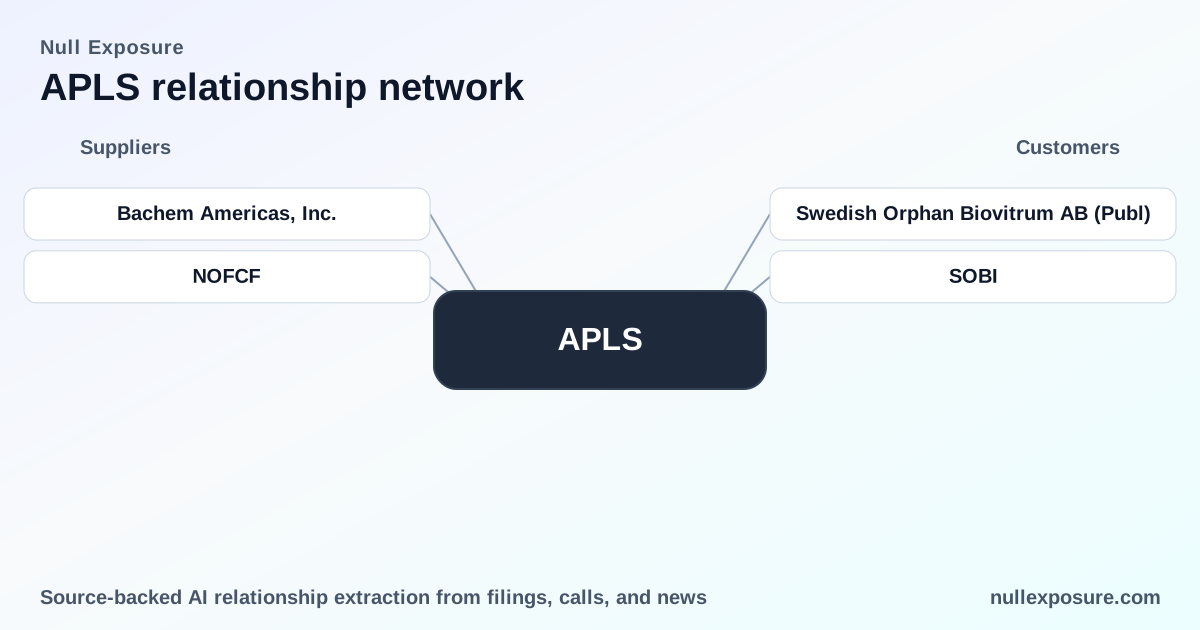
Apellis (APLS) supplier footprint: what Bachem and NOF mean for product delivery and investor risk
Apellis is a clinical-stage biopharma that develops and commercializes pegcetacoplan and related complement-inhibition therapies, monetizing through product sales and long-term supply-dependent manufacturing relationships for drug substance and key chemical components. The company locks in capacity through multi-year commercial supply agreements with third-party manufacturers and component suppliers; these contracts translate research-stage assets into repeatable production and recurring cost commitments. For investors and operators evaluating supplier risk, the key questions are counterparty concentration, contract tenor, and embedded non-cancelable obligations that affect cash flow flexibility.
For vendor diligence and contract analytics, see https://nullexposure.com/ for a centralized view of supplier commitments and filing evidence.
How the procurement architecture looks in practice
Apellis sources the active drug substance for pegcetacoplan and at least one essential chemical intermediate through commercial supply agreements rather than in-house manufacture. The arrangement positions suppliers as operationally critical partners: they are the firms that actually manufacture, package, and deliver the core inputs that enable commercialization.
- Long-term contracting posture. Apellis executes supply contracts with multi-year terms and automatic renewal mechanics, trading short-term flexibility for assured capacity. This structure supports launch and scale but anchors future cash commitments.
- Material, concentrated spend. The company describes these contracts as covering a “significant portion” of requirements for pegcetacoplan and discloses non-cancelable purchase obligations that aggregate to tens of millions of dollars, creating a mid-sized fixed-cost profile that matters to near-term cash planning.
- Outsourced manufacturing criticality. Suppliers are not peripheral vendors; they function as manufacturers and service providers whose continuity is central to product availability and regulatory supply chains.
If you evaluate supplier risk quantitatively and qualitatively, this combination of long-tenor agreements, material obligations, and outsourced manufacturing elevates counterparty importance in the operational risk profile. For diligence, examine contract termination mechanics, capacity guarantees, and redundancy plans. More supplier intelligence is available at https://nullexposure.com/.
The suppliers named in Apellis’s filings (what the company discloses)
Apellis’s FY2024 Form 10‑K discloses two primary supplier relationships relevant to pegcetacoplan supply: Bachem Americas, Inc. and NOF Corporation. Each relationship is presented below with a concise plain-English summary and filing reference.
Bachem Americas, Inc.
Apellis has a commercial supply agreement with Bachem under which it agreed to purchase a significant portion of its requirements for the pegcetacoplan drug substance, and the contract includes an initial term that extends through December 31, 2025 with automatic two‑year renewals thereafter unless earlier terminated. According to Apellis’s FY2024 Form 10‑K, this arrangement positions Bachem as a key manufacturer of the active drug substance for both systemic and intravitreal pegcetacoplan. (Source: Apellis 2024 Form 10‑K, fiscal year 2024 filing.)
NOF Corporation
Apellis has a commercial supply agreement with NOF to purchase activated polyethylene glycol (PEG), a component used in pegcetacoplan; NOF (through affiliate NOF America Corporation) manufactures and delivers PEG on a non‑exclusive basis in accordance with Apellis purchase orders, and the NOF agreement runs through December 31, 2025 unless terminated earlier. The 10‑K describes NOF as the supplier of a critical chemical intermediate and clarifies the non‑exclusive production arrangement. (Source: Apellis 2024 Form 10‑K, fiscal year 2024 filing.)
What the constraints in the filing mean for investors and operators
The company’s public disclosures include several operational constraints that affect capital allocation, supplier strategy, and execution risk:
- Long-term, partially automatic contract terms are explicit in the filings and reflect a deliberate choice to secure supply continuity at the expense of flexibility. This is a structural feature of Apellis’s operating model: securing manufacturing capacity to protect revenue delivery.
- Materiality and concentration are company-level signals: Apellis describes these agreements as covering a “significant portion” of pegcetacoplan needs, implying concentrated supplier exposure rather than broad, fungible sourcing.
- Manufacturing role and service provider posture: the suppliers function as both manufacturers and service providers, integrating into Apellis’s regulated supply chain and therefore subject to quality and regulatory continuity risk.
- Active stage and committed spend: the filings show active contracts and non-cancelable purchase obligations that aggregate to $45.7 million as of December 31, 2024, placing these suppliers in a mid-range spend band (roughly $10m–$100m in aggregate commitments). This is a company-level capital commitment that constrains short-term liquidity and bargaining leverage.
These constraints collectively imply operational criticality: supplier disruption, capacity failure, or regulatory noncompliance at either counterparty would have immediate implications for product supply and revenue realization.
Investment implications — concise takeaway for executives and investors
- Supply continuity is a core value-driver. Bachem and NOF are essential links in the pegcetacoplan supply chain; their contracts convert development-stage assets into delivered product and revenues.
- Counterparty concentration is material. The “significant portion” language and non‑cancelable commitments mean that supplier failure is not easily absorbed without costly contingency actions.
- Contract tenor reduces downside optionality but supports commercialization. Multi-year terms and renewal features protect launch plans and supplier capacity but create mid-term fixed costs that investors must price into liquidity models.
For deeper supplier coverage and contract-level details that matter to procurement and risk functions, visit https://nullexposure.com/.
Final read: how to act on this analysis
Operationally focused investors should prioritize questions about redundancy, capacity expansion rights, and termination penalties in any engagement with Apellis management. Procurement and supply-chain teams should seek visibility into quality audits, geographic diversification, and contingency inventory provisions. The combination of long-term contracts, material spend, and outsourced manufacturing makes supplier diligence an investment-level priority for Apellis.
For a consolidated view of these supplier commitments and the underlying filing evidence, go to https://nullexposure.com/ and review the supplier profiles and filing excerpts.