Aprea Therapeutics (APRE): supplier relationships and operational constraints that matter to investors
Aprea Therapeutics is a clinical-stage oncology company that develops small molecules to reactivate mutant p53 and advances assets through outsourced clinical development and contract manufacturing; the company currently monetizes primarily through equity financing and partnership activity while it progresses candidates toward proof-of-concept and potential commercialization. For investors and operators the core commercial model is straightforward: reduce fixed infrastructure by outsourcing R&D and manufacturing, fund development through capital raises and placement agents, and use external investor-relations channels to shape market access and liquidity. Learn more about supplier intelligence and relationship mapping at Null Exposure.
Operational posture and business-model constraints
- Aprea runs a deliberately lean operating model that relies on third-party service providers and contract manufacturers for critical development steps. Public disclosures describe active service agreements and master manufacturing arrangements, which means day‑to‑day execution is highly dependent on external vendors rather than internal scale.
- Concentration is an explicit risk: filings indicate the active pharmaceutical ingredient (API) and drug product are produced by a single contract manufacturer, and the company currently lacks redundant supply arrangements. The presence of a named master manufacturing agreement with Siegfried Hameln GmbH in regulatory excerpts confirms a single‑source manufacturing posture for key materials.
- Contracting is a mix of short-term, cancellable arrangements and multi-year manufacturing commitments. Aprea reports short-term office/lab leases and cancelable service contracts, which provides flexibility in overhead but increases sensitivity to supplier transitions for clinical-material manufacturing and distribution.
- Role diversification across suppliers is clear: third parties act as CROs, CMOs, clinical-data managers, waste-disposal firms and investor-relations vendors — the supplier base covers manufacturing and services segments and is classified in disclosures as active and operationally critical.
- Maturity: the relationships are operational (active clinical supply and services) rather than transactional marketing agreements — this is consistent with a company in clinical development rather than commercial launch.
Taken together, these constraints imply a trade-off: lower fixed cost and faster scalability in R&D versus concentrated operational risk around single-source manufacturing and dependence on external clinical and IR providers.
Middle-stage financing and IR channels — a running theme
Aprea’s recent disclosures show it engages placement agents and investor-relations firms when executing financing and messaging. That dual approach supports access to capital while managing market perception: placement agents accelerate private raises and boutique IR firms control narrative and investor outreach. For investors, that combination reduces friction for near-term financing but concentrates execution risk into a few external partners. If you want a mapped view of counterparties and their role in financing and operations, visit Null Exposure.
Relationship coverage: every supplier, documented
-
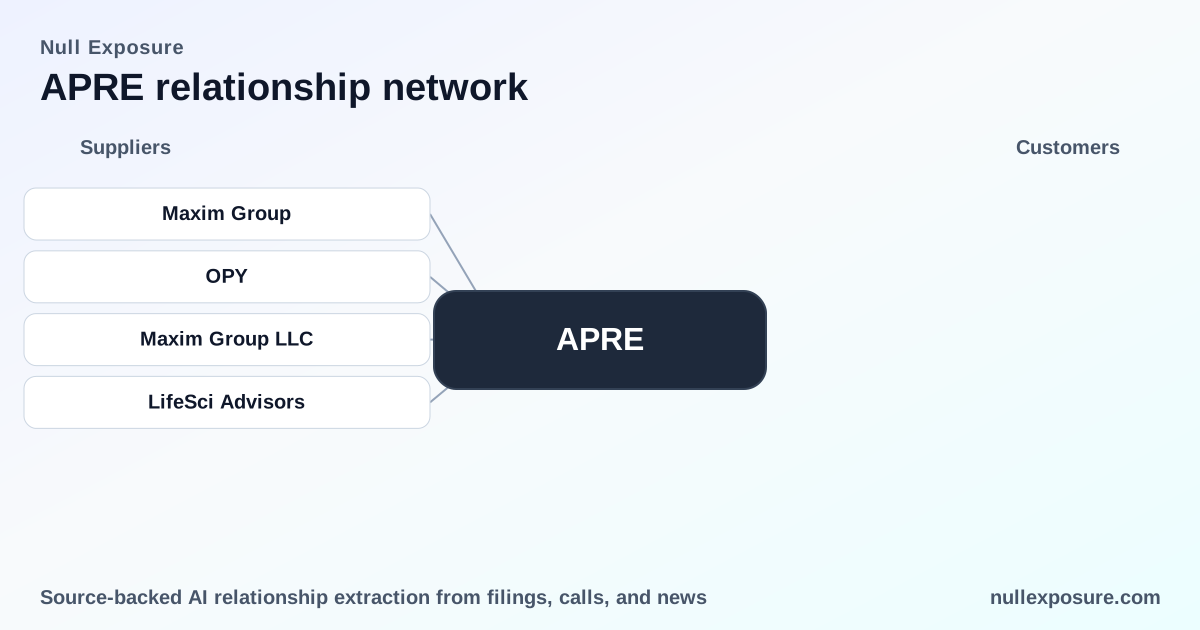
Maxim Group / Maxim Group LLC — Aprea appointed Maxim Group as placement agent and has used Maxim as sole placement agent for a private offering; the arrangement included a reported 7% cash fee plus expense reimbursement in FY2026 (TradingView reported the appointment on March 9, 2026) and coverage of the offering appeared in StockTitan in FY2025 stating Maxim served as sole placement agent. (TradingView, Mar 9, 2026; StockTitan, Mar 9, 2026)
-
Oppenheimer — Sell-side distribution and investor meetings are facilitated through Oppenheimer, with conference engagement arranged via Oppenheimer representatives; this underlines the role of a major broker in managing company access to investors at conferences (Bitget referencing Oppenheimer, Mar 9, 2026).
-
LifeSci Advisors — LifeSci Advisors functions as investor relations contact and public relations channel for Aprea, listed as the investor contact (Mike Moyer) across multiple press releases and the company’s SEC-related communications in early 2026; LifeSci has been cited in the company’s news releases about appointments and patent portfolio updates (GlobeNewswire, Feb 4, 2026; StockTitan coverage of SEC filings, Mar 9, 2026).
Constraints translated into investor intelligence
-
Short-term contracting posture: Aprea runs leases and certain vendor agreements that are cancelable on short notice and expire in the near term, which signals nimble overhead management but increases operational churn risk if vendors transition during critical trial stages. This is a company-level signal from lease and contract excerpts.
-
Critical single-source manufacturing: The company identifies a single contract manufacturer for API and drug product; regulatory excerpts name a Master Manufacturing and Supply Agreement with Siegfried Hameln GmbH. That single-supplier dependency is a materially critical operational constraint that elevates supply-chain risk for clinical timelines and cost predictability.
-
Active reliance on external service providers: Multiple excerpts describe service agreements with CROs, CMOs and specialized vendors (including a named Service Agreement with Syngene International Private Limited). Aprea is structurally a service‑dependent developer, which reduces capital intensity but increases vendor management as a core competency for operations and risk mitigation.
-
Segment focus: Supplier activity clusters into manufacturing and services — manufacturing for cGMP materials via CMOs and services covering clinical operations, data management and IT/cybersecurity support. These segments are mature in execution (active), not exploratory.
Implications for investors and operators
- Risk concentration: The single-manufacturer exposure is the principal operational risk that can impact timelines and cash use if a supply disruption occurs. Underwriters and operators should price in contingency costs for alternative sourcing or additional quality audits.
- Financing cadence: The use of a placement agent with a meaningful cash fee and active IR channels indicates an ongoing need to raise capital; investors should expect future financing events and monitor placement economics and dilution patterns.
- Operational governance is decisive: Given outsourced execution, the company’s ability to manage vendor performance, quality compliance and contingency planning is as important as the science. Strong vendor contracts and redundancy plans materially de‑risk the thesis.
If you are evaluating counterparty exposure or preparing diligence on Aprea, get the full relationship map and contract‑level signals at Null Exposure.
Conclusion: prioritize supply redundancy and financing visibility
Aprea’s model concentrates scientific execution externally while capitalizing through placement agents and targeted sell-side coverage. Key investor action points are to monitor single‑source manufacturing risk (Siegfried), placement activity (Maxim), and public messaging channels (LifeSci and broker coverage) — these are the levers that will determine near‑term cash runway and development cadence. For a deeper counterparty and constraint analysis tailored to investment diligence, visit Null Exposure for a mapped supplier view.