Aptevo Therapeutics (APVO): Supplier relationships, financing partners, and operational constraints
Aptevo Therapeutics is a clinical-stage immuno-oncology company that develops multispecific anti-cancer biologics and monetizes through partnerships, licensing milestones, and capital markets financings. The business generates no meaningful product revenue today and funds R&D and trials through equity placements, placement agents, and strategic co‑development agreements; its short-term value drivers are clinical progress and access to committed financing lines. For a focused supplier- and financing-risk view, start here: https://nullexposure.com/.
How Aptevo makes progress and where value is realized
Aptevo’s operating model centers on advancing a pipeline of multispecific therapeutics in collaboration with external partners and third‑party manufacturers. The company outsources a substantial portion of preclinical and clinical work to CROs and relies on third‑party manufacturing and licensed platform technologies, which reduces fixed-cost burden but increases operational dependency and regulatory execution risk. Financing is a persistent theme: equity lines, placement agents and distribution agreements supply runway but also create potential dilution and fee drag.
The active counterparties that shape financing and development
Below are the counterparties surfaced in recent reporting and their explicit roles for Aptevo.
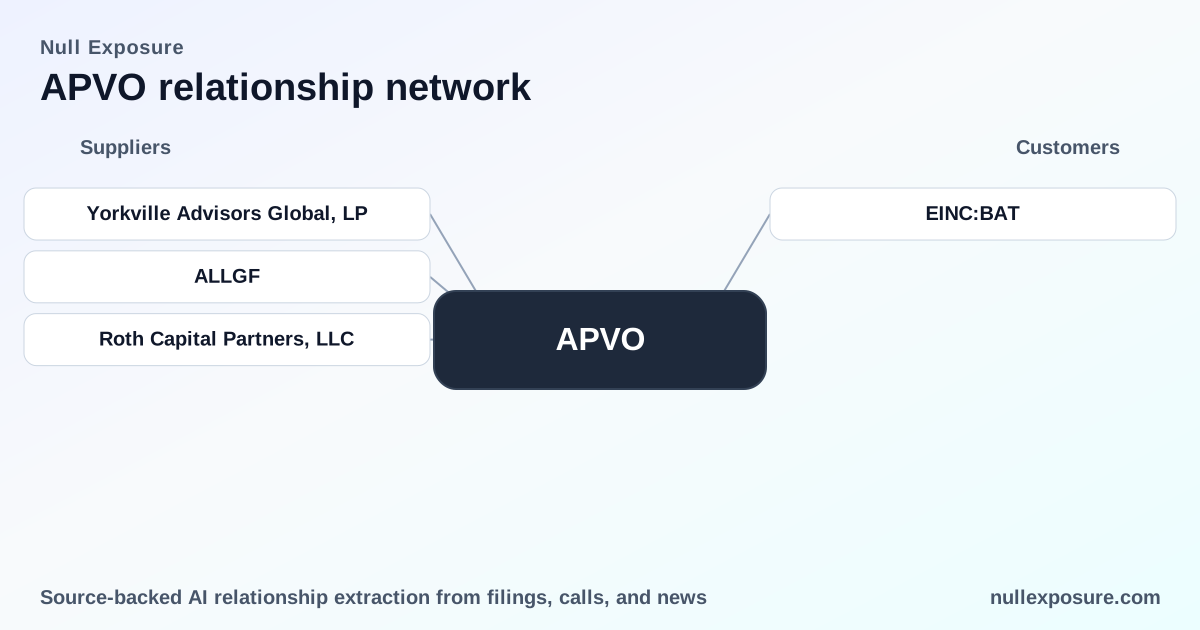
- Yorkville Advisors Global, LP — Aptevo secured a $60 million equity line of credit (ELOC) with Yorkville to strengthen liquidity while advancing its multispecific portfolio, providing near-term financing optionality to support clinical programs. According to an AccessNewswire release dated March 9, 2026, the ELOC was described as a key step to “strengthen the Company’s financial flexibility.”
- Alligator Bioscience (ALLGF) — Aptevo is co‑developing ALG.APV‑527, a bispecific conditional 4‑1BB agonist that requires simultaneous binding to 4‑1BB and 5T4, and this candidate was evaluated in a Phase 1 trial for multiple solid tumors. The joint development relationship is documented in the company’s March 2026 release describing the candidate’s design and Phase 1 evaluation.
- Roth Capital Partners, LLC — Roth acted as exclusive placement agent on a recent financing that yielded net proceeds of about $7.45 million after payment of a 7.0% placement fee, underscoring the pattern of capital raises executed through investment banking intermediaries. This detail appears in the company’s SEC-related filing collection as reported on StockTITAN (March 2026).
What these relationships mean for investors
The Yorkville ELOC materially changes the near-term financing profile: it reduces immediate cash-pressure risk but preserves the company’s reliance on equity issuance as the primary funding mechanism. The Alligator co‑development partnership is strategically important because it shares development burden and validates the multispecific approach, but clinical outcomes will determine value creation or impairment. Roth’s placement highlights the ongoing need for capital and the recurring fees and dilution that accompany transaction-driven financing.
For deeper supplier and counterparty intelligence, visit https://nullexposure.com/.
Operational constraints that determine execution risk
Aptevo’s public disclosures reveal several company‑level constraints that define supplier posture, concentration and criticality:
- Long-term commitments: Aptevo holds an operating lease for its Seattle office and lab extended through April 2030 with options to extend further; the firm recorded lease liabilities through April 30, 2030, indicating a sustained fixed‑cost commitment to its current site. This lease structure signals a mature facility commitment and operating footprint in Seattle.
- Geography and concentration: The company incurs expenses primarily in North America and runs operations on a consolidated basis, which concentrates operational and regulatory exposure regionally.
- Manufacturing criticality: Management warns that inability to develop compliant manufacturing processes will delay trials and impair financial performance, making contract manufacturers a critical single point of failure for clinical progress.
- Licensing and IP posture: Aptevo both licenses technology and grants licenses; it holds non‑exclusive licenses to platforms such as OmniAb transgenic rodents and has research/commercial options with Lonza Group AG for CHO cell lines and the GS system—this shows dependence on licensed platform technologies to advance biologics.
- Financing and distribution arrangements: The company uses distribution and placement arrangements to raise capital, evidenced by an Equity Distribution Agreement with Piper Sandler & Co. and a Placement Agent Agreement with A.G.P./Alliance Global Partners, indicating an active, fee‑based capital‑markets strategy.
- Service provider reliance: A substantial portion of preclinical and all clinical studies are performed by CROs, and critical clinical data is hosted by third‑party vendors required to be GxP compliant—this underscores operational reliance on external service providers.
None of these constraints is hypothetical—each is disclosed in corporate filings and press releases and spells out a supplier posture that is externally oriented and financing‑dependent.
Contracting posture, concentration and maturity explained
- Contracting posture: Outsourced, partnership‑centric. Aptevo contracts CROs, CMOs and platform licensors rather than building full internal capabilities, which keeps fixed costs low but increases managerial and counterparty risk.
- Concentration: Moderate to high—operations and suppliers are concentrated in North America, and the company names a handful of critical licensors and vendors (OmniAb, Lonza) that materially influence development timelines.
- Criticality: High for manufacturing and data vendors. Failure to secure compliant manufacturing or validated data hosting will delay trials and revenue generation.
- Maturity: The company is in a clinical‑stage operational maturity—facilities and long-term leases are in place, but revenue generation remains immature, and cash strategy centers on equity financings and milestone/partner payments.
Key risks and tradeoffs investors should monitor
- Dilution vs runway: The Yorkville ELOC improves runway but is equity‑based financing—monitor draw rates and conversion mechanics.
- Trial execution and manufacturing: Manufacturing scale‑up and regulatory compliance are critical; setbacks will directly affect timelines and valuation.
- Fee drag from capital markets: Use of placement agents and distribution agreements imposes fees that reduce net proceeds from financings.
- Partner dependency: Co‑development with Alligator and licensing arrangements with Lonza and OmniAb create upside if trials succeed, but also concentrate counterparty risk.
For a full supplier-risk profile and ongoing updates, check https://nullexposure.com/.
Bottom line — where value and risk converge
Aptevo is a classic small-cap clinical biotech: value is binary and driven by trial outcomes and access to capital. The Yorkville equity line and recent placements temporarily mitigate cash risk, but they preserve Aptevo’s dependence on market-based funding and create potential dilution. Co‑development with Alligator is strategically positive for advancing ALG.APV‑527, yet manufacturing and CRO dependencies create execution-critical risk that investors must price into the equity.
Actionable watchlist: monitor Yorkville draw activity, Alligator/APV‑527 clinical milestones, manufacturing qualification updates, and subsequent placement or distribution transactions. For ongoing monitoring of supplier exposures and counterparty risk, visit https://nullexposure.com/.