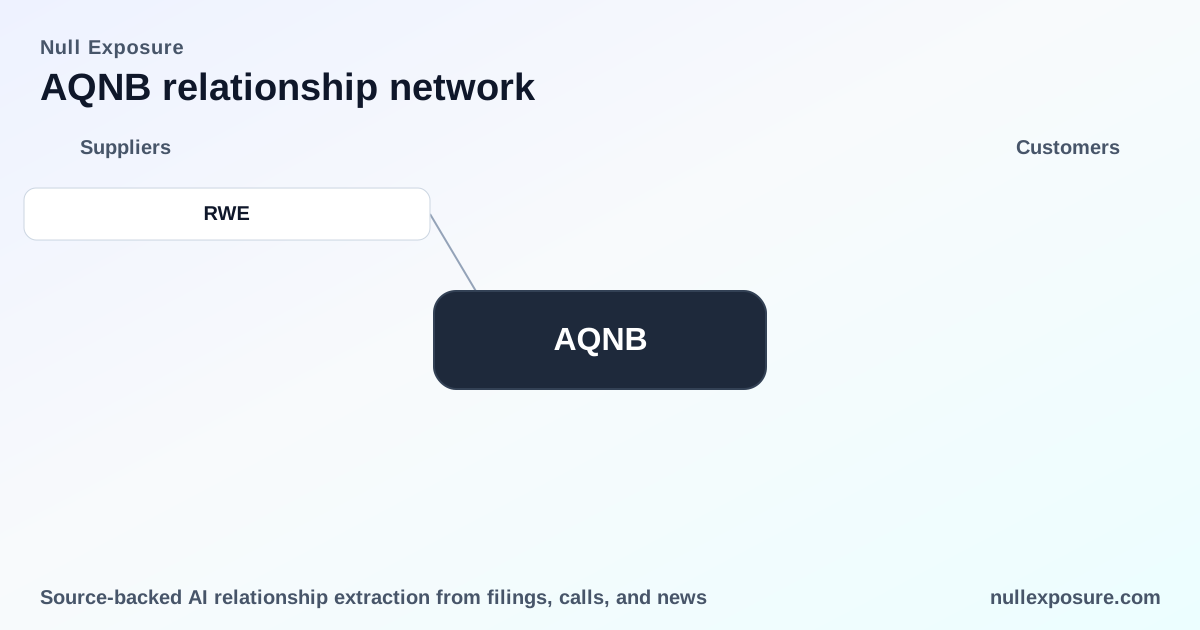
Algonquin Power & Utilities (AQNB): supplier relationships, strategic signal and the RWE purchase
Algonquin Power & Utilities Corp (AQNB) operates as an owner-operator of renewable generation and regulated utility businesses across North America, monetizing through asset-level electricity sales and regulated utility tariffs while growing scale through acquisitions and strategic minority/majority investments. Revenue streams are driven by operating assets (wind, solar, hydro) and regulated utility cash flows, and the company accelerates capacity and market access by transacting with large project owners and developers. For investors evaluating supplier and counterparty exposure, the critical lens is how Algonquin sources assets, who it partners with, and the maturity and contractual profile of those assets. Learn more about how we track relationships and exposures at https://nullexposure.com/.
Quick take: what the RWE transaction signals to investors
On December 14, 2020, RWE announced a deal with an Algonquin subsidiary to transfer a 51% interest in four onshore wind farms in Texas with a combined pro-rata installed capacity of 439 MW. This is a clear example of Algonquin’s execution strategy: acquire operational, utility-scale renewable assets from strategic sellers to expand cash-generating capacity. According to RWE’s press release dated December 14, 2020, the sale is structured as a majority stake transfer into an Algonquin subsidiary, reflecting a buy-and-operate posture rather than greenfield development.
Source: RWE press release, December 14, 2020 — https://www.rwe.com/en/press/rwe-ag/2020-12-14-rwe-to-divest-stake-of-51-procent-in-4-onshore-wind-farms-in-texas-to-algonquin/
The RWE relationship, in plain English
- RWE sold a 51% stake in four Texas onshore wind farms to an Algonquin subsidiary; the assets total 439 MW of installed capacity, and the transaction transfers majority operational ownership to Algonquin. According to RWE’s announcement (December 2020), this is an acquisition of operating assets rather than development-stage projects. https://www.rwe.com/en/press/rwe-ag/2020-12-14-rwe-to-divest-stake-of-51-procent-in-4-onshore-wind-farms-in-texas-to-algonquin/
This single documented supplier/partner relationship in the public record demonstrates Algonquin’s preference for purchasing established generation capacity from large incumbents and integrating those assets into its portfolio.
How this one deal maps to Algonquin’s operating model and business constraints
Algonquin’s corporate description emphasizes a diversified portfolio across wind, solar and hydro, plus regulated utilities, and disciplined capital management. From that base, the RWE transaction communicates several company-level operating characteristics investors should treat as persistent signals:
-
Contracting posture — acquisition-led growth. Algonquin executes growth primarily through purchases of operating assets and equity stakes, using subsidiary vehicles to hold newly acquired projects; the RWE deal is textbook execution of that posture. This implies a supplier counterparty strategy focused on large developers and incumbent utilities rather than building exclusively from the ground up.
-
Concentration and counterparty mix — limited single-supplier exposure so far. With the public record showing a direct transaction with RWE, Algonquin demonstrates the ability to transact with major global players. The current relationship set does not show concentration across many single suppliers; however, each large purchase increases importance of select counterparties in deal flow and asset sourcing.
-
Criticality — assets add immediate operating cash flow. Acquiring majority stakes in operating wind farms converts seller relationships into revenue-generating assets on closing, improving near-term cash flow and payout coverage for investors. The RWE farms’ 439 MW scale indicates material capacity and potential revenue contribution once integrated.
-
Maturity profile — preference for operational assets. The RWE farms were operational at sale, highlighting a bias toward established, de-risked generation into Algonquin’s portfolio rather than early-stage development exposure.
These signals are company-level and derive from the documented RWE transaction and Algonquin’s public positioning.
Strategic implications for investors and operators
- Growth via third‑party deal flow. The RWE sale shows Algonquin sources scale by buying assets from large renewable companies; investors should model inorganic growth alongside regulated utility cash flows.
- Execution and integration risk replace construction risk. When the company buys operational assets, the primary execution risk centers on integration, operational performance, and any legacy contractual obligations rather than construction completion.
- Counterparty relationships are strategic assets. The ability to transact with global players like RWE is a competitive advantage that supports continued portfolio expansion and deal origination.
If you evaluate AQNB for portfolio inclusion or supplier due diligence, factor in the company’s M&A cadence and the quality of counterparties it attracts. For ongoing monitoring of supplier relationships and exposure analysis, start your research at https://nullexposure.com/.
How investors should engage: a practical checklist
- Confirm whether acquired assets are supported by long-term offtake agreements or primarily merchant-exposed, and assess the revenue stability impact on distributable cash flow.
- Review integration plans and operational KPIs post-close for any purchased assets (availability, O&M contracts, interconnection status).
- Track the universe of sellers and counterparties — repeat transactions with the same large sellers indicate a stable pipeline; one-off deals suggest opportunistic purchases.
Key risk factor: a heavy reliance on third-party acquisitions concentrates exposure to sellers’ ability to transact and to the terms of legacy contracts attached to acquired assets. Verify the contractual profile of each acquisition to understand revenue tenure and counterparty obligations.
Complete supplier relationship log (public record)
This section lists every supplier or partner relationship captured for AQNB in public sources:
- RWE — RWE agreed to sell a 51% stake in four onshore wind farms in Texas (totaling 439 MW) to an Algonquin subsidiary; the transaction moves majority ownership and operational control into Algonquin’s portfolio. Source: RWE press release, December 14, 2020 — https://www.rwe.com/en/press/rwe-ag/2020-12-14-rwe-to-divest-stake-of-51-procent-in-4-onshore-wind-farms-in-texas-to-algonquin/
This is the complete supplier/partner set found in the examined public records for AQNB.
Final view and next steps
Algonquin’s profile is operationally oriented and acquisition-driven, with the RWE transaction illustrating a repeatable playbook: buy operational scale from established developers, fold assets into a diversified renewables-and-regulated-utilities portfolio, and monetize through ongoing electricity and tariff revenue. For investors tracking counterparty exposure and acquisition quality, prioritize analysis of contractual revenue profile and post-acquisition integration outcomes.
If you want a structured briefing on Algonquin’s evolving supplier network or ongoing monitoring of counterparties and transactions, start here: https://nullexposure.com/. For regular updates and intelligence on supplier counterparty risk across the energy sector, visit https://nullexposure.com/ to subscribe and set alerts.