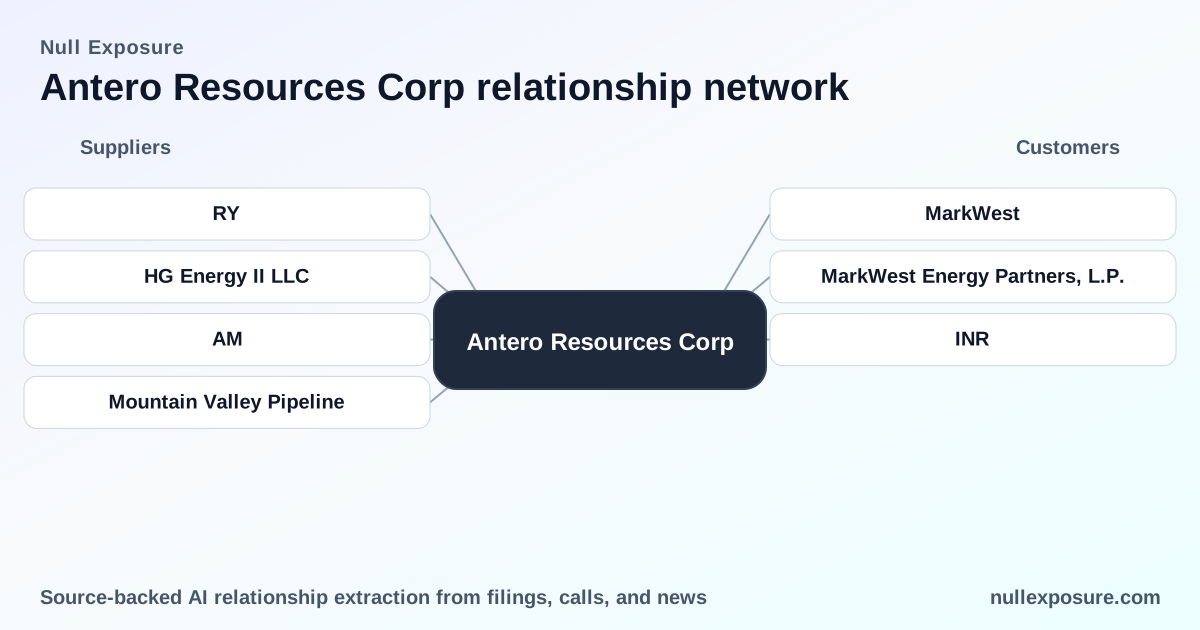
Antero Resources (AR) — supplier network, financing posture, and midstream dependence
Antero Resources operates as an Appalachian-focused natural gas and liquids producer that monetizes through commodity sales and an integrated midstream relationship while using external credit and targeted acquisitions to scale production and egress. The company funds growth and portfolio consolidation with unsecured bank facilities and strategic asset purchases, and it internalizes a portion of midstream capacity through a related midstream provider to secure takeaway and water handling capacity. For investors and operators, the question is straightforward: how durable and concentrated are Antero’s supplier and financing relationships, and what do they imply for cashflow volatility and operational leverage? Learn more at https://nullexposure.com/.
High-level takeaways for capital allocators and operators
Antero’s supplier relationships reveal a clear operating model: heavy reliance on long-term midstream contracts, concentrated regional dedication, and material multi-year contractual obligations. That architecture reduces near-term egress risk but increases counterparty and concentration risk around midstream providers and the financing banks that underwrote recent acquisitions.
- Contracting posture: The company runs with long-dated firm transportation and service agreements that extend into the 2030s–2050s, underpinning predictable physical access but locking in minimum volumes and commitments.
- Concentration and geography: Substantially all current and future acreage in West Virginia, Ohio and Pennsylvania is dedicated to the company’s preferred midstream provider, creating a regional concentration that both simplifies logistics and amplifies single‑counterparty exposure.
- Criticality and maturity: Midstream services (gathering, compression, processing, water handling) are critical to production realization and are provided under long-term commercial arrangements, reflecting an infrastructure-centric operating model.
- Financial scale: Long-term contractual minimums are large in aggregate — the company reports multi‑billion dollar contractual obligations — implying high structural spend and materiality in supplier relationships.
Read more company-level context at https://nullexposure.com/.
Capital relationships — who financed the deal and how
Royal Bank of Canada (RBC): Antero secured a $1.5 billion unsecured Term Loan A from RBC, maturing February 3, 2029, as part of its financing package to boost liquidity and partially fund acquisitions. TradingView reported the $1.5B facility on February 3, 2026 (news item published March 2026): https://www.tradingview.com/news/tradingview:489dec5b8ceea:0-key-facts-antero-resources-secures-1-5b-loan-files-form-8-k/. InsiderMonkey and other market outlets corroborate that RBC participated in a new unsecured credit agreement used to help fund the purchase (InsiderMonkey commentary, March 2026): https://www.insidermonkey.com/blog/is-antero-resources-ar-one-of-the-best-oil-and-gas-stocks-to-buy-1691332/.
M&A and asset sellers — what Antero bought and the immediate consequences
HG Energy II LLC: Antero completed the acquisition of upstream assets from HG Energy II LLC for approximately $2.8 billion in cash plus assumption of the seller’s commodity hedge book, consolidating additional Appalachian production and replacing third‑party supply commitments. Rigzone reported the completion of the $2.8B Utica acquisition on February 24, 2026: https://www.rigzone.com/news/infinity_completes_12b_utica_acquisition_from_antero-24-feb-2026-183058-article/. InsiderMonkey’s February/March coverage likewise summarized the transaction terms and funding approach (InsiderMonkey, March 2026): https://www.insidermonkey.com/blog/antero-resources-corporation-nysear-q4-2025-earnings-call-transcript-1695321/.
Midstream integration — the single most operationally critical supplier
Antero Midstream (AM): Antero Resources receives core gathering, compression, processing, water handling and fractionation services from Antero Midstream under long‑term contracts, and in many places has dedicated substantially all current and future acreage in West Virginia, Ohio and Pennsylvania to that provider. Management also highlighted a new $20,000,000 infrastructure buildout that expands dry gas delivery and egress for local demand and new power/data center customers (earnings release / transcript reporting, Q4 2025; Globe and Mail and InsiderMonkey coverage, March 2026): https://www.theglobeandmail.com/investing/markets/stocks/AR-N/pressreleases/188884/antero-resources-ar-q4-2025-earnings-transcript/ and https://www.insidermonkey.com/blog/antero-resources-corporation-nysear-q4-2025-earnings-call-transcript-1695321/. The constraints filing confirms that Antero Midstream’s services are provided under long-term contracts and that these assets are fundamentally infrastructure-oriented and service-provider in nature.
Egress and offtake relationships — where production hits the market
Mountain Valley Pipeline (MVP): Management highlighted early sales and RFPs tied to the Mountain Valley Pipeline, noting the company’s ability to supply gas to new regional power projects and data centers off MVP, which reflects deliberate commercial positioning to capture local incremental demand (Q4 2025 earnings remarks, Globe and Mail transcript): https://www.theglobeandmail.com/investing/markets/stocks/AR-N/pressreleases/188884/antero-resources-ar-q4-2025-earnings-transcript/.
What investors and counterparty managers should watch
The corporate supplier map creates a predictable but concentrated risk profile. Key risks and monitoring priorities:
- Funding concentration and leverage: the use of unsecured bank facilities (RBC term loan and broader unsecured credit agreements) to fund a large, cash acquisition increases near-term refinancing and covenant sensitivity. Track upcoming maturities (the $1.5B loan matures in 2029) and any covenant terms disclosed in Form 8‑K/credit agreements.
- Midstream single‑point criticality: dedication of Appalachian acreage and long-term service contracts with Antero Midstream reduce egress volatility but concentrate operational risk — a disruption to midstream capacity or changes in counterparty economics would materially impact realized volumes.
- Integration and hedge assumption: acquiring HG Energy II production along with its hedge book transfers both production upside and hedging liabilities; operators should model both cashflow and hedge rollover exposures.
- Material contractual commitments: the company reports multibillion-dollar minimum contractual obligations across firm transportation and service arrangements, creating high structural spend that constrains optionality.
Recommended monitoring items:
- Track credit amendments and any additional lender groups beyond RBC in 2026 filings.
- Monitor Antero Midstream capex and delivery performance on the $20M buildout and water handling capacity.
- Review hedge book terms and scheduled roll dates as part of post-acquisition integration.
Take a closer look at supplier exposure modeling and counterparty risk scenarios at https://nullexposure.com/.
Bottom line
Antero’s supplier architecture is intentionally infrastructure‑heavy and long-dated: it trades some commercial flexibility for secured egress and scale, and it funded a major asset purchase with unsecured bank financing. For investors and operators, the tradeoffs are clear — stable pathways to market coupled with elevated counterparty and refinancing concentration. Active surveillance of midstream performance, hedge roll dynamics, and near-term financing windows will be decisive for assessing the company’s cashflow and operational resilience. Further analysis and continuous supplier intelligence are available at https://nullexposure.com/.