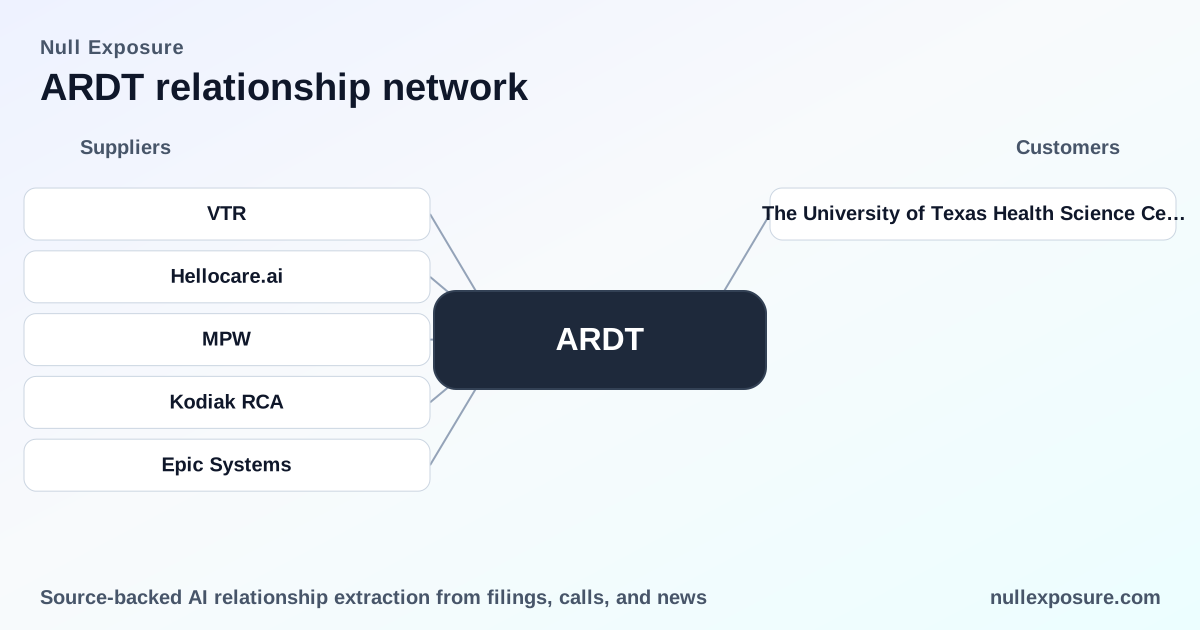
Ardent Health Partners (ARDT): Supplier relationships that determine margins and operational risk
Ardent Health Partners operates a network of acute-care hospitals and outpatient facilities and monetizes through patient services, long-term property leases, and outsourced revenue-cycle and technology relationships that convert clinical volume into cash. The company's margin profile is heavily shaped by long-duration real-estate leases and a concentrated revenue-collection model, while recent vendor partnerships in AI and revenue automation are positioned to influence short‑term collectability and long‑term efficiency. If you are evaluating supplier risk or partner dependency at Ardent, view the company’s counterparty map through the lens of fixed-cost obligations, outsourced cash collection, and platform modernization. Learn more at https://nullexposure.com/.
Why these supplier relationships matter for an investor
Ardent’s operating model is defined by long-term contracting posture, concentrated collection channels, and meaningful fixed obligations. The company’s disclosures and news filings show multiple long-duration leases, large annual rent payments (hundreds of millions), and a revenue-collection model that funnels the vast majority of cash receipts through a single master services relationship. Those three characteristics combine to make supplier performance both a margin driver and a liquidity risk vector.
- Contracting posture: Ardent holds multi‑decade leases on hospital real estate and medical office buildings, creating predictable but inflexible cash outflows.
- Concentration and criticality: A dominant master services agreement handles roughly nine-tenths of collections, making third-party revenue-cycle execution material to free cash flow.
- Maturity and spend scale: Rent expense and lease obligations are large and recurring—rent payments to REITs are reported in the low hundreds of millions annually—so supplier distress or renegotiation will immediately affect operating margins.
For an active supplier-risk review or counterparty due diligence, use these signals to prioritize leasing counterparties and revenue‑cycle vendors. If you want structured exposure maps and supplier scoring for healthcare counterparties, visit https://nullexposure.com/ for tailored reports.
Counterparty breakdown — what each relationship does and why it matters
Ventas, Inc. (VTR)
Ardent leases a material subset of its hospitals from Ventas under a long-term master lease—described as a 20‑year agreement with renewal options—and records significant annual rent payments to Ventas that affect adjusted EBITDAR and operating cash flows. Source: Ardent 8‑K filing (March 2026) via StockTitan (https://www.stocktitan.net/sec-filings/ARDT/8-k-ardent-health-inc-reports-material-event-62f3c22ccffd.html).
Medical Properties Trust, Inc. (MPW)
Ardent uses a lease arrangement with MPT for at least one major facility (Hackensack Meridian Mountainside Medical Center) and includes these REIT rents when reconciling Adjusted EBITDAR, signaling that MPT lease payments are operationally significant. Source: Ardent 8‑K filing (March 2026) via StockTitan (https://www.stocktitan.net/sec-filings/ARDT/8-k-ardent-health-inc-reports-material-event-62f3c22ccffd.html).
Hellocare.ai
Ardent selected Hellocare.ai to implement AI‑assisted virtual care and enterprise telehealth capabilities, a vendor relationship highlighted repeatedly in February–March 2026 press coverage; the partnership is positioned as a technology modernization step that will affect care delivery and patient-flow economics. Source: MarketScreener reporting (Feb 25, 2026) (https://www.marketscreener.com/news/ardt-write-offs-hagens-berman-investigating-claims-against-ardent-health-ardt-over-alleged-97m-a-ce7e5cd9de88f126) and related MarketScreener summaries.
Kodiak RCA
Ardent implemented the Kodiak RCA net‑revenue platform to provide management with more precise accounts‑receivable collectability signals and faster visibility into payor denial and payment trends, directly linking this vendor to improvements in A/R provisioning and working capital management. Source: Shareholder notices and press (March 2026) via MarketScreener / AccessWire (https://www.marketscreener.com/news/ardt-shareholder-action-reminder-faruqi-faruqi-llp-reminds-ardent-health-ardt-investors-of-securitie-ce7e5cd8db80ff26; https://www.accessnewswire.com/newsroom/en/business-and-professional-services/ardt-shareholder-notice-faruqi-and-faruqi-llp-reminds-ardent-hea-1142311).
Epic Systems
Ardent’s integrated health information system is provided by Epic Systems, an enterprise EMR platform whose implementation underpins clinical operations, coding, and billing flows that feed the revenue‑cycle process. Source: Ardent 8‑K filing (March 2026) via StockTitan (https://www.stocktitan.net/sec-filings/ARDT/8-k-ardent-health-inc-reports-material-event-62f3c22ccffd.html).
Operating constraints and what they imply for strategy
Ardent’s disclosures produce clear operating constraints that investors must fold into valuation and scenario work:
- Long-term lease commitments are explicit and contractually binding. The company reports weighted‑average remaining terms measured in years and master leases with renewal options for decades; this creates fixed-cost leverage that amplifies volume swings and collection shortfalls.
- Large, concentrated spend to a small set of counterparties is a structural feature, not a transitory event: rent payments to REITs and the outsized role of a single revenue‑collection master services agreement represent concentrated counterparty exposure and procurement concentration risk.
- Revenue‑collection outsourcing is material to cash flow conversion. Ardent states that roughly 89–91% of revenue was collected via a master services relationship, which means vendor performance in revenue cycle management directly controls near‑term liquidity.
- Government funding is modest but present as a counterparty category, providing episodic support historically (Provider Relief Fund distributions), and creating a partial dependency on public‑payer and government programs for cash inflows.
These constraints translate to a corporate posture where supplier performance is a leading indicator for margin stability. Investors should incorporate scenarios where vendor execution—on collections, denials, and AI adoption—either compresses or expands free cash flow.
If you want a concise counterparty risk scorecard or ongoing monitoring for ARDT suppliers, see our supplier intelligence offering at https://nullexposure.com/.
Investor action checklist
- Monitor lease maturity and renewal activity with Ventas and MPT; escalating rent obligations or covenant changes are immediate P&L and liquidity events.
- Track revenue‑cycle KPIs and the rollout outcomes of Kodiak RCA and Hellocare.ai—improvements in denial rates and days‑sales‑outstanding will materially affect working capital.
- Watch legal and investor‑action developments tied to collectability adjustments and write‑offs, since accounting changes in A/R provisioning flow straight to EPS and investor sentiment.
Final takeaway: Ardent’s financial profile is driven as much by supplier contracts and outsourced collection mechanics as by clinical volumes. For active investors and operators, the actionable lever set runs from renegotiating lease economics to tightening vendor performance metrics on collections and denial management. More detailed supplier maps and monitoring are available at https://nullexposure.com/.