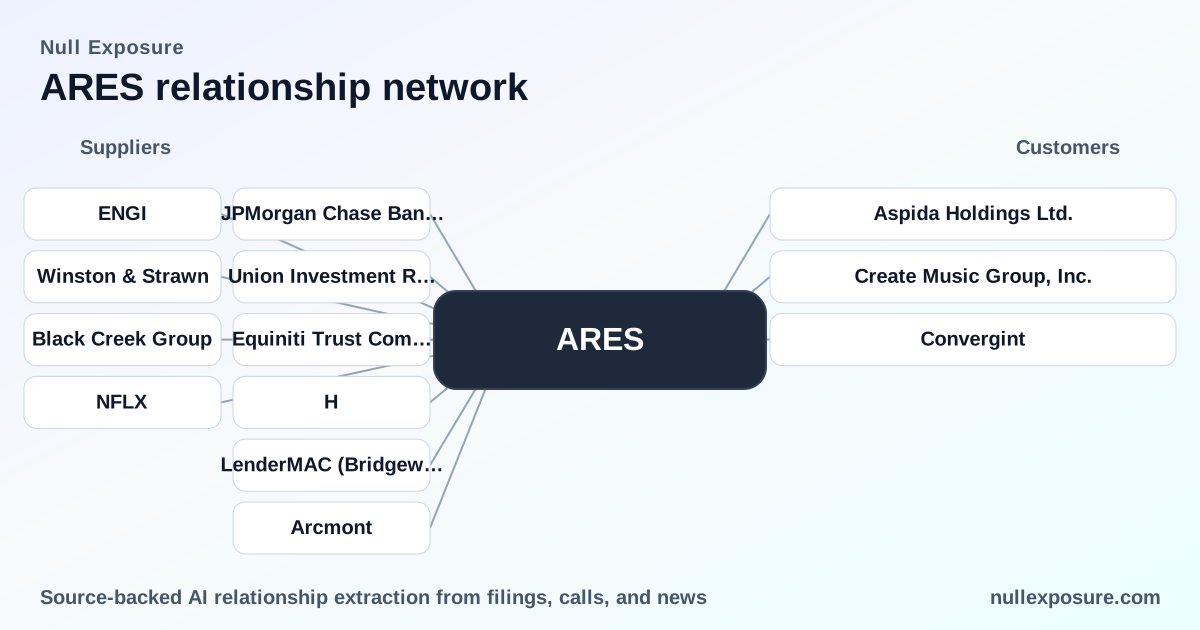
Ares Management: supplier map, recent counterparties and what investors should price in
Ares Management is a global alternative asset manager that monetizes through recurring management fees, incentive/performance fees and capital gains on co-investments and balance-sheet holdings. The firm operates across credit, private equity, real estate and infrastructure with a geographically diversified book and a fee-for-service distribution model that generates stable recurring cashflows while offering upside from realized exits and asset appreciation. For investors, supplier and counterparty relationships reveal where Ares deploys capital, where it outsources operational functions, and which counterparties underpin liquidity and growth initiatives.
Want a concise supplier exposure briefing? Visit https://nullexposure.com/ for tailored intelligence.
What the supplier map says about Ares' operating model
Ares' relationship set reflects a mature alternative manager with long-term contracting posture, broad geographic reach and a reliance on service providers for administration and transaction execution. The 10‑K discloses multi-year lease commitments and other long‑dated obligations, which translates into a predictable occupancy cost base and an operational footprint that supports investor-facing distribution and fund management.
- Contracting posture: Ares runs long‑term leases (one to 19 years) for offices and equipment, indicating stable headquarter/office commitments that align with a multi-decade asset management lifecycle.
- Geographic footprint: Public disclosures highlight investments and operations in North America, EMEA and APAC; recent transactions in London and European infrastructure confirm active cross‑border deployment.
- Service dependency: The firm relies on prime brokers, custodians and administrators for execution and fund administration — a standard but material operating dependency for managers of its scale.
- Concentration and materiality: Energy-sector exposure is small relative to total AUM (under 1% as of Dec 31, 2024), but targeted infrastructure partnerships signal selective scale-up in renewables and power.
Key takeaway: the supplier map underscores an operating model that is capital‑intensive, geographically diversified, and highly dependent on external administrators and financing counterparties.
Counterparties and recent deals — line by line
JPMorgan Chase Bank, N.A.
Ares is party to a long‑standing senior credit agreement with JPMorgan that structures lending relationships for its holding entities; this is documented in Ares’ FY2024 Form 10‑K referencing the Sixth Amended and Restated Senior Credit Agreement dated April 21, 2014. According to Ares’ 2024 10‑K, JPMorgan functions as a core lender under that facility.
Union Investment Real Estate GmbH
Ares agreed to purchase The Copyright Building (30 Berners Street, W1) from Union Investment for GBP 160 million, a London office acquisition that expands Ares’ European real estate footprint. This transaction was reported by MarketScreener and CI on Feb. 26, 2026.
Equiniti Trust Company
Equiniti has been engaged to administer an Ares plan, serving as plan administrator in recent filings and press coverage; media reports from TradingView and CityBiz in March 2026 describe Equiniti’s role in administering Ares’ plan. Equiniti therefore serves as a third‑party administrator for fiduciary/plan services.
Hyatt (H)
Ares, together with affiliate RIDA, will enter into a long‑term hotel management agreement for the Grand Hyatt following satisfaction of certain conditions, positioning Ares as a real estate owner/operator partner on hospitality assets. HotelInvestmentToday reported on the management arrangements in the context of the Orlando sale (reported 2026).
LenderMAC (Bridgeway Lending Partners LLC d/b/a LenderMAC)
Ares agreed to purchase a significant portion of LenderMAC’s Non‑QM mortgage production and provide strategic capital to expand LenderMAC’s origination capacity, reflecting Ares’ push into mortgage credit origination channels. MarketScreener covered this strategic relationship in March 2026.
Arcmont
Ares emerged as the lead buyer in a $2.2 billion secondary purchase from Arcmont, a sizeable secondary market acquisition that widens Ares’ credit and fund‑of‑funds exposure. Coverage of Ares’ lead role in the Arcmont secondary sale was reported by MarketScreener in early March 2026.
ENGIE North America (ENGI)
Ares’ Infrastructure Opportunities funds expanded a partnership with ENGIE North America with an additional 730 MW portfolio, signaling targeted scale up in renewables and contracted power assets. QuantisNow reported on the ENGIE/Ares expansion in March 2026.
Winston & Strawn
Winston & Strawn served as legal counsel to Ares on the LenderMAC strategic relationship and related transactions, reflecting the use of established law firms to support originations and capital deployment. MarketScreener’s March 2026 reporting noted Winston & Strawn’s counsel role.
Black Creek Group
Ares announced an agreement to acquire Black Creek Group, expected to accelerate retail distribution for Ares’ alternative products through Black Creek’s distributor relationships and enhance distribution for non‑traded REITs. PE‑Insights covered the acquisition agreement and strategic rationale in March 2026.
Netflix (NFLX)
Ares acquired Netflix’s London office in a transaction reported at $215.6 million, representing an institutional‑grade office purchase in central London that complements Ares’ real estate holdings. MarketScreener reported the acquisition on Feb. 27, 2026.
Operational constraints and what they imply for investors
The document signals translate into practical operating constraints and investment implications:
- Long‑term leases (company signal): multi‑year lease obligations create fixed operating costs and reduce short‑term flexibility in office footprint decisions; the maturity profile of those leases supports stable fixed overhead but increases exposure to real‑estate cycles.
- Geographic diversification (NA/EMEA/APAC): Ares’ multi‑region investment strategy drives regulatory and FX complexity but positions the firm to source deal flow globally and allocate capital to regional opportunities.
- Service provider dependence: reliance on administrators, custodians and legal counsel creates operational concentration risk; counterparty failure or disruption would affect fund operations and investor servicing.
- Energy exposure immaterial: with energy investments under 1% of AUM as of Dec 31, 2024, energy is not a principal earnings driver today, but infrastructure partnerships (e.g., ENGIE) increase targeted exposure to renewables.
Investor takeaway: Ares’ supplier network reflects a diversified, institutionally oriented manager with long‑dated operational commitments and selective growth through M&A and infrastructure partnerships. Assess valuation through the lens of fee stability, pipeline for realized gains, and operational counterparty risk.
Explore supplier-level intelligence and bespoke exposure reports at https://nullexposure.com/ to support diligence and counterparty monitoring.
Actionable next steps for investors
- Review the FY2024 10‑K’s credit and lease disclosures to quantify long‑dated obligations and lender relationships.
- Monitor the Black Creek and LenderMAC integrations for distribution and origination synergies that will feed fee revenue.
- Track ENGIE infrastructure deals for earnings contribution to infrastructure strategies.
For targeted supplier exposure analysis and periodic monitoring, visit https://nullexposure.com/ — request a tailored briefing on Ares’ counterparties and operational constraints to inform portfolio decisions.