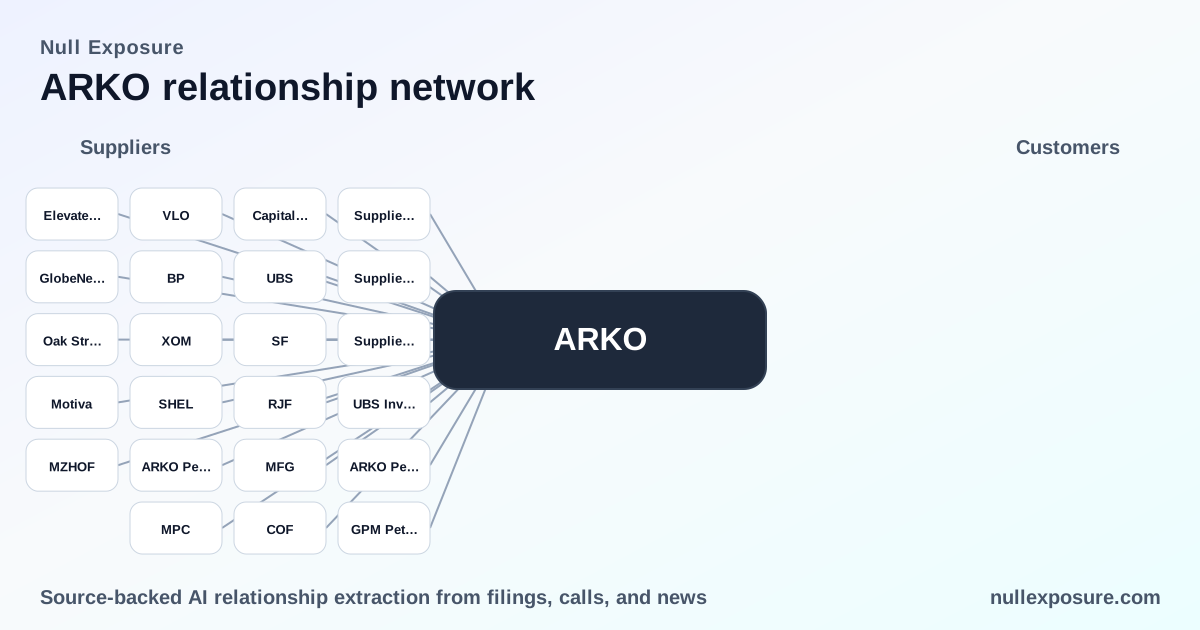
ARKO’s external map: suppliers, underwriters and what they tell investors
Thesis: ARKO Corp operates a vertically integrated convenience-store and fuel business that monetizes through retail fuel margin, convenience-store merchandise and a growing wholesale/fleet-fueling distribution arm now being carved into ARKO Petroleum Corp (APC); the company’s economics depend on fuel supply contracts with major refiners, a small set of large merchandise and fuel vendors, and fee-based relationships for fleet and wholesale services. For investors evaluating supplier risk, the 2024 10‑K shows material purchase concentration, while 2025–2026 press activity around APC’s IPO reveals active capital-markets engagement that will influence funding and counterparty visibility. Read more or get deeper sourcing at https://nullexposure.com/.
A practical supplier map, not an academic catalog
ARKO is both a buyer of fuel and merchandise and an operator/distributor. That dual posture means counterparty risk shows up as: (1) concentration where a handful of fuel suppliers account for meaningful purchase dollars, (2) long‑dated supply and lease commitments that lock volumes and site economics, and (3) service relationships such as third‑party transportation and financing that support daily operations. For active diligence, ARKO’s filings and recent press releases are the primary sources for each named relationship; the list below compiles every counterparty and media/placement partner referenced in the available records.
If you want a streamlined supplier risk report or a custom summary for portfolio due diligence, start here: https://nullexposure.com/.
Supplier and counterparty roll‑call (what each relationship does)
-
Supplier A — A named fuel supplier that accounted for more than 10% of ARKO’s purchases in FY2024, with reported purchases in the hundreds of thousands (reported as $786,868 for fuel products in the 10‑K). According to ARKO’s FY2024 10‑K, Supplier A is a material fuel counterparty in the company’s purchase profile (ARKO 2024 10‑K).
-
Supplier B — Another >10% fuel vendor for FY2024; the 10‑K lists Supplier B purchase amounts across the periods presented (ARKO 2024 10‑K).
-
Supplier D — Identified in the 10‑K as a material merchandise‑product supplier, Supplier D represented significant merchandise purchases in FY2024 (ARKO 2024 10‑K).
-
GPM Petroleum — A primary fuel seller and supplier to substantially all of ARKO’s retail and wholesale sites; GPM charges a fixed fee for fuel supply and is identified as central to the wholesale/fleet model that APC will inherit (multiple press releases and the APC IPO filing, GlobeNewswire and finance outlets, 2025–2026).
-
ARKO Petroleum Corp. (APC) — ARKO’s wholly owned subsidiary intended to consolidate wholesale, fleet fueling and GPM Petroleum segments and handle wholesale distribution to most fuel‑selling retail stores; APC filed a registration statement and completed an IPO process in early 2026 (GlobeNewswire, December 2025 filing; pricing announcements February 2026).
-
UBS Investment Bank — Named as a lead book‑running manager on the APC IPO and in roadshow materials; UBS served as a primary capital‑markets partner for the spin‑off offering (GlobeNewswire and other press coverage, Dec 2025–Feb 2026).
-
Raymond James — Served as a lead book‑running manager and has previously acted as ARKO’s financial and capital markets advisor; Raymond James is consistently listed among the transaction banks for APC’s offering (press releases and historical coverage, 2020 and 2025–2026).
-
Stifel — Listed as a lead book‑running manager on APC’s IPO alongside UBS and Raymond James (GlobeNewswire and sector press, Dec 2025–Feb 2026).
-
Mizuho — Appears as a joint book‑running manager on the APC offering, listed with Mizuho’s capital markets unit in public release materials (GlobeNewswire/press, Dec 2025–Feb 2026).
-
Capital One Securities — Named as a joint book‑running manager for the APC IPO in press announcements (GlobeNewswire and sector news, Dec 2025–Feb 2026).
-
Valero — Listed in communications describing APC’s fuel‑supply partnerships with major integrated refiners; Valero is one of several majors identified as fuel‑supply partners (trading‑platform coverage of the IPO filing, March 2026).
-
BP — Identified among major fuel suppliers with supply relationships noted in the APC filing/press coverage (trading and press coverage, March 2026).
-
ExxonMobil — Included in the list of majors that provide fuel supply to ARKO/APC in public filings and IPO materials (trading and press coverage, March 2026).
-
Shell — Cited in IPO‑related press as a partner/refiner in ARKO/APC’s supplier mix (trading and press coverage, March 2026).
-
Marathon — Named alongside other integrated refiners as part of ARKO/APC’s supply relationships in public disclosures (trading press, March 2026).
-
Motiva — Identified in the same category as other major suppliers cited in APC filing summaries (trading press, March 2026).
-
Raymond James & Associates Inc. — Cited historically as ARKO’s financial and capital markets advisor in earlier company materials and industry write‑ups (CSPDailyNews coverage and company commentary, 2020–2026).
-
GlobeNewswire — Distribution service that published ARKO’s press releases announcing the APC registration and IPO pricing; serves as the channel for ARKO’s official statements (GlobeNewswire press releases, Dec 2025–Feb 2026).
-
QuiverQuant — Secondary news aggregator that republished or summarized ARKO announcements related to APC’s roadshow and pricing (QuiverQuant posts, March 2026).
-
StockTitan / MassMarketRetailers / CSPDailyNews / TradingView — Various trade and news outlets that reported on APC’s filing, IPO launch and pricing; these sources syndicated ARKO’s press releases and added market context (press coverage, Dec 2025–Mar 2026).
-
Elevate IR — Investor‑relations contact used for ARKO’s conference call logistics and shareholder communications; referenced as the support contact for call registration (Q4 and full‑year 2025 call notice).
-
Oak Street Real Estate Capital — Named in historical coverage related to GPM‑related property financing and acquisition structures; appears in M&A/real‑estate reporting tied to GPM transactions (CSPDailyNews, 2022).
Note: every relationship above is drawn from ARKO’s 10‑K and the APC registration/press materials and associated trade press between 2025–2026 (ARKO 2024 10‑K; GlobeNewswire, CSPDailyNews, TradingView, QuiverQuant and related press, Dec 2025–Mar 2026).
Key operating constraints investors should log in the model
-
Long‑term contracts and leases: ARKO’s filings describe fuel supply contracts and lease agreements with expirations extending into the early 2030s and leases commonly running 15–20 years—this translates to locked‑in site economics and volume commitments that limit short‑term flexibility (company 10‑K excerpts).
-
Framework agreements with minimum volume commitments: Fuel vendor agreements require minimum annual gallons purchases, establishing downside exposure if traffic or volumes decline; that creates throughput dependency rather than spot purchasing flexibility (10‑K language on vendor agreements).
-
Large‑enterprise counterparties: The company purchases fuel primarily from major integrated oil companies and independent refiners, indicating counterparty credit and market‑power dynamics matter materially to ARKO’s cost of goods (10‑K vendor description).
-
Role diversity: ARKO acts as buyer, distributor and seller across segments—inventory financing, third‑party transport and long‑term supply agreements are embedded in the operating model, increasing the importance of distributed operational continuity (10‑K relationship descriptions).
-
Explicit references to GPMP and a Capital One line: The filings explicitly reference GPMP (GPM Petroleum) as party to many fuel supply contracts and note a Capital One line of credit maturing in 2028—these are direct, named constraints that affect liquidity and supply structure (10‑K excerpts).
If you want a vendor‑level exposure matrix or counterparty concentration dashboard built from these signals, we have a ready template at https://nullexposure.com/.
What this means for investors and operators
-
Concentration risk is measurable and real: The 10‑K shows a handful of suppliers represent material purchase volumes; operations and procurement strategy should assume supplier negotiation leverage varies by brand, geography and contract term.
-
The APC IPO clarifies optionality: Spinning wholesale and fleet into APC and engaging major bookrunners (UBS, Raymond James, Stifel, Mizuho, Capital One Securities) increases capital‑markets visibility for the distribution business and creates a potential re‑pricing catalyst for the consolidated fuel supply relationships (GlobeNewswire and sector press, Dec 2025–Feb 2026).
-
Operational fragility sits in logistics and financing: long leases, fixed supply fees for fleet sites and reliance on third‑party transportation and financing lines mean operational disruptions in fuel logistics or a liquidity shock could compress margins quickly (10‑K constraint language).
Final action: for a concise counterparty risk brief tailored to a portfolio position or an operator’s procurement playbook, visit https://nullexposure.com/ and request the ARKO supplier exposure pack.