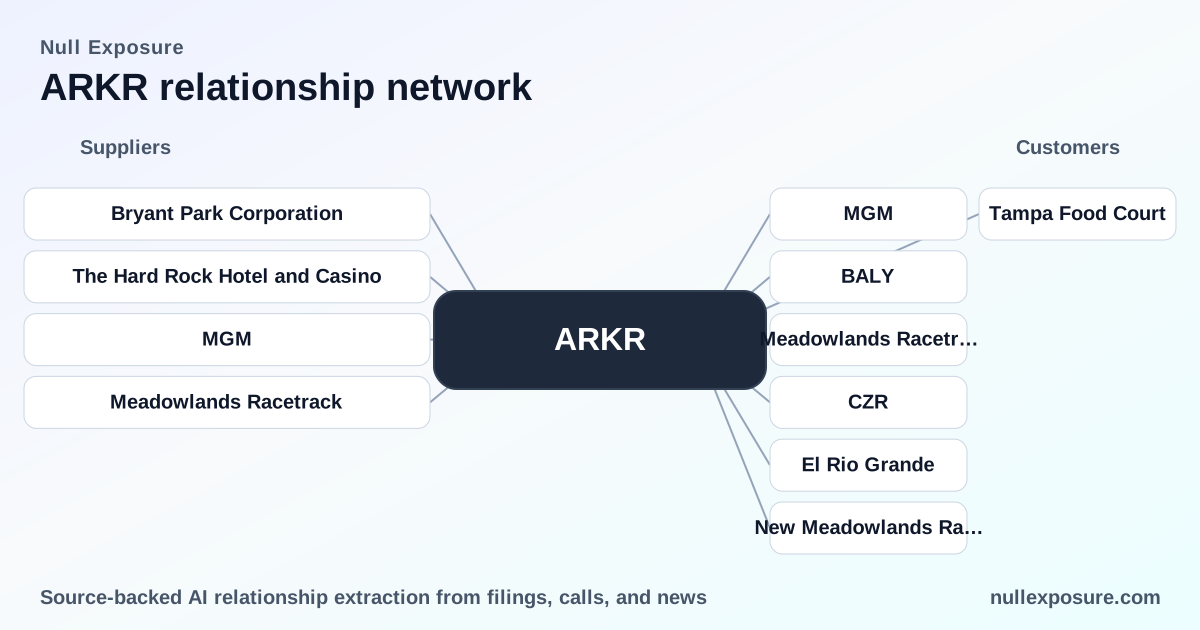
Ark Restaurants (ARKR): supplier, landlord and venue relationships that determine earnings and exposure
Ark Restaurants operates and monetizes by leasing and operating full-service restaurants and food-and-beverage concessions in high-traffic venues, collecting F&B revenues and, in some leases, percentage rent tied to sales; the company generates revenue from its branded restaurant operations and venue concessions while managing costs through a mix of centralized purchasing and short-term commodity sourcing. For investors and operators, the core thesis is straightforward: Ark's profitability is driven by location-level sales and lease economics, and its counterparty exposures — especially large landlord relationships and venue concessions — drive both downside concentration risk and discrete upside optionality. Learn more at https://nullexposure.com/.
How Ark runs its supplier and lease stack (what matters to credit and procurement teams)
Ark centralizes purchasing for many items but deliberately combines long-term real estate leases with short-term supply agreements for perishables. Company disclosures record initial lease terms commonly in the 10–25 year range, and the firm negotiates both long and short supply contracts depending on market conditions. Independent distributors deliver most daily inventory, while fresh commodities (produce, meat, dairy) are procured on shorter terms and therefore create cost volatility.
As a company-level signal across Ark’s footprint:
- Contracting posture is mixed: long-term leases for strategic locations; short-term sourcing for fresh commodities.
- Supplier relationships are mature and operationally critical: Ark identifies established, long-standing suppliers for specialty items (for example, shellfish), while daily distributors serve routine replenishment needs.
- Concentration and materiality are real: certain locations contribute a disproportionate share of revenue, creating lease/landlord concentration risk.
- Near-term cash and committed spend exposures exist: the company posts letters of credit as lease security and agrees to material refresh capital in certain lease extensions.
Every partner you need to track (what the filings and coverage show)
Bryant Park Corporation
Ark’s leases for the Bryant Park Grill & Café and The Porch at Bryant Park expired in March/April 2025, and those two locations historically represented approximately 15–17% of total revenue (about $25.5M in FY2025 and $31.1M in FY2024), which creates a material exposure until lease renewals are resolved. According to coverage of the company’s FY2025 filing, Bryant Park is a private non‑profit landlord that operates the park under city agreements and was specifically called out in Ark’s disclosures. (Stocktitan FY2025 / company filing language summarized in FY2025 coverage.)
The Hard Rock Hotel and Casino (Tampa)
Ark agreed to terminate its lease for the Tampa Hard Rock Hotel and Casino food court and vacated the premises on December 15, 2024, reducing a leased footprint in that market and removing related revenue and cost flows from the operating base. This action was disclosed in the company’s FY2025 results coverage. (Stocktitan FY2025.)
MGM (New York, New York)
Management confirmed that Ark signed a new lease with MGM for the New York, New York property a couple of years prior, representing an ongoing concession relationship in a high-traffic casino-hotel environment that supports Ark’s concession revenue stream. This was stated on Ark’s Q1 FY2026 earnings call. (InsiderMonkey Q1 FY2026 earnings call transcript.)
Meadowlands Racetrack
Management repeatedly highlighted the exclusive food-and-beverage optionality at Meadowlands conditional on casino gaming approval; Ark stands to gain exclusive F&B rights if regulators license gaming at the Meadowlands, which management frames as a discrete upside opportunity. The optionality was referenced in FY2025 investor commentary and reiterated on the FY2026 call. (The Globe and Mail FY2025 reporting; InsiderMonkey Q1 FY2026.)
What the relationship map implies for investors and operators
Ark’s cash flow and credit profile are landlord- and venue-sensitive. The Bryant Park exposures are particularly consequential because those two locations historically produced a material share of revenue; a dispute or non‑renewal at that site directly compresses consolidated top line and operating leverage. Simultaneously, Ark’s venue concessions (MGM, Meadowlands optionality) are higher-margin opportunities that, if expanded, re-weight revenue toward captive concession economics.
Company-level constraints that shape execution:
- Long-term lease footprint is strategic but concentration raises risk. Ark holds leases with multi-year initial terms across its portfolio; this creates durable site control but concentrates downside when a handful of flagship sites underperform or face non-renewal.
- Short-term commodity sourcing drives margin volatility. Fresh food is intentionally sourced on shorter terms, shifting price risk to near-term procurement and compressing predictability of gross margin.
- Distributor reliance creates operational single points. Independent distributors deliver daily inventory, making operations operationally sensitive to supply-chain disruptions.
- Committed capital and security requirements increase surface-area for cash and credit risk. Ark posts letters of credit (aggregate ~$324k referenced in filings) and agreed to a multi‑million dollar refresh commitment (a $4.0M minimum spend in connection with an extension) — these are real cash commitments that affect liquidity planning.
If you underwrite Ark for supplier credit or premium finance, treat the landlord relationships as part of the criticality assessment: landlord and venue counterparty outcomes can swing revenue and collateral values materially. The Meadowlands casino optionality is a clear upside lever, but it is contingent on regulatory events and therefore should be modeled as binary incremental value rather than recurring base revenue.
Find deeper counterparty intelligence and procurement-risk profiles at https://nullexposure.com/.
Risk and upside checklist
- Concentration risk: Bryant Park represented ~15–17% of revenue historically — material to consolidated performance.
- Operational flexibility: Long-term leases secure locations but reduce near-term flexibility to cut underperforming sites.
- Cost volatility: Short-term purchasing for perishables places margin pressure during commodity inflation.
- Upside catalysts: Meadowlands exclusive F&B rights and stable casino/hotel concessions (e.g., MGM) can materially improve margins if realized.
- Liquidity commitments: Letters of credit and committed refresh spend are non-operating cash drains that lenders and suppliers must consider.
Bottom line — how to act on these signals
Ark Restaurants is a location-driven operator whose supplier exposures combine durable lease-based revenue with short-term commodity cost risk. Investors and operators must prioritize landlord and venue outcomes in any credit or supplier evaluation while modeling commodity volatility and committed capital spend into liquidity stress tests. For counterparty diligence, prioritize review of lease expirations, renewal terms, and committed capital clauses; track Meadowlands regulatory progress as a discrete upside scenario.
For more detailed counterparty profiles, contract-tenor analytics and risk scoring for Ark and similarly structured operators, visit https://nullexposure.com/. For licensed commercial risk reports and supplier diligence tailored to hospitality portfolios, start here: https://nullexposure.com/.