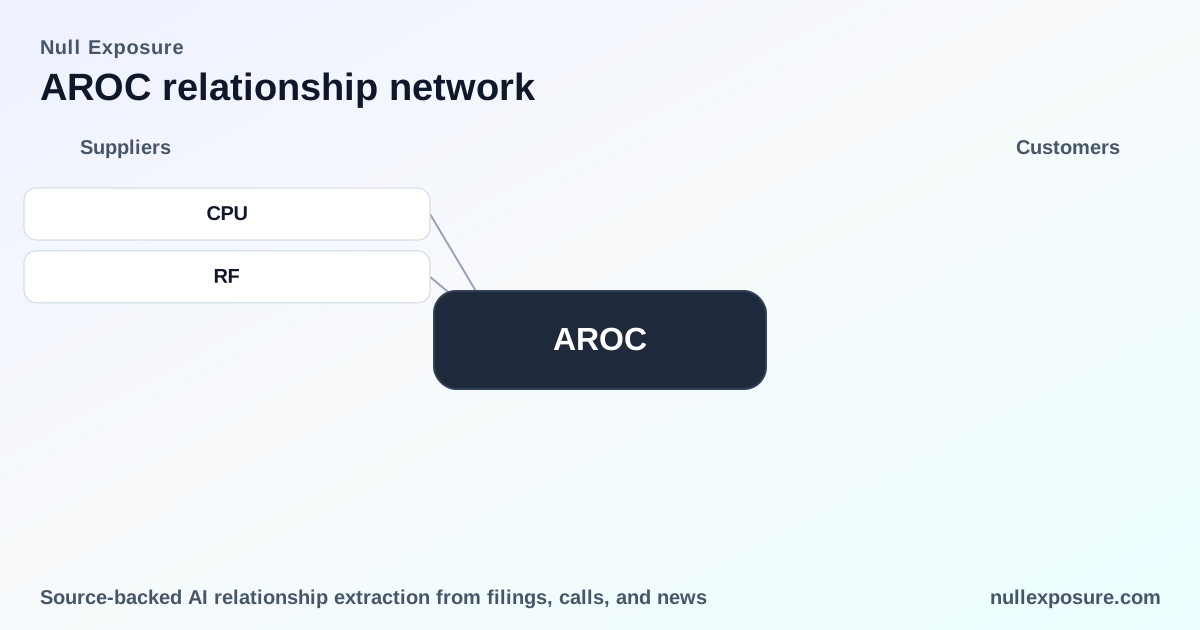
Archrock (AROC): Supplier relationships, contractual posture, and what they mean for investors
Archrock operates and monetizes as a business-to-business energy infrastructure provider focused on natural gas compression and related fleet services; it rents and sells compression assets, provides field services, and secures long-term customer contracts while financing fleet replenishment and growth through a mix of purchase commitments and debt. The company generates cash flow from operating leases and service contracts on a large installed fleet, and funds that fleet through multi-year purchase commitments and capital markets activity. For investors evaluating supplier and counterparty risk around AROC, the interplay between trustee/bank counterparties and Archrock’s procurement commitments is decisive. Learn more about supplier and counterparty signals at https://nullexposure.com/.
A concise commercial thesis for investors
Archrock’s operating model centers on capital-efficient fleet ownership and long-duration customer arrangements that deliver recurring revenue; value accrues if fleet utilization, uptime and contract pricing hold while financing costs remain manageable. The company reported trailing twelve‑month revenue of about $1.49 billion and EBITDA of $832.6 million as of the latest quarter (2025-12-31), with a market capitalization near $6.22 billion—metrics that support a mid-cycle infrastructure valuation profile. Against that backdrop, counterparty arrangements with trustees and banks affect liquidity execution and debt management, while supplier procurement commitments drive capital outlays and operational continuity.
Trustee and bank relationships you need to know
Archrock’s public filings and market notices show two notable relationships active in FY2026: a trustee/paying agent role handled by Computershare and a trustee arrangement with Regions Bank. Both are transactional and governance-oriented relationships tied to Archrock’s debt instruments.
Computershare Trust Company, N.A.
Computershare is acting as trustee and paying agent for Archrock’s outstanding senior notes, and a February 26, 2026 GlobeNewswire release discloses a notice of redemption process for the 6.25% senior notes due 2028, with Computershare distributing notices to registered holders. This is a procedural, creditor-facing relationship that governs payment and redemption mechanics for noteholders. (GlobeNewswire, Feb 26, 2026: https://www.globenewswire.com/news-release/2026/02/26/3246135/0/en/Archrock-Announces-Redemption-of-All-Outstanding-6-25-Senior-Notes-Due-2028.html)
Regions Bank
Regions Bank is identified in a public report as the trustee for a separate indenture establishing note terms, indicating that Archrock uses commercial banks as trustees for specific indebtedness, which formalizes creditor rights and administrative controls around its bond and note programs. This relationship is disclosure-driven and central to debt administration rather than operational procurement. (TradingView report, March 2026: https://www.tradingview.com/news/tradingview:621ca161da3e7:0-archrock-signs-indenture-with-regions-bank/)
What the constraint signals tell us about Archrock’s operating model
Archrock’s constraint excerpts from filings and disclosures reveal several company-level characteristics that matter for supplier and counterparty risk assessment.
- Heavy, near-term capital commitments: Archrock discloses purchase commitments of $341.1 million (with $337.5 million due in 2025) that primarily relate to fleet assets. This high concentration of near-term capital commitment signals that Archrock’s procurement cycle is capital intensive and that timely access to financing and supplier performance are critical to execution.
- Buyer posture with structured supplier relationships: The company reports established pricing agreements with its primary suppliers of compression equipment, parts and services, and active value-engineering engagement to lower lifecycle costs and improve reliability. This contracting posture is proactive and supplier-managed, implying negotiated pricing, service-level expectations, and collaborative product life‑cycle practices.
- Small, targeted purchases from affiliated sellers: Archrock purchased $0.5 million from its unconsolidated affiliate ECOTEC during the year ended December 31, 2024, reflecting limited affiliate-sourced procurement in relation to large external purchase commitments.
- Spend-band profile: The data shows both very large capital commitments (hundreds of millions) and small single‑vendor transactions (~$0.5 million), indicating a bimodal spend profile: large, lumpy fleet acquisition contracts plus routine smaller operating purchases.
These constraints collectively indicate a mature supplier ecosystem where long‑lead, high-value capital purchases coexist with negotiated supplier relationships and occasional affiliated sourcing. For investors, the critical takeaway is that execution risk is concentrated around large fleet purchases and financing windows, while day‑to‑day supplier risk is mitigated through pricing agreements.
(If you want an investor-grade mapping of Archrock’s contractual obligations against counterparty roles, visit https://nullexposure.com/ for deeper coverage.)
Risk implications for operators and investors
- Liquidity and refinancing are central risks. The size and timing of purchase commitments mean Archrock’s ability to convert financing into delivered fleet assets, or to negotiate staggered deliveries, affects both capex timing and service availability.
- Counterparty roles are administrative but consequential. Trustee relationships with Computershare and Regions Bank are not operational suppliers but are critical to debt servicing and redemption mechanics—disruptions or miscommunications here can influence market perception and refinancing execution.
- Supplier concentration is mitigated, not eliminated. Pricing agreements with primary suppliers suggest negotiated terms and continuity plans; however, the capital intensity of fleet purchases means that any supplier or vendor execution failure at scale would have outsized operational and financial effects.
- Affiliate transactions are immaterial to scale but worth monitoring for governance and related-party dynamics; the $0.5 million purchase from ECOTEC is small relative to overall commitments but denotes intercompany activity.
How investors should act on these signals
- Monitor Archrock’s financing timetable and any further notices from trustees or indenture agents; trustee notices (Computershare, Regions) will telegraph debt actions and redemption timing. The GlobeNewswire notice (Feb 26, 2026) is an immediate example.
- Stress-test scenarios around deferred or accelerated purchase commitments: large near-term commitments are the principal operational lever that can strain cash flow or necessitate additional capital markets activity.
- Validate supplier resilience and delivery schedules for compression fleet orders during due‑2025 delivery windows; pricing agreements reduce price volatility risk but do not eliminate delivery and lead‑time risk.
For a practical, investor-ready breakdown of supplier and counterparty exposure—mapped to cash flow and covenant timelines—use our platform at https://nullexposure.com/.
Closing: the bottom line for AROC counters
Archrock is a capital‑intensive infrastructure operator with predictable revenue drivers but concentrated capital outlays. Trustee and banking relationships (Computershare and Regions Bank) are governance levers for debt instruments and warrant close attention during refinancing or redemption events, while large purchase commitments set the cadence for future fleet capacity and cash requirements. Investors should focus on financing windows, supplier delivery performance, and trustee notices as primary signals that will move valuation and credit metrics.
To benchmark Archrock’s supplier exposure against peers or to model the cash flow impact of different delivery and financing scenarios, visit https://nullexposure.com/ for detailed tools and analysis.