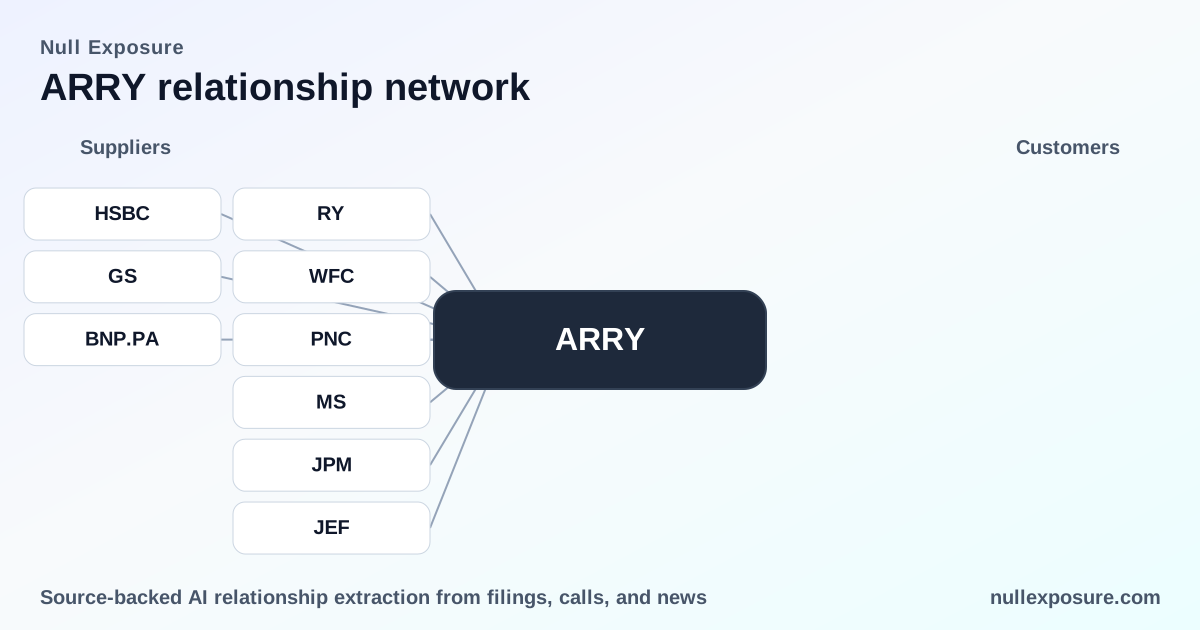
Array Technologies (ARRY): Banking syndicate reinforces working capital but supplier signals matter
Array Technologies manufactures and sells solar tracking systems and related foundation, software and services to global project developers and EPCs; it monetizes through equipment sales, aftermarket services and project component supply. The company recently upsized and extended a revolving credit facility, a financing move that buys operational runway while leaving supplier concentration and manufacturing sourcing as principal operational risks. Learn more about supplier and counterparty exposure at https://nullexposure.com/.
Why the credit move changes the operating backdrop
On February 18, 2026 Array announced it had increased its revolving credit facility from $166 million to $370 million and extended maturity to February 18, 2031, with up to $250 million available for letters of credit. Goldman Sachs Bank USA served as lead arranger and administrative agent for the facility, while a broad syndicate of banks joined to share exposure. The transaction materially strengthens liquidity and trade-finance capacity for large project deliveries and letter-of-credit-backed contracts, shifting short-term refinancing risk off the immediate table. (GlobeNewswire, February 18, 2026; MarketScreener, March 9, 2026)
If you want a quick read on counterparty roles and supplier footprints, visit https://nullexposure.com/ for consolidated coverage.
The syndicate and supplier relationships you need on your radar
Below I list every counterparty captured in recent reports and describe the role each plays in Array’s financing structure.
- Goldman Sachs Bank USA — Acted as Lead Arranger and Administrative Agent on the amended revolving credit facility, anchoring the syndication and administrative oversight for the loan. (GlobeNewswire, February 18, 2026)
- J.P. Morgan — Identified as a Joint Lead Arranger on the facility, joining the top-tier banks that structured and marketed the extension. (GlobeNewswire, February 18, 2026)
- Wells Fargo Securities, LLC. — Named as a Joint Lead Arranger and participating bank in public reporting on the upsized facility. (TechnologyMagazine/GlobeNewswire, February 18, 2026)
- PNC Capital Markets, LLC. — Listed among Joint Lead Arrangers on the amended facility, providing underwriting and distribution support to the syndicate. (MarketScreener, March 9, 2026)
- HSBC Bank USA — Served as a Joint Lead Arranger and participant in the syndicated facility, contributing to the cross-border lending capability. (GlobeNewswire, February 18, 2026)
- Royal Bank of Canada (RBC) — Included as a participating lender in the syndicate, providing incremental lending capacity for letters of credit and working capital. (MarketScreener, March 9, 2026)
- BNP Paribas — Named among participating lenders in the syndicate, reflecting European bank participation in Array’s financing. (TechnologyMagazine/GlobeNewswire, February 18, 2026)
- Morgan Stanley Senior Funding, Inc. — Cited as a participating lender in the amended facility, adding senior funding support to the group. (MarketScreener, March 9, 2026)
- Jefferies — Listed as a participating lender in the syndicate that upsized and extended Array’s revolver. (GlobeNewswire, February 18, 2026)
Each bank’s role is explicitly described in the company release and corroborated by financial news coverage; collectively they convert a single-lender liquidity profile into a multi-bank syndicate that supports letters of credit, working capital and project deliveries. (GlobeNewswire; MarketScreener; TechnologyMagazine, February–March 2026)
What the supplier constraints tell investors about operational exposure
Array’s public disclosures also surface several company-level supply and procurement signals that are relevant to underwriting operational risk:
- Global sourcing posture: Array purchases components from suppliers located across the globe, indicating exposure to international logistics, tariffs and regional supply-chain disruption. This is a company-level sourcing signal rather than a relationship-specific note.
- Buyer and manufacturer roles: The company functions as both buyer and manufacturer: it maintains internal manufacturing capacity for key products while relying on a small number of external vendors for certain critical components, and has identified alternative vendors for contingency. This dual role creates mixed leverage—control over some manufacturing, dependency on external specialists for other parts.
- Spend and contractual commitment: Array reported non-cancellable purchase obligations of $78.2 million as of December 31, 2024, placing its near-term commit-level in the $10M–$100M band. That scale of committed spend signals material cadence in procurement and working-capital needs tied to project delivery schedules.
Taken together, these constraints describe a company with moderate supplier concentration, global exposure, and tangible committed spend, meaning finance counterparties and insurers should expect episodic letter-of-credit draws and committed working-capital outlays during peak installation windows.
How these supplier and bank signals affect credit and operational risk
- Contracting posture: The enlarged revolver and letters-of-credit capacity reduce immediate liquidity pressure and improve Array’s ability to meet supplier payment terms and LC requirements during project ramp-ups. Goldman Sachs anchoring the facility reduces execution risk for arranging trade finance.
- Concentration and criticality: Dependence on a small set of vendors for certain components increases operational concentration risk; however, internal manufacturing capability and identified alternative vendors temper the single-source threat.
- Maturity and quality of relationships: The five-year tenor extension to 2031 signals institutional lender confidence in Array’s cash generation profile and execution plan. Syndicate participation from global banks spreads refinancing and counterparty risk across multiple institutions.
What investors should watch next
- Cash conversion and margin recovery: Array reported negative operating margins in recent trailing periods while generating positive gross profit—monitor whether improved liquidity translates into margin stabilization. (Company financials, latest quarter 2025)
- Letter-of-credit utilization: Rising LC draws against the $250 million capacity will be an early indicator of project execution stress or heavy working-capital consumption.
- Supplier performance and logistics: Given the global sourcing posture and $78.2 million in non-cancellable obligations, logistics disruptions or vendor insolvency would have outsized near-term effects.
For a consolidated look at counterparty exposure and supplier footprints on companies like Array, visit https://nullexposure.com/ — the site centralizes financing counterparties and supplier-supplier relationships for investors and operators.
Bottom line
The syndication led by Goldman Sachs and supplemented by global banks materially strengthens Array’s liquidity and trade-finance capabilities, a necessary hedge for a capital-intensive manufacturing and project-delivery business. At the same time, supplier concentration, global sourcing, and meaningful committed purchase obligations are operational constraints that keep execution risk front and center for credit analysts and strategic investors. If you evaluate ARRY for credit or supplier risk, prioritize monitoring LC utilization, procurement cadence, and margin recovery into 2026.
Explore fuller counterparty mappings and supplier intelligence at https://nullexposure.com/ to support underwriting decisions and operational diligence.