Artesian Resources (ARTNA): Supplier relationships that shape margin and regulatory exposure
Artesian Resources Corporation operates as a regulated water and wastewater utility in Delaware, Maryland and Pennsylvania, monetizing through regulated customer rates, municipal and interconnection agreements, and ancillary services such as wastewater disposal. Its cash flow profile is driven by rate-setting mechanics and contractually anchored supply and interconnection relationships; supplier actions that change energy or purchased-water costs, or that produce out-of-cycle settlements, translate directly into near-term margin swings and customer bill credits.
Explore deeper supplier intelligence at https://nullexposure.com/
What the supplier signals say about how Artesian runs the business
Artesian runs a hybrid utility operating model: regulated rate revenue provides stability while supplier contracts create discrete cost and counterparty exposures. Public excerpts and filings indicate a pattern of recurring, multi-year commercial relationships alongside occasional short-term hedges:
- Long-term contracting posture is prominent. Artesian discloses interconnection agreements with automatic renewal and “take-or-pay” minimums, indicating contractual commitments that lock in baseline purchase volumes and fixed obligations. One excerpt explicitly names an interconnection with Chester Water Authority effective 2022–2026 with automatic five-year renewals and a 0.5 million gallons-per-day minimum purchase clause.
- Short-term tactical contracts are used for energy management. The company also uses short-term electric supply contracts to smooth spikes in commodity prices, consistent with excerpts describing seasonal or sub-year supply agreements.
- Dual role as buyer and service provider. Artesian is a net buyer of treated surface water in some areas while simultaneously serving as a service provider to its customers and interconnected municipalities.
- Active, mission‑critical supplier footprint. The firm lists multiple interconnections and municipal ties that are operationally critical to continuity of service.
- Spend profile spans small operating items to material capital projects. Recorded line items include sub-$100k easement payments, ~$100k–$1m recurring operational payments (wastewater disposal), multi-hundred-thousand maintenance items (tank painting), and planned utility plant spend in the $10m–$100m band for highway-related relocations, indicating a capital-led mid-term spend program that will affect cash flow and project delivery priorities.
Key operating constraint: the combination of take‑or‑pay interconnections and fixed‑rate electric supply contracts translates supplier cost volatility into either absorbed margin pressure or rate case dynamics that regulators will have to adjudicate. That structure elevates supplier risk relevance above what a purely municipal-run system would carry.
Explore supplier exposure mapping at https://nullexposure.com/
Publicly visible supplier relationships (what shows up in the record)
Below are the relationships identified in publicly indexed reports and news items, with concise, plain-English descriptions and source references.
-
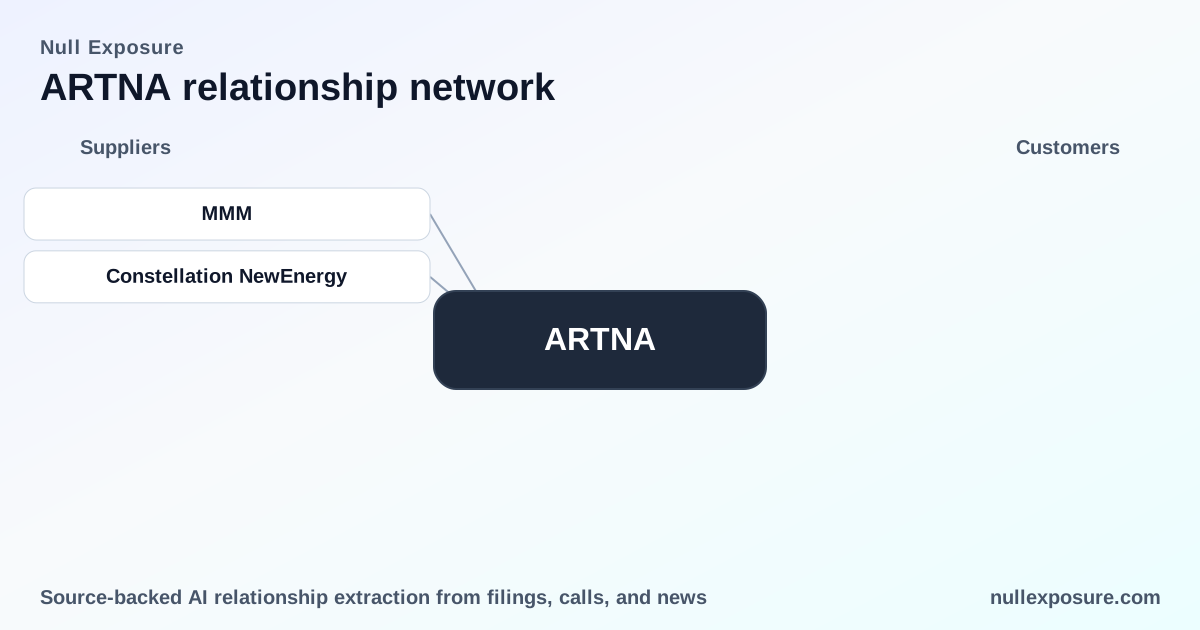
3M — Artesian received approximately $7.2 million from 3M as part of the nationwide PFAS settlement addressing contamination in public drinking water systems; the funds were announced in connection with credits to Delaware customers. This payment is a non-operational inflow that reduces future remediation and customer-bill pressure. (FirstStateUpdate report, November 2025; and StockTitan coverage, FY2025.)
-
Constellation NewEnergy — Under a contract referenced in historical reporting, Artesian faced a 25% increase in electric supply costs resulting from a new supply agreement, illustrating the sensitivity of operating costs to supplier re-pricing. This contract-level cost increase feeds directly into near-term operating margins unless offset through hedging, other supplier negotiations, or rate relief. (StockTitan news item referencing FY2020 contract impacts.)
-
3M Company (duplicate coverage) — StockTitan separately reported the same 3M settlement and the planned customer credits tied to the approximately $7.2 million recovery, reinforcing that the 3M payment has been circulated across multiple industry news outlets and had a fiscal impact in FY2025. (StockTitan article on Artesian customer credits, FY2025.)
Each item above is pulled from public news coverage tied to fiscal disclosures or company announcements; the 3M settlement shows up in multiple outlets, while Constellation’s energy contract is referenced as a historical supplier-driven cost shock.
Why these supplier links matter to investors and operations
- Earnings sensitivity: Artesian’s margins are regulated but not immune to supplier-driven shocks. A 25% bump in electric supply under a contract is a direct cost input that regulators will consider in rate proceedings; energy sourcing decisions therefore correlate tightly with near-term EPS variability.
- One-off cash events matter more here than for non-regulated peers. The $7.2 million PFAS-related recovery from 3M is a balance-sheet event that funds remediation and customer credits rather than core rate-base growth, creating episodic earnings and cash-flow effects that investors should separate from recurring operations.
- Contract structure increases fixed obligations. Long-term interconnections with automatic renewals and take-or-pay clauses convert variable demand into contractual minimum spend requirements; that reduces short-run flexibility and amplifies the impact of adverse price movements.
- Capex pipeline is material and concentrated. Planned mandatory relocations and utility plant work in the mid‑tens of millions over a short horizon require execution and capital allocation discipline; those projects will influence leverage, cash flow and potential rate-base growth.
Relevant corporate metrics: Artesian is a mid-cap regulated utility with a dividend yield around 3.76% and a trailing P/E near 14.65, reflecting the market’s valuation of steady regulated cash flow plus measured growth.
Tactical implications — what operators and procurement teams should prioritize
- Lock in multi-year, fixed-price electric contracts where regulatory recovery is uncertain, and build short-term overlays only for deliberate cost management.
- Treat interconnection contracts as strategic assets: renegotiate minimums and renewal mechanics where possible to preserve operating flexibility.
- Separate one-time remediation recoveries from recurring cash flows in investor communications to avoid conflating structural profitability with episodic inflows.
For investors and operator teams who want an actionable supplier risk dashboard, start here: https://nullexposure.com/
Final takeaways
Artesian's supplier profile is a study in regulated stability intersecting with targeted commercial risk: long-duration interconnections and fixed-cost electric contracts create durable obligations, while occasional settlement inflows and short-term energy hedges move the earnings needle. Investors should underwrite Artesian with attention to contract renewal mechanics, energy sourcing strategy, and the company’s ability to translate supplier cost shocks into recoverable rate adjustments.
If you want a concise, supplier-focused briefing or ongoing monitoring of utilities like Artesian, visit https://nullexposure.com/ for tailored analysis and alerts.