ASB-P-F: Income-oriented preferreds underpinned by regional banking liquidity relationships
Associated Banc‑Corp’s ASB‑P‑F preferred shares monetize through stable fixed dividends issued by a mature regional bank that generates cash flow from retail and commercial banking, wealth and insurance operations across the Midwest. For investors, ASB‑P‑F is a play on consistent income with exposure to a bank that uses traditional liquidity tools and wholesale funding relationships to manage balance‑sheet volatility. For operators and counterparty managers, the key questions are funding flexibility, counterparty concentration, and contractual stability. Learn more about supplier and liquidity counterparties at https://nullexposure.com/.
Quick read: what this security represents for an investor
ASB‑P‑F is a preferred equity issuance from Associated Banc‑Corp (NYSE: ASB), positioned to deliver a fixed dividend stream while sitting junior to debt and senior to common equity in the capital structure. The issuer is a well‑established regional bank operating primarily in the Midwest, with diversified retail and commercial deposit franchises that support its ability to service preferred distributions. The investment case rests on predictable cash flow, regulatory stability, and the bank’s access to wholesale liquidity to smooth funding mismatches.
How Associated Banc‑Corp operates and funds growth
Associated Banc‑Corp runs a traditional regional bank model: deposit gathering at the branch and digital level, originations across commercial and consumer lending, and fee income from wealth and insurance services. The bank monetizes through net interest margin on lending and transaction-driven fees. Funding is a mix of retail deposits and wholesale lines — with wholesale including Federal Home Loan Bank advances — which provide contingency liquidity and balance‑sheet management flexibility.
This operating posture shapes counterparty risk and contracting strategy:
- Contracting posture: Standard regulated bank contracts and collateralized wholesale facilities dominate; counterparties operate under well‑understood master agreements and regulatory oversight.
- Concentration: The bank’s revenue is regionally concentrated in the Midwest, but funding sources include national wholesale providers that diversify liquidity providers.
- Criticality: Wholesale liquidity partners are critical to short‑term funding and asset/liability management; interruptions would raise near‑term refinancing risk.
- Maturity: Associated Banc‑Corp is a mature institution with established relationships and documented funding lines, reducing structural uncertainty for preferred holders.
Supplier relationships that matter (what we found)
Below I cover every supplier/partner relationship surfaced in the available reporting.
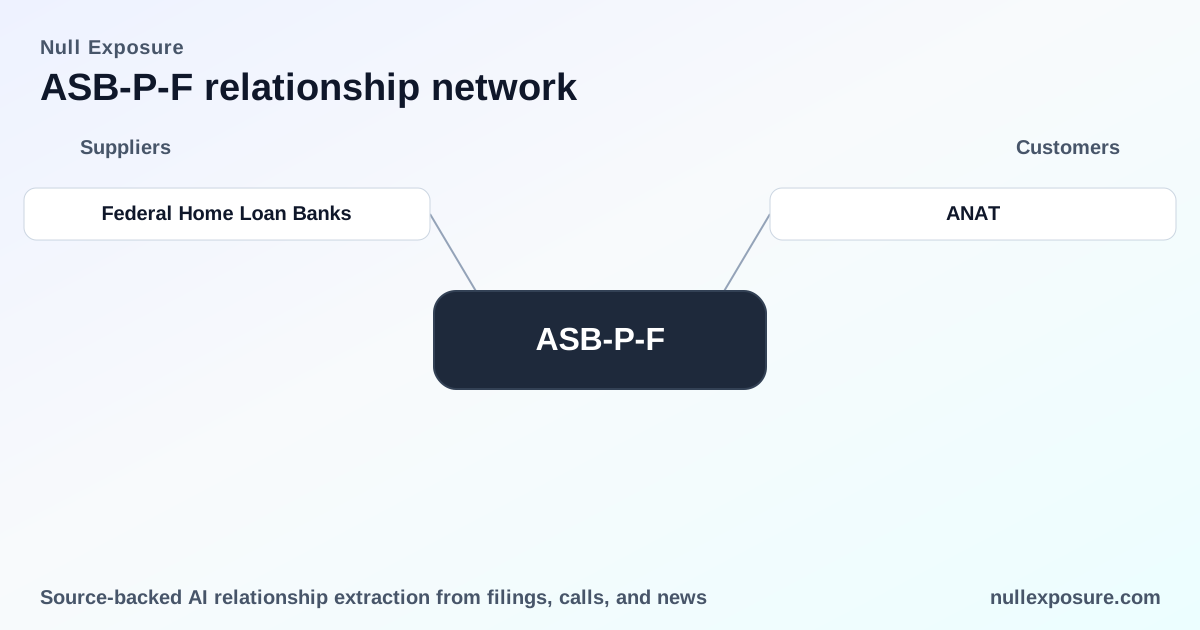
Federal Home Loan Banks — a staple liquidity counterparty
Federal Home Loan Bank advances are the regional system loans that member banks use for secured short‑to‑medium term funding; Associated Banc‑Corp uses these advances as part of its liquidity toolkit. According to a company summary reported on March 9, 2026, FHLB advances are loans where member institutions borrow against mortgage or other eligible assets for liquidity management. (Source: StockTitan news, March 9, 2026 — reporting on Associated Banc‑Corp’s FY2026 commentary.)
- Why this matters: FHLB advances provide a collateralized, reliable source of funding that reduces forced asset sales and supports dividend commitments on preferred shares during stress periods.
Risk and concentration considerations for ASB‑P‑F holders
Preferred investors should focus on several practical characteristics of the business model and supplier posture:
- Liquidity dependency: While retail deposits provide a stable base, the bank explicitly uses FHLB advances as pooled wholesale liquidity, which is critical in periods of deposit volatility or loan growth. This elevates the importance of collateral availability and haircuts under stress.
- Counterparty contracting: The bank’s liquidity relationships are governed by standardized, collateralized advance agreements with FHLBs and similar institutions, which favor predictable enforcement and limited operational counterparty risk.
- Funding diversification: The presence of FHLB access signals a conventional, diversified liquidity strategy; reliance on a single type of wholesale provider would be a concern, but current reporting shows FHLB usage as part of a broader toolkit.
- Regional exposure: Income and asset concentration in the Midwest creates correlated credit risk to local economic cycles; liquidity counterparties help manage that but do not eliminate underlying credit exposure.
Practical implications for investors and operators
For investors evaluating ASB‑P‑F:
- Prioritize monitoring the bank’s liquidity composition (deposit mix vs. advances) and collateral availability for FHLB lines, since these drive the bank’s ability to maintain preferred dividends under pressure.
- Track regulatory filings and earnings commentary for changes in advance volumes and terms; swings in wholesale funding usage are an early warning on deposit stress or growth strategy shifts.
For operators overseeing counterparty risk:
- Validate the legal and operational robustness of advance agreements and collateral valuation processes; ensure margin mechanics and haircuts are stress‑tested against regional collateral performance.
- Maintain a view of concentration by both counterparty type and regional collateral exposure to avoid a single point of failure.
Bottom line and action points
ASB‑P‑F is a yield instrument backed by a conventional regional bank funding model where FHLB advances play a visible role in liquidity management. That relationship reduces short‑term funding risk but requires active monitoring of collateral positions and deposit trends. For a targeted review of supplier exposures and contract posture, visit https://nullexposure.com/ to see how supplier mappings and relationship intelligence inform underwriting and portfolio supervision.
Key takeaways:
- FHLB advances are a material liquidity lever for Associated Banc‑Corp and therefore relevant to preferred‑holder risk.
- Contracting is standard and collateralized, which improves predictability versus unsecured wholesale lines.
- Regional concentration in the Midwest remains a core credit consideration that liquidity tools only partially offset.
Sources referenced in this note include Associated Banc‑Corp reporting summarized in market coverage and a StockTitan news piece dated March 9, 2026, which described FHLB advances as loans secured by eligible assets used by member banks.