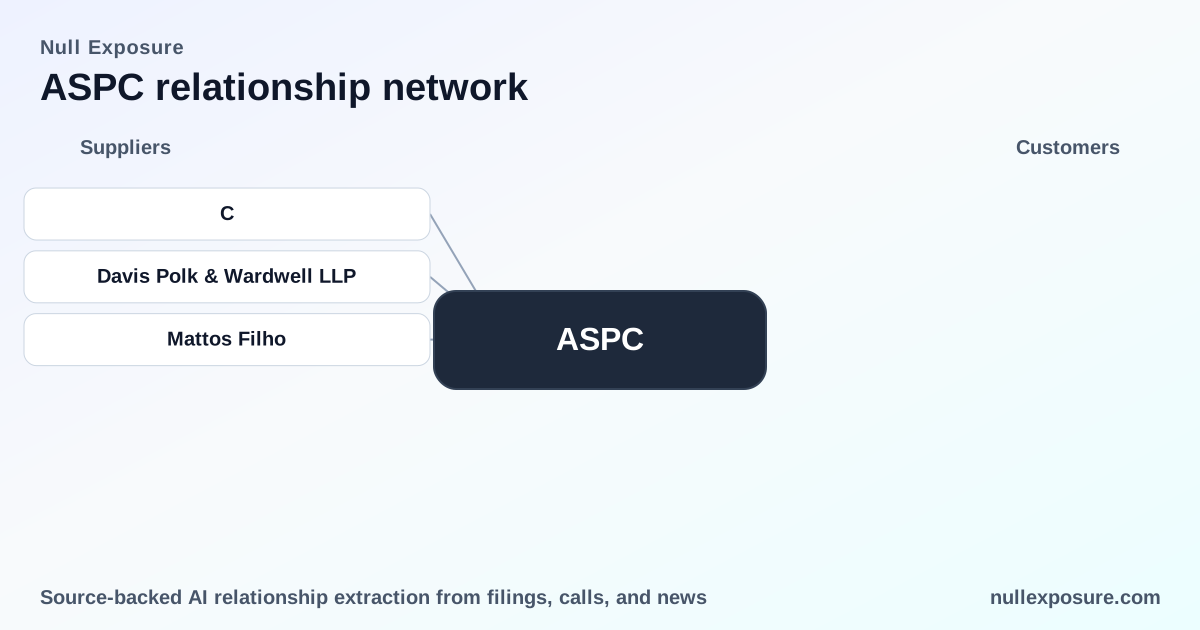
A SPAC III Acquisition Corp. (ASPC): supplier relationships and what they tell investors
Alpha Capital Acquisition Company (ASPC) is a classic SPAC vehicle: it raises capital through a public shell listed on NASDAQ and seeks to effect a business combination, monetizing through sponsor economics, trust-account equity and post-merger equity upside. The company’s public filings show a small market capitalization (~$25.2M) and very high insider ownership (≈76%) with minimal institutional interest (~1.7%), positioning ASPC as sponsor-driven and control-concentrated. For investors and counterparties evaluating supplier exposure, the clear implications are on deal staging, payment structure, and which external advisors are critical to execution.
For a quick look at our broader supplier mapping and monitoring tools, visit https://nullexposure.com/.
How ASPC runs the transaction engine: monetization and contracting posture
ASPC follows the standard SPAC operating model: it collects capital into a trust, lists ordinary shares, and negotiates framework agreements with target sellers where consideration is frequently paid in newly issued SPAC shares or a subsidiary’s stock. The public materials show large headline consideration commitments ($300M and $200M) denominated in stock, implying the company is prioritizing equity-for-sale structures rather than cash outlays, and therefore its counterparty risk is concentrated on post-closing share performance rather than immediate cash liquidity.
This translates into a contracting posture that is:
- Framework-driven and indicative: agreements are described as expressions of mutual interest and remain subject to execution of definitive documents, signaling near-term deal risk and conditionality.
- Deal-size asymmetric: spend signals include both very large headline share-based deals (>$100M) and mid-sized cash outlays (e.g., a $60M purchase from trust), showing mixed liquidity demands.
- Sponsor-dependent: the economics and governance will be influenced by the sponsor and insider concentration metrics in the cap table.
What the supplier map looks like (full coverage)
Below are the external relationships identified in ASPC’s public reporting and press releases, summarized for diligence use. Each relationship is followed by a concise source reference.
-
Citibank — Citibank is listed as capital markets advisor to Alpha Capital in the company’s SPAC announcement tied to a proposed business combination; the advisor role supports deal structuring and distribution. A BizWire press release dated November 17, 2021 states Citibank’s advisor role: https://markets.financialcontent.com/pennwell.cabling/article/bizwire-2021-11-17-data-software-platform-semantix-to-become-publicly-traded-on-nasdaq-via-spac-merger-with-alpha-capital
-
Davis Polk & Wardwell LLP — Davis Polk is engaged as legal advisor to Alpha Capital, handling U.S. transactional and securities counsel in support of the proposed merger process. The advisory role is documented in the November 17, 2021 announcement: https://markets.financialcontent.com/pennwell.cabling/article/bizwire-2021-11-17-data-software-platform-semantix-to-become-publicly-traded-on-nasdaq-via-spac-merger-with-alpha-capital
-
Mattos Filho — Mattos Filho is retained as Brazilian counsel on matters relating to a target with Brazilian connections, providing local regulatory and transactional support. The firm’s role is noted in the same Nov 17, 2021 press release: https://markets.financialcontent.com/pennwell.cabling/article/bizwire-2021-11-17-data-software-platform-semantix-to-become-publicly-traded-on-nasdaq-via-spac-merger-with-alpha-capital
These three counterparties appear consistently across English and Spanish versions of the same corporate announcement, reinforcing their standing in the transaction’s advisor ecosystem.
Constraints and company-level signals investors should factor into contracts
Public disclosures include several structural constraints that are company-level signals about how ASPC approaches counterparties and deal execution. These are not assigned to a specific external firm unless the excerpt explicitly names them.
- Framework agreements dominate: Multiple excerpts indicate that the company entered into agreements intended to express mutual indications of interest and that definitive agreements remain outstanding. This signals a high proportion of early-stage, conditional commitments rather than finalized, irrevocable contracts.
- Geographic tilt toward APAC exposure: One disclosure identifies an HD Group headquartered in Anji County, China, creating an APAC jurisdictional footprint that carries cross-border regulatory, tax and enforcement considerations.
- Seller-focused deals paid in stock: Two deal excerpts specify aggregate consideration of $300M and $200M paid entirely in stock to target shareholders, indicating equity-based consideration as the primary funding mechanism and implying counterparty reliance on post-closing public-market performance.
- Mixture of spend bands: Evidence points to both very large headline stock deals (>$100M) and mid-sized cash payments (e.g., a $60M purchase from the trust account), together with underwriting fees in the $100k–$1M band. This mix signals episodic cash demands (trust purchases, commissions) alongside leveraged equity transfers.
- Relationship stage: prospect: Multiple mentions label the agreements as expressions of interest and subject to definitive documents, confirming that many counterparty relationships are in a prospect stage rather than closed or operational.
- Service-provider commercial terms visible: The underwriting agreement paid $600,000 in commissions, demonstrating standard underwriting economics and indicating where cash spend will occur during capital markets activity.
These constraints imply that counterparties and investors should expect conditional commitments, equity-heavy consideration mechanics, APAC-related complexity, and near-term cash flows tied to underwriting and trust-account actions.
For a deeper supplier risk map and active monitoring, see https://nullexposure.com/.
Investment implications: risk, concentration and execution sensitivity
Investors evaluating ASPC’s supplier relationships should treat the combination of conditional framework agreements and equity-settled consideration as the dominant risk vector. Equity-for-seller arrangements transfer performance risk to post-closing public-market dynamics; they reduce immediate cash strain on ASPC but increase the criticality of successful integration and market reception.
Key operational finance implications:
- Execution sensitivity is high. Framework-stage agreements mean counterparties can walk or renegotiate if definitive documentation or shareholder approvals fail.
- Counterparty criticality is concentrated. A handful of advisors (investment bank, U.S. counsel, local counsel) are materially important to closing and regulatory clearance.
- Liquidity cadence is lumpy. While equity considerations defer large cash outflows, trust purchases and underwriting commissions create discrete cash execution points that require monitoring.
Quick closing view and action items
ASPC is a sponsor-controlled SPAC with large stock-settled acquisition proposals and conditional framework agreements; investor focus should be on execution risk, market reception to equity consideration, and APAC legal/regulatory exposure. For investors and operators wanting structured supplier intelligence and active monitoring of advisor engagements, underwriting outlays, and contract progression, explore our tools and reports at https://nullexposure.com/.
Actionable next steps:
- Track definitive agreement filings and shareholder votes to move prospects to closed status.
- Monitor cash movements from the trust account and underwriter fee disclosures as proximate indicators of transaction progress.
- Review APAC-target regulatory checkpoints (especially for assets headquartered in China) for timeline and clearance risk.
For portfolio teams seeking dedicated supplier mapping and live alerts on SPAC counterparties, visit https://nullexposure.com/ to arrange a briefing.