Astec Industries (ASTE): Supplier posture, strategic exposures, and the Avalara compliance link
Astec Industries designs, manufactures and sells heavy highway construction equipment and components and monetizes through equipment sales, replacement parts and aftermarket service across domestic and international markets. Revenue is driven by equipment cycles and parts/service capture; margins compress when steel input costs or supply constraints bite. The company’s balance of on-hand working capital, supplier arrangements and ERP footprint determine how reliably Astec converts backlog into cash flow. For a concise supplier-risk briefing and model inputs, visit https://nullexposure.com/.
Executive snapshot: what investors are buying
Astec is a capital goods manufacturer focused on highway construction machinery and component sales. Trailing revenue stands at $1.41 billion with EBITDA around $121.5 million, and the market capitalization is roughly $1.21 billion (latest quarter 2025-12-31 company profile). Valuation metrics show a trailing P/E of 31.3 and a forward P/E of 13.95, implying the market is pricing a near-term step-up in profitability. Institutional ownership is very high at ~99.7%, which concentrates trading liquidity and vote control; insider ownership is modest at about 1.18%. These facts anchor commercial counterparty risk: large institutional holders demand transparency on supplier concentration and cost inflation control.
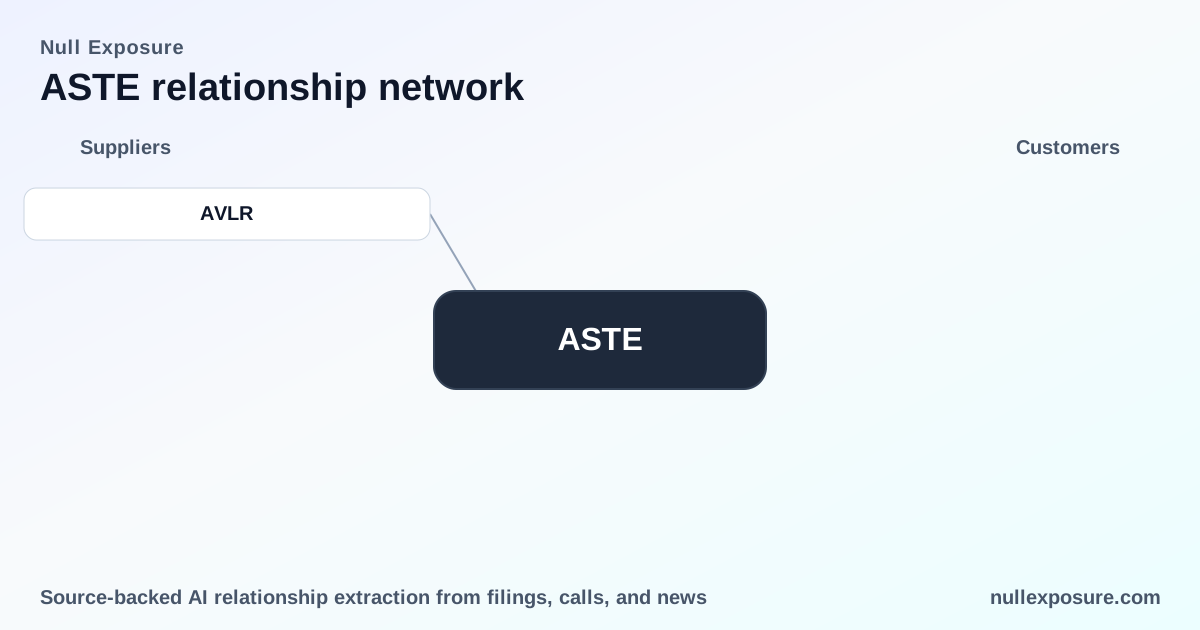
The single supplier relationship reported: Avalara, Inc.
Avalara, Inc. — tax compliance software across 20 entities and multiple ERPs
Astec has implemented Avalara’s tax and compliance solutions to automate tax calculation and filing across 20 legal entities and multiple ERP systems, streamlining global tax compliance and reducing manual tax exposure. According to a PR Newswire release on March 9, 2026, Avalara announced Astec’s deployment of its solutions to standardize tax processes across the company’s footprint. (PR Newswire, March 9, 2026)
Takeaway: this relationship addresses operational control and compliance complexity rather than raw materials or manufacturing throughput; integrating tax automation across multiple ERPs can lower audit risk and administrative cost, and it implicitly confirms a complex, multi-entity IT footprint.
How Astec’s supplier model shapes operating risk
Astec’s supplier posture can be understood through several company-level constraints disclosed in public materials:
- Short-term contracting posture via Just-In-Time steel purchases. Management states, “The majority of steel is scheduled on a just in time arrangement from suppliers to better manage inventory requirements at our manufacturing facilities.” This establishes a short-term contract orientation and elevated sensitivity to supply interruptions and price spikes.
- Global sourcing footprint. Astec purchases raw materials, components and replacement parts “both domestically and internationally,” which spreads procurement exposure across geographies but also introduces logistics, tariff, and geopolitical variables.
- Critical supplier concentration for steel and certain components. The company concedes reliance on “a limited number of suppliers for steel and certain other raw materials, parts and components,” indicating high materiality and supplier concentration risk for core inputs.
- Mixed supplier roles: distributors and mills/manufacturers. Steel and related inputs are sourced from mills, distributors and other sources, meaning contractual strength varies across the supply base and inventory buffers cannot be uniformly relied upon.
Together, these constraints describe a manufacturer that runs lean inventories, depends on a small set of steel suppliers for critical inputs, and sources globally—conditions that accentuate the importance of supplier continuity, pricing contracts, and logistics resilience.
Why the Avalara engagement matters to investors
The Avalara relationship does not substitute for raw-material supply; it is an operational control play. Automating tax and compliance across 20 entities and multiple ERPs reduces administrative drag and audit exposure, improving free-cash-flow conversion if implemented cleanly. The deployment also signals that Astec manages complexity across legal entities and fragmented ERP systems—an indirect indicator of organizational scale and the potential friction costs associated with vendor integrations.
For further supplier analytics and tailored exposure reports, see https://nullexposure.com/.
Investment implications and risk checklist
Astec’s supplier configuration generates concentrated upside and downside scenarios:
- Upside lever: Efficient procurement and successful passes of steel cost through pricing and aftermarket parts recover margins; Avalara-driven compliance improvements convert to lower SG&A volatility.
- Downside lever: Disruption from a primary steel supplier or shipping/logistics chokepoints will hit production cycles quickly because of JIT scheduling; global sourcing widens exposure to tariffs, currency swings and lead-time variability.
Key facts investors should monitor (drawn from company profile and disclosures):
- Revenue TTM: $1.41B; EBITDA: $121.5M.
- Quarterly revenue growth YoY: +11.6%; quarterly earnings growth YoY: -43.8%, highlighting operating leverage and margin pressure.
- Valuation: EV/EBITDA ~13.8, trailing P/E 31.3, forward P/E 13.95—market expects margin recovery.
- Ownership: ~99.7% institutional, which concentrates governance scrutiny on supply-chain disclosures.
Action item: verify supplier concentration disclosures in the next 10-K and monitor steel procurement agreements for any fixed-price or hedging provisions.
What to watch next—data points that change the investment case
- Quarterly commentary on steel procurement and whether suppliers shift from JIT to longer-term commitments or add capacity guarantees.
- Evidence of ERP consolidation or continued fragmentation; Avalara’s rollout status across entities is a process metric worth checking in earnings calls.
- Order backlog and parts availability metrics that translate supplier continuity into revenue realization.
- Trends in gross margin and EBITDA conversion—if margins expand toward forward multiples, upside is confirmed; if they deteriorate, supplier shocks are the likely culprit.
- Public filings and press releases that identify any new material supplier relationships or distribution agreements.
Bottom line and next steps
Astec is a capital-goods manufacturer running a lean, globally sourced supply chain with concentrated dependency on steel suppliers. The Avalara relationship strengthens tax and compliance controls across a complex multi-entity ERP landscape, reducing one class of operational risk, but it does not address the material supply-chain exposures intrinsic to their manufacturing model. For investor due diligence, prioritize supplier concentration disclosures, procurement contract terms for steel, and updates on ERP and compliance integrations.
For more supplier intelligence and scenario analysis, visit https://nullexposure.com/ — the resource hub for procurement-driven equity insights.