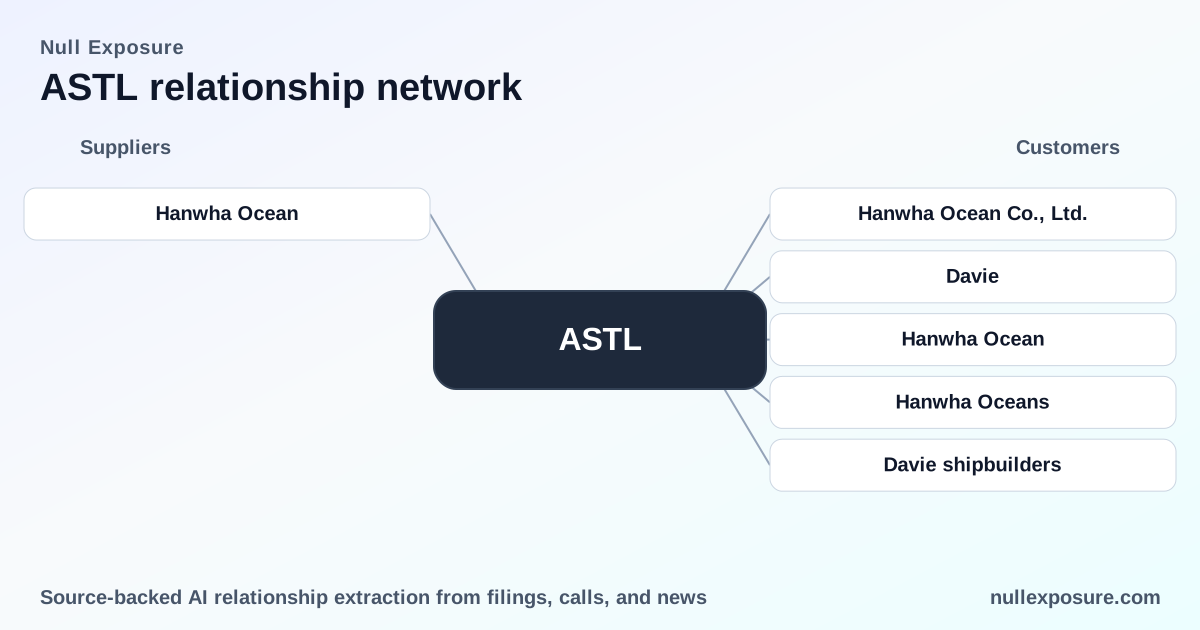
Algoma Steel (ASTL): What the Hanwha Ocean MOU means for suppliers and investors
Algoma Steel is a Canadian steel producer that monetizes through the sale of finished steel products across North America and through targeted capital projects that expand capacity — most recently a beam mill project that is now the center of a new commercial arrangement. Revenue is generated from product sales, and non-operating arrangements tied to new assets are structuring long-term cash flows via revenue-sharing with strategic partners. If you evaluate counterparty risk or supplier relationships, the Hanwha Ocean agreement is the immediate transactional event that changes cash-flow timing and partner exposure. Read more on implications and source documents at https://nullexposure.com/.
Quick financial context every supplier and counterparty should use
Algoma operates in a cyclical, capital-intensive industry and is currently operating with negative profitability metrics that influence contracting posture and supplier creditworthiness. Key facts:
- Market capitalization roughly $376m and trailing revenue about $2.09bn (TTM).
- Negative EBITDA (-$418m) and negative operating margin, which compress bargaining power with suppliers and increase sensitivity to project financing.
- Institutional ownership is high (~81%), while insiders hold about 7%, indicating professional investor scrutiny.
- Analysts set a target price at $20, but current multiples are distorted by losses (EV/EBITDA ~89.6 on a negative earnings base).
These metrics translate into a conservative contracting posture with a premium on clear cash-flow visibility from projects and revenue-sharing agreements.
The Hanwha Ocean arrangement — the relationship entries documented
Below are the two relationship records found in public reporting and news feeds; each entry is summarized with its source.
-
Algoma will pay Hanwha Ocean 3% of net sales from the beam mill for 10 years post-operation, creating a predictable, long-dated cash outflow linked to that facility’s revenue stream. According to a March 9, 2026 news report, the revenue-share arrangement is explicit and will directly affect Algoma’s cash flow and profitability once the beam mill is operational. (Intellectia news, March 9, 2026 — https://intellectia.ai/news/stock/algoma-steel-signs-mou-with-hanwha-ocean-for-c345m-investment)
-
The two parties signed a binding Memorandum of Understanding that frames a long-term strategic arrangement, tied to the Canadian Patrol Submarine Project and other cooperation areas, announced in a filing referenced January 26, 2026. The MOU positions Hanwha Ocean as a strategic partner and formalizes the commercial pathway for the revenue-sharing agreement. (SEC filing summary indexed by StockTitan, Jan 26, 2026 — https://www.stocktitan.net/sec-filings/ASTL/schedule-13g-a-algoma-steel-group-inc-amended-passive-investment-disc-bb134fc92572.html)
What this relationship changes for suppliers and operators
The Hanwha Ocean MOU is not a simple vendor contract — it is a strategic financial commitment that re-allocates a portion of future beam mill revenue to an external partner. Operationally and commercially this produces immediate, practical effects:
- Cash-flow predictability for Hanwha Ocean: The 10-year, percentage-of-sales structure creates an annuity-like revenue stream for the partner.
- Permanent reduction in project-level free cash flow for Algoma: Suppliers and lenders should model the 3% revenue outflow when assessing post-commissioning working capital and debt service capacity.
- Counterparty strategic alignment: The MOU ties Algoma’s beam mill economics to defense-related industrial activity (Canadian Patrol Submarine Project), which can insulate long-term demand but also concentrates project risk.
If you manage supplier exposure or underwriting, incorporate the 3% revenue share into your scenarios for supplier payment terms, bonding capacity, and working-capital drawdowns.
Operating model signals that matter to counterparties
Several company-level signals — derived from the corporate profile and financials — shape how Algoma contracts and performs with suppliers:
- Concentration on capital projects: The beam mill is a material production and revenue initiative; contractual commitments tied to that asset directly affect enterprise cash flow.
- Contracting posture is conservative and liquidity-aware: Negative margins and EBITDA suggest Algoma will prioritize liquidity preservation and may prefer supplier arrangements that improve cash timing (extended terms, milestone payments) or transfer some project risk to partners.
- Criticality of the beam mill: The revenue-share demonstrates the project’s strategic centrality; suppliers tied to beam mill inputs will face higher operational interdependence with Algoma’s commercial partners.
- Maturity and partner selection: Bringing a partner like Hanwha Ocean reflects a strategy to de-risk capital and secure longer-term demand channels; this increases contractual complexity for downstream suppliers.
There are no third-party constraints flagged in the supplier relationship feed; this absence is itself a signal that public constraints or third-party covenants were not disclosed in the reviewed records.
What investors and operators should stress-test now
- Model the beam mill’s revenue profile with a permanent 3% gross-outflow for 10 years and quantify impacts on free cash flow, covenant headroom, and supplier payment capacity.
- Re-evaluate supplier credit lines and payment terms for vendors dependent on the beam mill, since their counterparty (Algoma) has committed distributable revenue away from the asset.
- Consider the strategic upside: alignment with defense projects reduces pure-market demand cyclicality, but it anchors cash flows to program timelines and political risk.
For a quick operational review and tailored counterparty intelligence, visit https://nullexposure.com/ to commission a focused supplier risk brief.
Risks and the downside scenario
- Earnings vulnerability: With negative EBITDA and operating margin, any overruns on the beam mill or slower sales ramp amplify the impact of the 3% payout.
- Liquidity pressure: Regular revenue outflows reduce free cash available for supplier payments or debt service, increasing the probability of renegotiated supplier terms.
- Concentration risk: The company’s reliance on a single major project for future revenue elevates counterparty systemic exposure.
Bottom line and recommended next steps
The Hanwha Ocean MOU converts a capital project into a multi-year commercial partnership that materially changes Algoma’s future cash flows and supplier risk profile. For suppliers and investors evaluating exposure, the key is to price the 3% revenue-share into all forward cash-flow models and renegotiate or hedge supplier terms where necessary.
If you need a supplier risk memo that integrates this agreement into credit lines and working-capital scenarios, start here: https://nullexposure.com/. For a comparative view of how partners and suppliers are adjusting commercial terms in heavy industry, request a bespoke briefing through https://nullexposure.com/ and lock in a focused review.