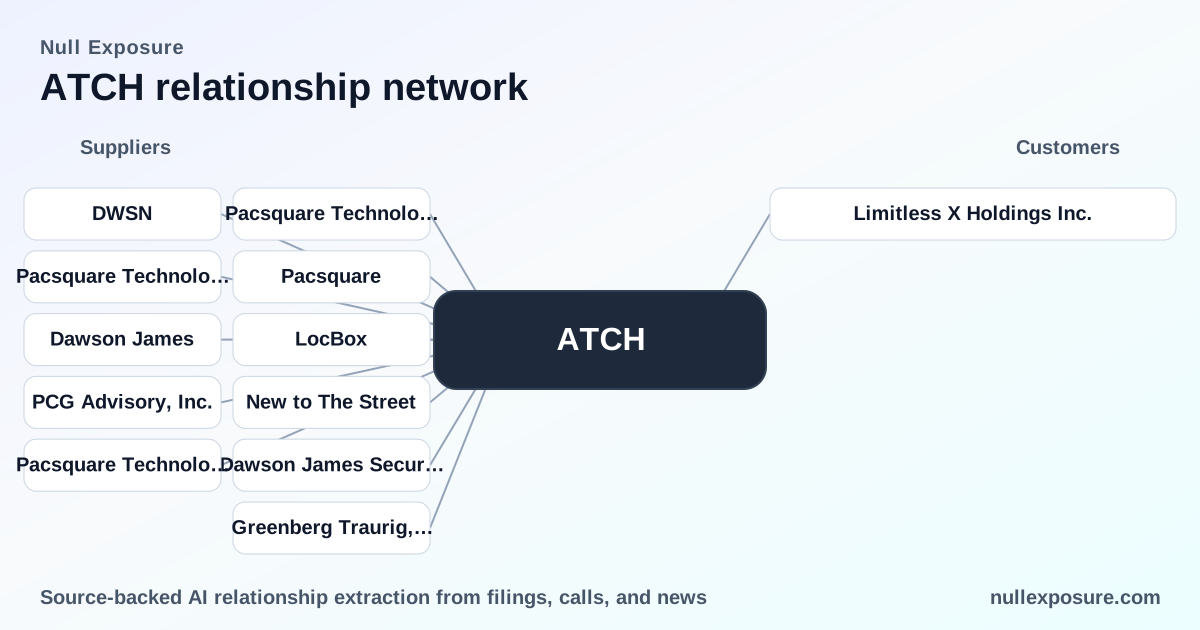
AtlasClear Holdings (ATCH) — Supplier relationship map and investor takeaways
AtlasClear is building a fintech trading and securities-lending stack and monetizes through platform services, stock-loan revenue and licensing/white‑label fees tied to its clearing and settlement capabilities. The company combines organic product delivery with targeted technology acquisitions and third‑party integrations to generate recurring revenue and scale gross margins; recent financing and platform deals position AtlasClear to convert technology assets into revenue while carrying integration and counterparty concentration risk. For a concise supplier-risk scorecard and live tracking, visit https://nullexposure.com/.
How AtlasClear actually makes money (short version)
AtlasClear’s public disclosures describe three commercial levers: (1) revenue from securities lending and fully‑paid lending programs, (2) fees for its clearing/settlement and correspondent services delivered via the AtlasClear platform, and (3) licensing/white‑label arrangements and subscription fees attached to software partners. The FY2025 filings and subsequent press releases show rapid revenue growth (Revenue TTM ~$14.6M) and a software-centric gross margin profile, but with negative EBITDA and high EPS volatility as the business scales and integrates acquisitions.
Visit https://nullexposure.com/ for additional supplier intelligence and contract-level detail.
Supplier relationships you need to know
Below are the counterparties the company lists in filings and news; each entry includes a short plain‑English summary and the source cited naturally.
Pacsquare / Pacsquare Technologies LLC
AtlasClear contracted Pacsquare under a Source Code Purchase and Master Services Agreement (and later a Software Development and License Agreement) to acquire technology and to develop and maintain the Online Account Application (OLA) used in AtlasClear’s platform; the relationship is described as a multi‑year development and licensing service. Source: AtlasClear FY2025 Form 10‑K and related 2025 press releases summarized in TradingView and GlobeNewsWire (FY2025–FY2026).
LocBox (LCBX / Locbox Technologies, Inc.)
AtlasClear has integrated LocBox technology to optimize stock‑loan inventory and fully‑paid lending capabilities, and the company discloses a monthly payment option for LCBX services (cash or stock), indicating a subscription‑style commercial tie. Source: Company corporate updates and GlobeNewswire / press releases (FY2025–FY2026).
New to The Street
AtlasClear is a featured client of New to The Street and has used the outlet’s channels for investor communications and to announce regulatory timing (Form 10‑K filing targets) and business‑line expansion. Source: Multiple press releases published via New to The Street syndicated outlets (FY2025–FY2026).
Dawson James / Dawson James Securities, Inc.
Dawson James acted as placement agent on AtlasClear’s October 2025 financing, taking a placement fee and participating in note allocations; disclosures show insider participation in the financing through affiliated funds. Source: MarketScreener and StockTitan coverage of the October 2025 financing and placement agent disclosures (FY2025).
Greenberg Traurig, LLP
Greenberg Traurig is disclosed as legal advisor to AtlasClear in the Company’s acquisition activity, indicating external legal support for transactional work. Source: MarketScreener reporting on the share purchase agreement to acquire Commercial Bancorp (FY2026 coverage).
PCG Advisory, Inc.
PCG Advisory is repeatedly listed as the investor relations contact and communications partner in AtlasClear press materials, signaling an ongoing IR and messaging relationship rather than operational supply. Source: Company press releases and GlobeNewswire / Yahoo Finance distribution (FY2025–FY2026).
What the contract characteristics tell investors
AtlasClear’s constraint signals in filings are revealing for commercial and operational risk.
- Software and licensing are core to the model: multiple excerpts show AtlasClear holds perpetual licenses for the OLA and can modify or white‑label the platform, which supports a software‑driven monetization strategy and potential revenue from correspondents and transfers. This is a company‑level signal from licensing language in filings (FY2025).
- Multi‑year technology engagements with Pacsquare: the documents describe a 36‑month software development and licensing term with ongoing maintenance and support, which implies medium‑term dependency on a single provider for critical platform functionality (FY2025 10‑K).
- Subscription and stock‑payment mechanics: AtlasClear can pay some vendors (notably LCBX/LocBox) monthly in cash or stock, and legal fees may be payable in shares (Winston & Strawn example in filings); this points to capital‑preserving supplier arrangements but potential dilution and alignment risk (evidence in FY2025–FY2026 excerpts).
- Mixed tenor exposures: the company’s disclosures also flag short‑term on‑demand credit lines in acquired businesses and a $10M revolving credit facility referenced for Wilson‑Davis, suggesting liquidity and short‑term funding dependencies in addition to long‑term software commitments.
These constraints together depict a company that is software‑centric, dependent on a small set of strategic suppliers for platform delivery, and creative about vendor payments (cash or equity)—all of which influence contract negotiation posture, concentration risk and integration complexity.
See more granular supplier profiles and contract excerpts at https://nullexposure.com/.
Investment implications — what matters to investors
- Upside: If the Pacsquare‑built platform and LocBox integrations scale trading and stock‑loan flows as management projects, AtlasClear’s gross margins and recurring revenue should expand meaningfully given the high gross profit reported relative to revenue (FY2025).
- Key risks: Integration risk from recent acquisitions, supplier concentration on Pacsquare for core platform development, and payment‑in‑equity mechanics that introduce dilution and governance considerations. Legal and IR relationships (Greenberg Traurig, PCG Advisory) reduce execution risk but do not eliminate operational concentration.
- Catalysts to watch: successful 36‑month deliverables from Pacsquare, recurring revenue growth from LocBox‑enabled lending products, and follow‑on financings structured by placement agents such as Dawson James.
Practical next steps for due diligence
- Request the Pacsquare technology delivery schedule, SLAs and any escrow/indemnity provisions supporting the OLA codebase.
- Validate subscription economics and payment flexibility for LocBox (cash vs. equity) to model dilution and recurring cost profiles.
- Monitor placement agent activity and insider participation in financings as short‑term liquidity moves can materially affect ownership and capital structure.
For a supplier risk brief and contract red‑flag report tailored to AtlasClear, go to https://nullexposure.com/ and request the ATCH supplier dossier.
Bottom line
AtlasClear has assembled a fintech stack by combining acquired technology and third‑party integrations; its commercial model is software‑driven with recurring lending and platform fees, but execution hinges on a small number of supplier relationships (notably Pacsquare and LocBox) and on financing actions that affect capitalization. Investors should prioritize contract terms, delivery milestones and supplier concentration when evaluating AtlasClear’s next 12–36 month trajectory. For detailed contract excerpts and an exposure heatmap, visit https://nullexposure.com/.