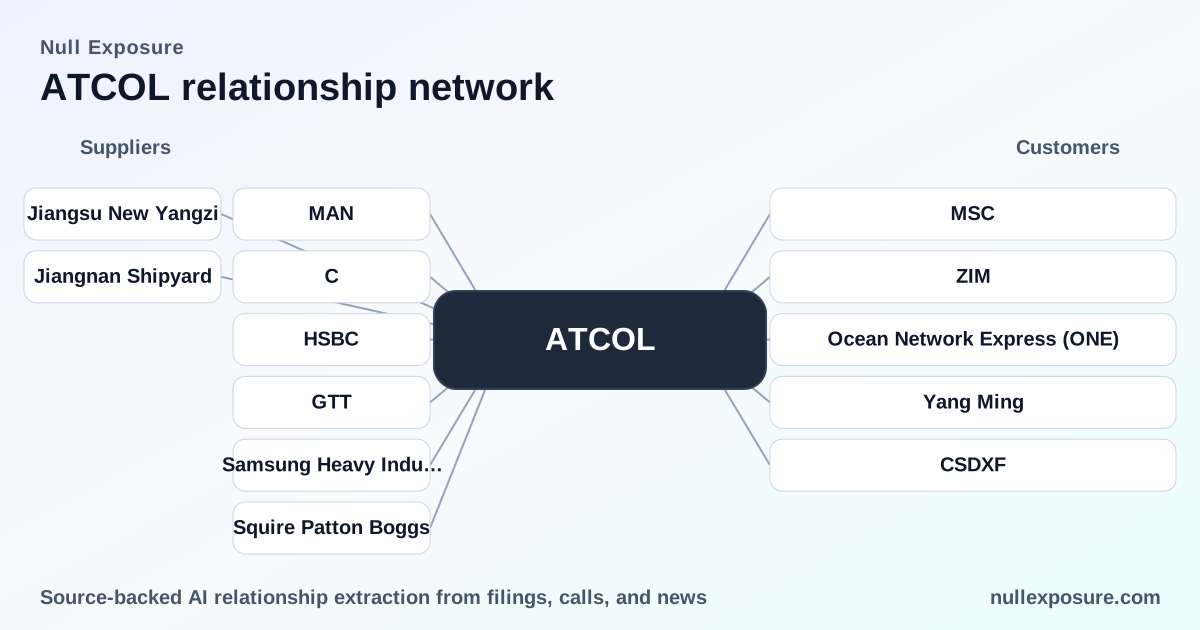
Atlas Corp (ATCOL): Supplier footprint and what it means for investors
Atlas Corp operates as a global owner-operator of container vessels through its wholly owned subsidiary Seaspan, monetizing a fleet through long-term charters, sale-leaseback structures and structured shipping finance. The company presents a capital-intensive, cash-backed operating model with a market capitalization roughly $3.36 billion, trailing EBITDA of $1.818 billion and a reported profit margin near 27.5%, giving investors both scale and recurring cashflow characteristics that underwrite supplier and financing relationships. For a deeper supplier-risk and partner analysis, visit https://nullexposure.com/.
Why suppliers and lenders determine Atlas’ durable earnings
Atlas’ business is fundamentally a fixed-asset, contract-driven model: ships are built, financed and then committed to multi-year charters. That operating posture produces predictable revenue streams, but it also concentrates operational risk in a handful of upstream partners — shipyards, engine and tank technology providers, legal and financing counterparties. Atlas’ balance of long-term charters and structured finance makes suppliers not just vendors but strategic enablers of fleet renewal and compliance with emissions and fuel transitions. The company-level signals are clear: stable contracting posture, material capex dependency, diversified shipbuilding counterparties, and mature cash generation as evidenced by the recent financials.
The supplier and partner map — what the reporting shows
Below are the relationships surfaced in the public record and what each means in plain language.
-
MAN — MAN ME‑GI engines are the selected main propulsion for the new 15,000‑TEU LNG‑powered vessels built for Seaspan, indicating Atlas’ reliance on MAN for core propulsion technology. (LNGPrime, March 2026: https://lngprime.com/asia/samsung-heavy-launches-seaspans-lng-powered-containership/64105/)
-
GTT — GTT’s Mark III membrane technology is specified for the LNG tanks on the same 15,000‑TEU vessels, making GTT a critical supplier for Atlas’ LNG containment and fuel transition strategy. (LNGPrime, March 2026: https://lngprime.com/asia/samsung-heavy-launches-seaspans-lng-powered-containership/64105/)
-
Samsung Heavy Industries — Samsung Heavy launched the first of ten LNG‑powered 15,000‑TEU containerships being built for Seaspan, confirming Atlas’ use of major Asian yards to deliver large, modern tonnage. (LNGPrime, March 2026: https://lngprime.com/asia/samsung-heavy-launches-seaspans-lng-powered-containership/64105/)
-
Jiangsu New Yangzi — Jiangsu New Yangzi is building a separate series of 7,000‑TEU LNG‑powered vessels for charters involving Seaspan and ZIM, showing Atlas’ multi‑yard procurement strategy across vessel sizes. (LNGPrime, March 2026: https://lngprime.com/asia/samsung-heavy-launches-seaspans-lng-powered-containership/64105/)
-
Jiangnan Shipyard — Jiangnan delivered the Maersk Cleveland as part of the SAVER 15,500 TEU series for Seaspan, documenting ongoing newbuilding deliveries from Chinese yards into Atlas’ fleet. (MarineLink, November 2023 reporting on delivery; cited March 2026: https://www.marinelink.com/news/seaspan-takes-delivery-new-teu-vessel-509542)
-
Citibank N.A., London Branch — Citibank is a lender/arranger on ECA‑backed JOLCO financing for Seaspan, highlighting Atlas’ use of export credit agency structures and international banks to underwrite newbuild capex. (WFW press release, March 2026: https://www.wfw.com/press/wfw-advises-citibank-and-hsbc-on-first-of-their-kind-eca-backed-jolcos-for-seaspan/)
-
HSBC Bank — HSBC is a co‑arranger on similar ECA‑backed JOLCO facilities for Seaspan, underscoring diversified bank relationships for structured shipping finance execution. (WFW press release, March 2026: https://www.wfw.com/press/wfw-advises-citibank-and-hsbc-on-first-of-their-kind-eca-backed-jolcos-for-seaspan/)
-
Squire Patton Boggs — Squire Patton Boggs acted for Seaspan in related transactions alongside other law firms, indicating the complex legal and documentation work that supports Atlas’ financing and leasing arrangements. (WFW press release, March 2026: https://www.wfw.com/press/wfw-advises-citibank-and-hsbc-on-first-of-their-kind-eca-backed-jolcos-for-seaspan/)
Commercial implications investors should act on
The vendor map reflects a deliberate strategy: use top-tier shipyards and specialist technology providers while funding newbuilds through export‑credit and JOLCO structures with global banks. That combination preserves balance-sheet flexibility and locks in charter revenue against deployment risk. For investors, this implies:
- Revenue visibility is high because multi-year charters back debt and capex. Atlas’ operating margin strength and EBITDA scale support further fleet investment and financing activity.
- Counterparty concentration is moderate — Atlas contracts with multiple yards and technology suppliers, reducing single‑vendor execution risk but leaving industry-wide delivery and input-cost exposure.
- Financing sophistication is a core asset — ECA‑backed JOLCOs and relationships with Citibank and HSBC reduce funding cost and extend tenor, directly supporting fleet expansion. Learn more on how partner risk affects valuation at https://nullexposure.com/.
Risks to monitor, spelled out
- Shipyard execution and delivery schedules — delays at Samsung Heavy, Jiangsu New Yangzi, or Jiangnan would compress returns and could trigger financing adjustments.
- Technology and integration risk — reliance on MAN engines and GTT tanks ties vessel performance and regulatory compliance to a small set of specialized suppliers.
- Financing-market sensitivity — a tightening of ECA or bank appetite would increase funding costs for newbuilds and refinancing.
- Regulatory and fuel-transition pressure — moving to LNG propulsion reduces near‑term emissions risk but requires ongoing capital and technical integration.
Public reporting on supplier and financing activity does not show explicit counterparty constraints flagged in the collected records; the absence of constraint records should be treated as a company‑level signal, not proof of zero exposure. Atlas’ financial metrics and existing structured finance program indicate mature commercial relationships but continued dependence on skilled shipbuilders, lenders and technology licensors.
What investors should do next
- Monitor delivery calendars and announced charter commencements from Seaspan to validate revenue timing and capex absorption.
- Track material counterparties (MAN, GTT, Samsung, Jiangsu New Yangzi, Jiangnan) for execution risk and any public notices on warranty, delays or cost escalations.
- Watch bank and ECA appetite — announcements from Citibank and HSBC will signal financing capacity for the next wave of newbuild financing.
For a consolidated view of Atlas’ supplier exposures and structured-finance relationships, visit https://nullexposure.com/ — the fastest way to reconcile public reporting with investment risk. For ongoing updates and a partner‑level risk dashboard, return to https://nullexposure.com/ for subscriber tools and curated commentary.