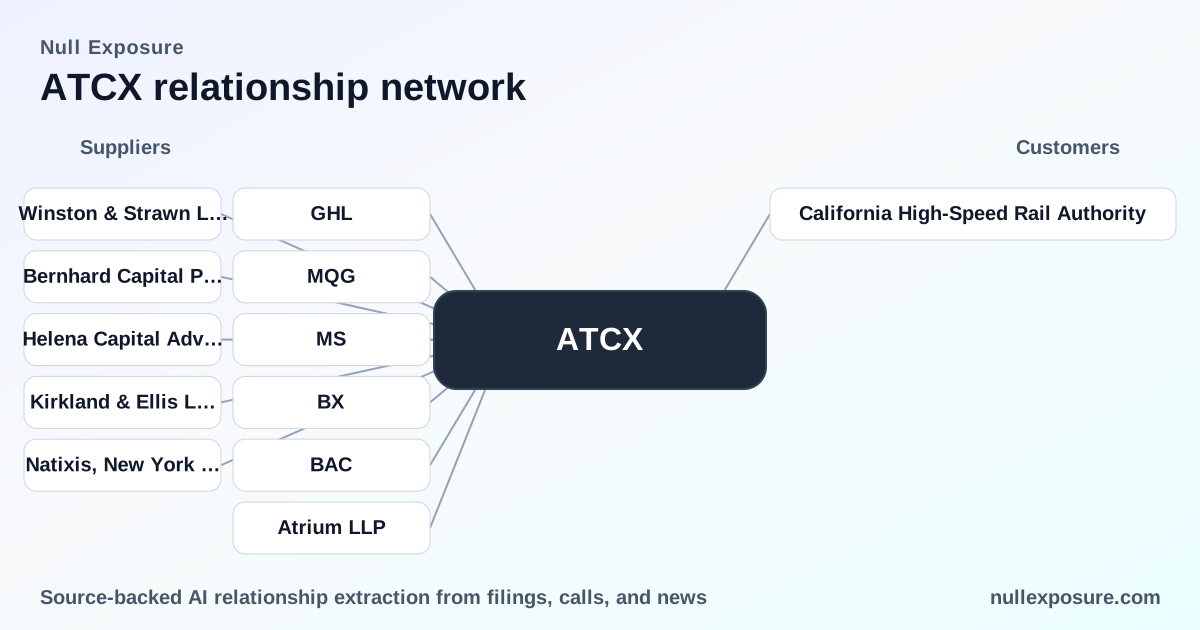
Atlas Technical Consultants (ATCX): What the Boxwood financing relationships reveal for investors and operators
Atlas Technical Consultants is a fee-based professional services firm that generates revenue through testing, inspection, engineering, program and environmental management contracts across infrastructure and energy sectors. The company monetizes a geographically distributed billable-labor model and project-based consulting, converting backlog and government/industrial contracts into recurring revenue streams. For investors and procurement teams, the Boxwood/SPAC financing disclosures around Atlas reveal who is enabling the capital structure and transaction execution—information that directly affects integration risk, sponsor alignment and short-term balance sheet flexibility.
Explore broader supplier intelligence at https://nullexposure.com/ to weigh these counterparty signals alongside financials.
Why the Boxwood financing map matters to Atlas stakeholders
Boxwood Merger Corp. secured financing to complete its combination with Atlas Intermediate Holdings LLC; the parties named in the financing announcement are advisors, lenders and legal counsel who will shape the deal terms and timing. These relationships are transactional but materially relevant because they determine the deal’s probability of close, capital structure, and the sponsor equity posture—each of which affects Atlas’s access to growth capital and sponsor influence post-close (e.g., equity rollover, debt terms).
The named counterparties and what they mean for Atlas
- Greenhill & Co. acted as a financial advisor to Boxwood, underwriting aspects of deal strategy and valuation guidance for the SPAC sponsor. (SpacInsider, March 9, 2026 — https://www.spacinsider.com/news/market-intel/boxwood-merger-corp-secures-additional-financing)
- Macquarie Capital provided committed debt financing for the transaction and is listed as a capital markets advisor, which indicates active role in structuring the credit piece. (SpacInsider, March 9, 2026 — https://www.spacinsider.com/news/market-intel/boxwood-merger-corp-secures-additional-financing)
- Morgan Stanley served as a capital markets advisor to Boxwood, contributing to syndication and market placement strategy for any equity or debt components tied to the deal. (SpacInsider, March 9, 2026 — https://www.spacinsider.com/news/market-intel/boxwood-merger-corp-secures-additional-financing)
- GSO Capital Partners (Blackstone’s credit arm) committed up to $155 million of financing, supplying a large portion of the backstop debt capacity that will underwrite the combined company’s near-term leverage. (SpacInsider, March 9, 2026 — https://www.spacinsider.com/news/market-intel/boxwood-merger-corp-secures-additional-financing)
- BofA Merrill Lynch is listed among capital markets advisors to Boxwood, reinforcing the syndicate strength and institutional distribution for any financing tied to the transaction. (SpacInsider, March 9, 2026 — https://www.spacinsider.com/news/market-intel/boxwood-merger-corp-secures-additional-financing)
- Atrium LLP served as legal advisor to Boxwood, responsible for transaction documentation and regulatory compliance on the sponsor side. (SpacInsider, March 9, 2026 — https://www.spacinsider.com/news/market-intel/boxwood-merger-corp-secures-additional-financing)
- Winston & Strawn LLP also acted as legal counsel to Boxwood, providing additional transactional legal support and closing preparedness. (SpacInsider, March 9, 2026 — https://www.spacinsider.com/news/market-intel/boxwood-merger-corp-secures-additional-financing)
- Bernhard Capital Partners agreed to increase its equity rollover up to $50 million, signaling sponsor continuity and a meaningful insider equity stake in the post-close company. (SpacInsider, March 9, 2026 — https://www.spacinsider.com/news/market-intel/boxwood-merger-corp-secures-additional-financing)
- Helena Capital Advisors is named among the capital markets advisors to Boxwood, adding boutique M&A advisory depth on transaction structuring. (SpacInsider, March 9, 2026 — https://www.spacinsider.com/news/market-intel/boxwood-merger-corp-secures-additional-financing)
- Kirkland & Ellis LLP is acting as legal advisor to Atlas, representing the target on deal terms, indemnities and post-close governance structures. (SpacInsider, March 9, 2026 — https://www.spacinsider.com/news/market-intel/boxwood-merger-corp-secures-additional-financing)
- Natixis, New York Branch participated in committed debt financing for the transaction, supplementing the credit package alongside Macquarie. (SpacInsider, March 9, 2026 — https://www.spacinsider.com/news/market-intel/boxwood-merger-corp-secures-additional-financing)
What the advisor and lender mix signals about deal execution and risk
The financing syndicate combines large institutional banks (BofA, Morgan Stanley), specialist credit (GSO/Blackstone) and active credit providers (Macquarie, Natixis). That configuration tilts toward an execution-focused, covenant-backed debt package with significant sponsor alignment through Bernhard’s rollover. The presence of top-tier legal counsel on both sides indicates disciplined documentation and conventional investor protections.
- Contracting posture: Atlas operates with project contracts and government work that create near-term revenue visibility; the financing partners are structuring a capital stack appropriate for a services company converting backlog into working capital and growth investment.
- Concentration and criticality: The advisor and lender list does not show dependency on a single bank; however, the involvement of GSO’s large credit commitment concentrates significant leverage-related risk with one credit provider.
- Maturity of relationships: Engagement of established capital markets and law firms reflects a mature transaction process rather than a hastily assembled financing, increasing the likelihood of a timely close on conventional terms.
For a deeper read on supplier-level counterparty signals, visit https://nullexposure.com/.
Operational and financial context you must factor in
Atlas’s financials indicate a mid-sized professional services company with TTM revenue of roughly $605 million, gross profit of $279 million, and an operating margin around 6.4 percent, while earnings per share are slightly negative and return on equity is depressed. The planned financing and sponsor rollover will materially influence liquidity and leverage metrics after close—factors procurement and operators must track because capital structure changes influence vendor payment terms, bonding capacity and capital allocation to growth investments.
- Capital structure sensitivity: Large committed financing from a credit sponsor increases short-term capacity but raises covenant and interest-rate exposure.
- Sponsor alignment: Bernhard Capital Partners’ $50 million rollover is a positive sponsor signal that aligns insider economics with public shareholders and operational continuity.
- Legal rigor: Dual sets of high-caliber counsel (Kirkland for Atlas; Winston & Strawn/Atrium for Boxwood) indicate negotiated protections that protect both buyers and sellers during integration.
Bottom line and recommended next steps
The financing syndicate and legal roster assembled for the Boxwood–Atlas combination reflect an institutionally structured transaction with meaningful sponsor alignment and substantial credit backing. For investors, the combination reduces execution uncertainty but increases post-close leverage sensitivity; for procurement and operations, the deal changes counterparty balance-sheet dynamics and could shift payment and bonding behavior.
Recommended actions:
- Monitor definitive financing documents and covenant terms when filed to quantify leverage and liquidity headroom.
- Confirm vendor payment and bonding policies with Atlas procurement contacts post-close to assess supplier risk.
- Track sponsor equity rollover realization and any subsequent capital raises that could dilute or shore up the balance sheet.
For tailored supplier risk reports and ongoing counterparty monitoring, go to https://nullexposure.com/.
If you want a custom briefing on ATCX counterparties and how the financing affects supplier terms, start here: https://nullexposure.com/.