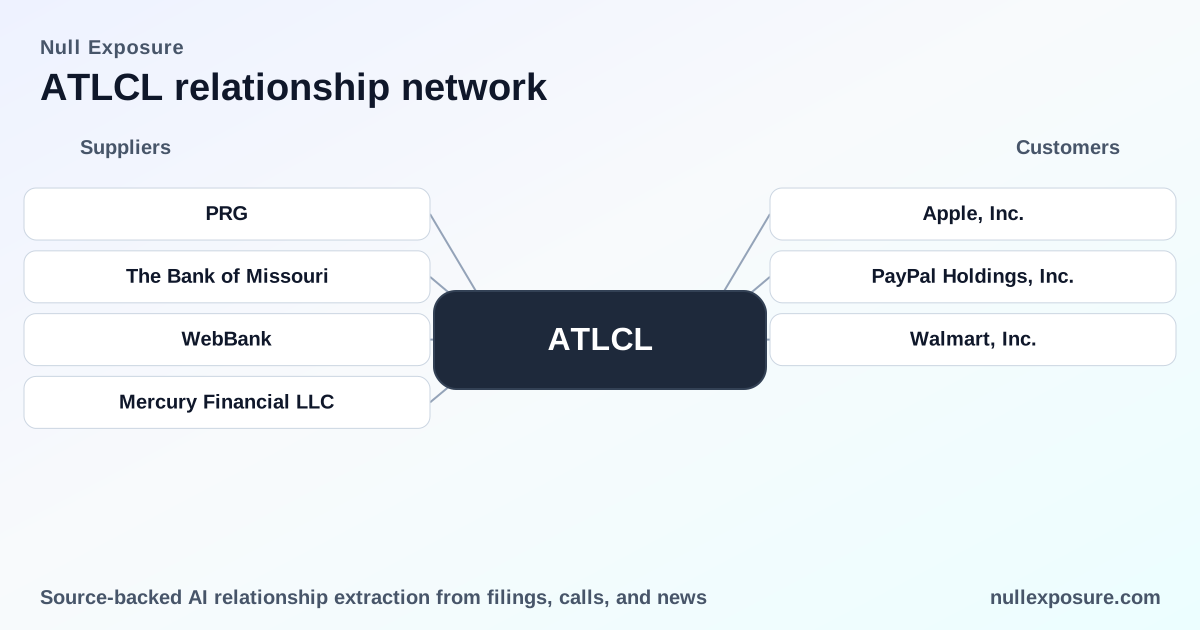
Atlanticus Holdings (ATLCL): Supplier Relationships and What They Mean for Credit Investors
Atlanticus Holdings generates cash flow by acquiring and servicing consumer credit receivables and funding those exposures through capital markets instruments such as the 6.125% senior notes due 2026. The company monetizes through interest spread on purchased receivables, servicing fees, and scale-driven operational leverage following portfolio acquisitions; its recent activity shows an active roll-up strategy that converts third‑party receivables into on‑balance‑sheet assets. For sourcing and counterparty insight, see the firm’s supplier connections below and visit https://nullexposure.com/ for deeper supplier intelligence.
Recent deal activity frames the operating playbook
Atlanticus is executing a buy-and-scale model: it acquires retail receivables portfolios and folded-in servicing platforms to grow receivables balances and cross-sell products across a larger customer base. The March 2026 wave of transactions — including the Mercury Financial acquisition and purchases of Vive portfolios from PROG — demonstrates a focus on rapid balance-sheet growth through inorganic consolidation rather than organic originations alone. That approach creates immediate scale but concentrates operational risk on portfolio integration and servicing execution, while relying on bank partners for origination flows. For additional context on counterparties and risk signals, visit https://nullexposure.com/.
Who Atlanticus is doing business with (each relationship listed)
The following statements cover every relationship flagged in the compiled results and cite the original sources.
Prog Holdings (Intellectia report, March 9, 2026)
Atlanticus purchased the Vive Financial credit card receivables portfolio from Prog Holdings for approximately $150 million in cash, reflecting targeted portfolio acquisitions to expand receivables balances. Source: Intellectia news report, March 9, 2026 — https://intellectia.ai/news/stock/prog-sells-150m-vive-credit-card-receivables-portfolio-to-atlanticus
The Bank of Missouri (Intellectia report, March 9, 2026)
Atlanticus’s private-label and general-purpose card products are originated by third‑party banks including The Bank of Missouri, indicating reliance on bank partners for regulatory-chartered origination capacity. Source: Intellectia news report, March 9, 2026 — https://intellectia.ai/news/stock/prog-sells-150m-vive-credit-card-receivables-portfolio-to-atlanticus
WebBank (Intellectia report, March 9, 2026)
WebBank is another originating partner for Atlanticus’s private-label and general-purpose cards, underscoring a bank‑sponsored origination model that offloads charter risk while enabling product distribution. Source: Intellectia news report, March 9, 2026 — https://intellectia.ai/news/stock/prog-sells-150m-vive-credit-card-receivables-portfolio-to-atlanticus
Mercury Financial LLC (QuiverQuant announcement, March 2026)
Atlanticus completed the acquisition of Mercury Financial LLC for approximately $166.5 million in cash, bringing roughly $3.2 billion of credit card receivables and 1.3 million new accounts under management — a material scale step for the company’s managed receivables. Source: QuiverQuant press report (company release), March 2026 — https://www.quiverquant.com/news/Atlanticus+Holdings+Corporation+Reports+Significant+Growth+Following+Strategic+Acquisition%2C+Serving+Over+5.7+Million+Consumers+with+%246.6+Billion+in+Managed+Receivables
PROG Holdings (QuiverQuant disclosure, March 2026)
In a related filing, Atlanticus disclosed it acquired approximately $165 million of retail credit receivables through purchase of the Vive portfolio from PROG Holdings, reflecting follow‑through on portfolio purchases announced around quarter end. Source: QuiverQuant press report (company release), March 2026 — https://www.quiverquant.com/news/Atlanticus+Holdings+Corporation+Reports+Significant+Growth+Following+Strategic+Acquisition%2C+Serving+Over+5.7+Million+Consumers+with+%246.6+Billion+in+Managed+Receivables
What the supplier map implies about Atlanticus’s operating model
- Contracting posture: Atlanticus operates as an active buyer and servicer of retail receivables and leverages third‑party banks for origination; contracts skew toward asset purchases and servicing agreements rather than traditional originator risk. The presence of bank partners like WebBank and The Bank of Missouri confirms a sponsored‑origination framework.
- Concentration and reach: The company serves a national retail footprint; its CAR operations supported over 670 dealers across 34 states and two U.S. territories as of December 31, 2024, signaling geographic breadth but also concentration in specific retail channels (buy‑here, pay‑here auto finance and credit-card portfolios).
- Criticality of relationships: Bank originators and acquired servicing platforms are critical to product flow and receivable performance. Loss or degradation of origination partners would materially impair future growth; portfolio integration risk is central to near‑term credit performance.
- Maturity and stage: Atlanticus is in an active growth stage, evidenced by recent large acquisitions (Mercury) and portfolio buys (Vive), and it maintains formal third‑party risk processes including vendor vetting and cybersecurity controls that reflect a maturing governance posture.
Evidence for the operational signals above comes from company disclosures about CAR operations and third‑party risk management (reporting through FY2024 and related announcements).
Investment implications: upside drivers and risk checklist
Atlanticus’s strategy accelerates scale and short‑term earnings through purchased receivables, which supports the cash flow that services the 6.125% senior notes due 2026. Key investor considerations:
- Upside: Rapidly increased receivables and customer base from Mercury and Vive portfolio purchases enhance fee income and interest margin potential given successful integration and stable credit performance.
- Execution risk: Portfolio purchase economics depend on vintage performance; integration of large portfolios raises operational and credit risk that directly affects cash flow available to noteholders.
- Counterparty dependency: Originating banks (WebBank, The Bank of Missouri) and acquired servicing platforms are strategic suppliers — their continued cooperation and operational health are essential to sustain new originations and servicing quality.
- Governance signal: Active third‑party risk management and use of external cybersecurity consultants are positive governance indicators that reduce, but do not eliminate, vendor-related operational risks.
For a deeper read on counterparties and supplier concentration, visit https://nullexposure.com/.
Bottom line and recommended next steps
Atlanticus is executing a scale-focused, buy-and-service business model that converts acquired receivables into interest and fee revenue to support its fixed-income obligations. The company’s credit profile for note investors depends on portfolio performance, integration execution, and the stability of bank origination partners. Review transaction-level purchase economics and monitor early vintage performance for Mercury and Vive portfolios as the primary near‑term covariates to credit risk.
If you want granular supply‑chain and supplier risk intelligence on Atlanticus and its key counterparties, start your analysis at https://nullexposure.com/.