Atlanticus (ATLCZ): Supplier Relationships and What They Signal for Credit and Counterparty Risk
Atlanticus monetizes by acquiring consumer credit receivables and financing that exposure through market instruments — most notably the 9.25% Senior Notes due 2029 (ATLCZ) — while generating fees from originating lenders and growing the receivables book via acquisitions. The company’s business model combines receivables purchase economics, balance-sheet financing, and targeted M&A to scale within underserved consumer markets; investors should evaluate the counterparty network, legal and financial advisors, and concentrated dealer footprint that underpin that model.
Explore a full supplier mapping at Null Exposure.
Deal advisors and what they reveal about transaction sophistication
Atlanticus’ choice of advisors for recent transactions signals a deliberate, institutionally managed approach to M&A and capital strategy. Guggenheim Securities, LLC served as financial advisor while Troutman Pepper Locke and Willkie Farr & Gallagher acted as legal counsel on a recent acquisition, indicating the company engaged senior boutique and national advisers to execute a strategic purchase announced in March 2026. A StockTitan report published March 9, 2026 described those advisory roles in coverage of Atlanticus’ acquisition of Mercury Financial, reflecting the firm’s willingness to recruit external expertise for complex asset acquisitions and regulatory review.
Receivables purchases are the business model engine
Atlanticus grows by buying receivables and integrating portfolios into its servicing and analytics stack. A press release covered by The Globe and Mail on March 9, 2026 reported that Prog (PRG) sold the Vive credit card receivables portfolio to Atlanticus for $150 million, a clear example of Atlanticus deploying capital to scale originations through third-party portfolio acquisition. That playbook — buying receivables at principal and then collecting over time while hedging or financing through note issuance — sits at the center of how ATLCZ noteholders are paid and how management projects growth.
For a deeper look at supplier counterparties and document-level evidence, visit Null Exposure.
How the company-level constraints frame supplier risk
The available excerpts and filings provide actionable constraints that shape counterparty exposure:
- Geographic footprint — North America: Company disclosures state that its CAR operations served over 670 dealers in 34 states and two U.S. territories as of December 31, 2024, signalling a broad but U.S.-centric dealer network and regional concentration.
- Dual contracting posture — buyer and seller roles: Filings describe situations where Atlanticus acquires receivables for the principal amount and where lenders pay a fee and are generally obligated to sell receivables to Atlanticus, indicating the company operates both as a buyer of receivables and a counterparty to originating lenders.
- Service-provider reliance: Atlanticus uses external consultants and third-party experts for cybersecurity and control assessments, exposing operations to vendor risk but also showing governance around critical controls.
- Active relationship stage: The company’s dealer and portfolio remarks are framed as active operations, indicating ongoing counterparty engagement rather than legacy or one-off activity.
These company-level signals imply contracting sophistication, a reliance on a moderately broad but regionally focused originator base, and an operational model where vendor management and legal counsel are material to execution and regulatory compliance.
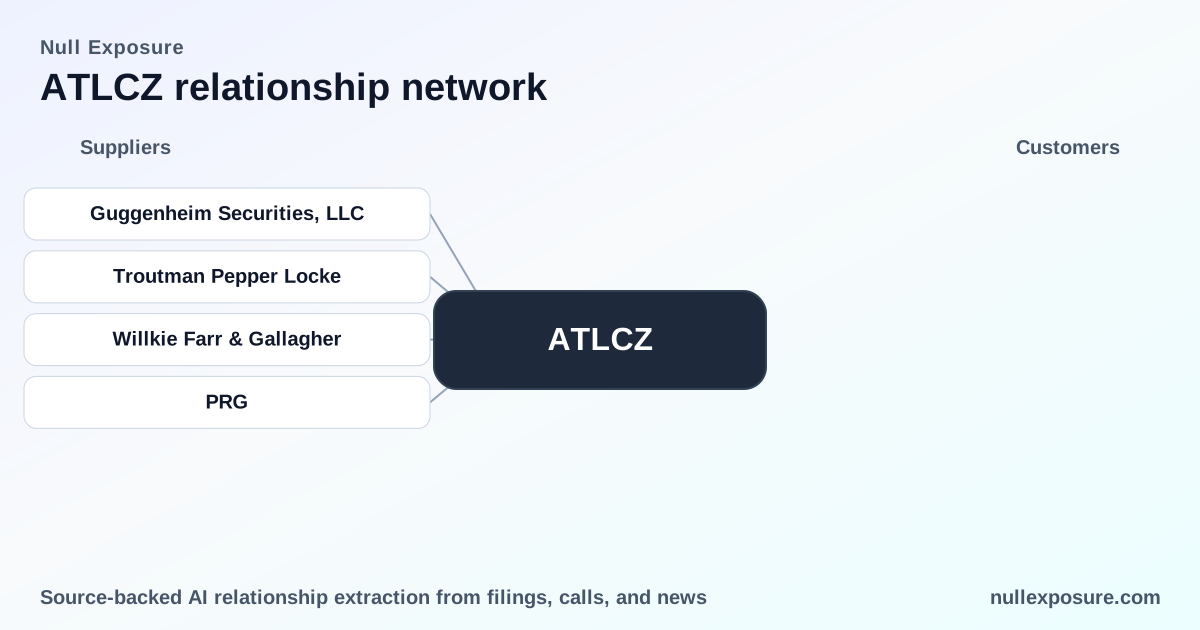
Relationship map: the counterparties named in recent coverage
Below are the specific counterparties surfaced in the recent results, each explained in plain English with source context.
- Guggenheim Securities, LLC — Guggenheim served as Atlanticus’ financial advisor on the Mercury Financial acquisition, demonstrating that Atlanticus engaged an investment banking adviser for deal structuring and execution. This role was reported in StockTitan coverage on March 9, 2026.
- Troutman Pepper Locke — Troutman Pepper Locke acted as legal counsel to Atlanticus on the same transaction, signaling reliance on a national law firm for regulatory and transactional work; this was described in the March 9, 2026 StockTitan item.
- Willkie Farr & Gallagher — Willkie Farr & Gallagher also provided legal counsel to Atlanticus on that acquisition, further underscoring the use of top-tier transactional counsel during the deal process, as noted in StockTitan on March 9, 2026.
- Prog (PRG) — Prog sold the Vive credit card receivables portfolio to Atlanticus for $150 million, a material portfolio sale that expanded Atlanticus’ asset base; that transaction was reported in a Globe and Mail press release dated March 9, 2026.
Each of these relationships is transactionally oriented and tied to Atlanticus’ strategy of growing receivables through third-party purchases and professionalized legal and advisory support.
Risk, concentration and counterparty criticality: what operators and investors should watch
Atlanticus’ model creates three primary areas of counterparty risk:
- Counterparty concentration at the originator level. Serving 670 dealers across 34 states indicates scale, but the underlying revenue and receivables profile can still concentrate risk by product, dealer, or state. Investors should review dealer-level exposure and state regulatory regimes that affect collections and charge-offs.
- Transactional legal and advisory dependence. The presence of Guggenheim, Troutman Pepper, and Willkie suggests Atlanticus relies on established advisers for deal execution — a strength for deal quality but a cost center and potential point of delay in rapid scale scenarios.
- Operational vendor and cybersecurity dependencies. The company’s stated use of external consultants for cybersecurity and control testing is a governance best practice; it also creates vendor-management risk that is material to data integrity and collections platforms.
Key takeaway: Atlanticus runs a capital-intensive receivables acquisition strategy that is operationally complex and dependent on a defined set of counterparties for deal flow, legal review, and vendor services — factors that directly affect cashflow predictability for ATLCZ note investors.
For a full counterparty profile and to download the evidence trail supporting these relationships, go to Null Exposure.
Practical next steps for investors and operators
- Credit investors should demand counterparty-level stress testing that isolates dealer and portfolio concentration, collection curves, and the legal terms governing receivables purchases.
- Operators and partner originators should negotiate clear sale-and-transfer mechanics and representations that withstand regulatory scrutiny across states.
- Active monitoring of advisory and counsel engagement provides early visibility into deal cadence and potential balance-sheet changes that affect noteholder coverage.
Atlanticus’ 9.25% Senior Notes due 2029 are supported by an aggressive acquisition-and-finance model; the named counterparties and the company-level constraints outlined above provide the factual basis for credit diligence and operational due diligence. For a consolidated supplier exposure report and document-level sourcing, visit Null Exposure to access the underlying references and relationship map.