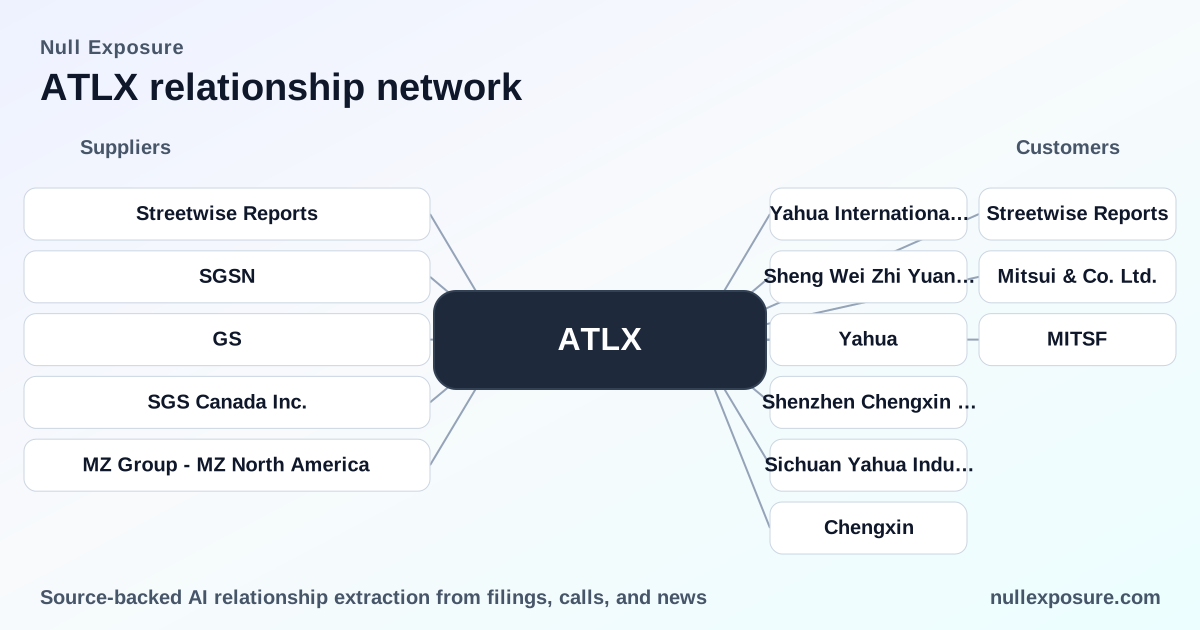
Atlas Lithium (ATLX): Supplier relationships that matter for execution risk and value capture
Atlas Lithium develops lithium assets in Brazil and monetizes by advancing its Neves and associated projects from exploration through processing to sale of lithium concentrates or downstream products; near-term revenue is limited and the company funds development through capital markets, advisory relationships and milestone-driven supplier contracts. For investors and operators, the critical questions are execution of processing infrastructure, third‑party technical validation, and whether supplier contracts concentrate counterparty or delivery risk.
For a concise view of Atlas’s supplier and adviser profile, visit https://nullexposure.com/.
Where Atlas stands today: a compact financial snapshot with outsized operational leverage
Atlas is a small-cap exploration/development company with market capitalization of ~$147.2M and minimal operating revenue (TTM revenue $92,490) while reporting negative EBITDA (‑$31.5M) and diluted EPS around ‑$1.51 for the latest reported period. These figures underline that Atlas’s equity value is driven by project delivery and technical milestones rather than current cash generation, so supplier performance and advisory output are primary value drivers.
Who provides services, testing and market visibility
Below I cover every supplier, adviser and named third party found in the public relationship records and media coverage. Each relationship is summarized in plain English with the relevant source noted.
Streetwise Reports – billboard sponsorship and marketing engagement
Atlas pays a monthly billboard sponsorship fee of US$4,000–$5,000 to Streetwise Reports for visibility and investor outreach, documented across multiple company appearances in 2024–2025. This is a marketing expense that supports investor communications rather than core technical delivery (Streetwise Reports articles, Nov 22, 2024; Feb 4, 2025; Jul 29, 2025: https://www.streetwisereports.com/).
SGS Canada Inc. / SGS Lakefield (SGSN) – metallurgical testing and DFS provider
Atlas engaged SGS Canada Inc. (SGS Lakefield) to conduct metallurgical testwork and produce a Definitive Feasibility Study (DFS) for the Neves Project; SGS Lakefield processed ~117 kg of representative ore and produced over 10 kg of commercial‑grade lithium concentrate using standard dense media separation, and Atlas reports DFS completion in August 2025. This positions SGS as a high‑impact technical counterparty providing independent validation of recoveries and flowsheet design (Junior Mining Network press release FY2023; Streetwise Reports / article Nov 18, 2025; Investing News FY2025: https://www.juniorminingnetwork.com/, https://www.streetwisereports.com/).
MZ Group – investor relations and conference engagement
Atlas uses MZ Group – MZ North America for investor relations support; contact details and presentation activity (PDAC 2023) are publicly listed, indicating an outsourced IR function to maintain analyst and investor access. This is a communications and stakeholder‑management relationship rather than operational support (InvestingNews PDAC 2023: https://investingnews.com/).
Goldman Sachs – financial advisory
Goldman Sachs is referenced as Atlas’s financial advisor supporting funding for 2024 production plans, an endorsement that has been cited in market commentary as supporting the company’s near‑term financing posture. This advisory relationship is material to capital strategy and market credibility (InvestorPlace article, March 2024: https://investorplace.com/).
What the constraints reveal about Atlas’s operating model and counterparty posture
The public constraint excerpts give clear, actionable signals about Atlas’s contracting posture, concentration and execution risk:
-
Contracting posture and payment structure: Atlas has structured several supplier contracts with milestone and delivery‑based payments. The company’s processing‑plant construction agreements indicate majority of payments due upon delivery, concentrating financial exposure at handover rather than as large upfront payments—a posture that shifts construction risk onto suppliers until delivery is accepted (company disclosures).
-
Service provider relationships are formal and milestone‑linked: Atlas entered a Technical Services Agreement with RTEK International DMCC (named in filings) that includes a cash payment of roughly US$1.449M plus issuance of up to 410,000 restricted share units tied to milestone achievement, demonstrating a common industry structure of mixed cash and equity compensation to align service providers with project outcomes. The same constraint set confirms SGS was engaged to produce the Neves DFS, reinforcing SGS’s role as a core technical service provider.
-
Geography and manufacturing footprint: The DMS processing plant used in testwork was manufactured in South Africa, which introduces an EMEA‑supply chain element into what is otherwise a Brazil‑centric operation; logistics and import/delivery timing from EMEA suppliers are therefore a relevant execution risk factor.
-
Materiality of raw‑material supply: Atlas states it has no material dependence on any single raw material supplier, phrasing that positions raw‑material sourcing as broadly available and low concentration risk at the supplier level—important when assessing commodity supply chain vulnerabilities.
Together these constraints show Atlas structures supplier relationships to limit upfront capital outlay, uses equity incentives for technical services, and relies on established third‑party validators for technical de‑risking. For investors, that configuration reduces some counterparty concentration but increases the importance of delivery timing and supplier logistics.
For further investigation into Atlas’s supplier counterparties and delivery schedules, explore https://nullexposure.com/.
Investment implications: what to watch and what matters for valuation
-
Technical validation is bullish: Independent DFS and metallurgical testwork from SGS provide critical inputs to reserve economics and capex estimates; successful DFS deliverables materially increase the probability of project financing and value capture. SGS’s role is therefore a value catalyst.
-
Execution risk centers on plant delivery and commissioning: The DMS plant origin (South Africa) and payment‑on‑delivery structure mean logistics, customs and final commissioning will determine timing risk; delays directly compress the near‑term value thesis given the company’s negligible operating revenue.
-
Advisory and IR relationships support funding and market access: Goldman Sachs’ advisory role and MZ Group’s IR work underpin Atlas’s ability to access capital and maintain investor visibility; these relationships are important non‑technical enablers of capitalization.
-
Sponsorships are immaterial to financials: Streetwise Reports sponsorship fees (US$4–5k/month) are immaterial to operating cash flows but useful for retail visibility; treat them as marketing expense, not operational leverage.
Quick checklist for underwriters and operators
- Confirm SGS DFS deliverables and modelling assumptions (recoveries, throughput, capex drivers).
- Validate supplier delivery timelines for the DMS plant from South Africa and contractual penalties or acceptance criteria.
- Review RTEK milestone schedule, equity issuance conditions and potential dilution.
- Maintain active investor communications through existing IR channels to preserve funding optionality.
Bottom line
Atlas’s supplier and adviser network combines independent technical validation (SGS), milestone‑aligned services (RTEK), and capital‑market support (Goldman Sachs, MZ Group). The company’s financials make execution the primary value lever: successful delivery and commissioning of the processing plant and DFS outputs are the single largest determinants of value. Investors should prioritize verification of delivery schedules, acceptance criteria and supplier contractual protections when sizing risk and upside.
For more supplier‑focused intelligence on junior producers and developers, see the research hub at https://nullexposure.com/.