Atmus Filtration (ATMU): Supplier Relationships, Operational Constraints, and What Investors Should Price In
Atmus Filtration designs and manufactures engine and industrial filtration systems and monetizes through two complementary channels: long-term OEM first-fit contracts and recurring aftermarket replacement sales. The company captures value via design-to-production engineering, branded replacement parts, and contractual supply commitments that provide volume visibility and warranty alignment with major engine and vehicle manufacturers. For investors, the commercial model combines durable aftermarket annuity characteristics with lumpy OEM program revenue tied to vehicle production cycles. Learn more about how supplier and customer relationships shape risk and opportunity at https://nullexposure.com/.
Why supplier and OEM relationships matter to ATMU's investor thesis
Atmus operates in a parts-centric manufacturing model where material inputs and contractual supply cadence determine margins and growth optionality. The FY2025 filings make two company-level signals clear:
- Contracting posture: long-term — Atmus manages key suppliers and customers through long-term supply agreements designed to secure capacity, delivery and quality over extended periods, which yields predictable production slots and reduces short-term procurement risk (Atmus FY2025 10‑K).
- Material cost criticality: material — Material inputs (steel, filter media, petrochemical-based plastics, rubbers and adhesives) represented roughly 61% of cost of sales in 2024, up from 57% in 2023, highlighting sensitivity to commodity cycles and supplier pricing (Atmus FY2025 10‑K).
Taken together, these signals define a business that is operationally mature in contracting but materially exposed to input costs, with supplier agreements that are central to delivering on OEM programs.
Visit https://nullexposure.com/ for direct access to primary filing excerpts and relational intelligence.
How to read the relationship list: scope and strategic importance
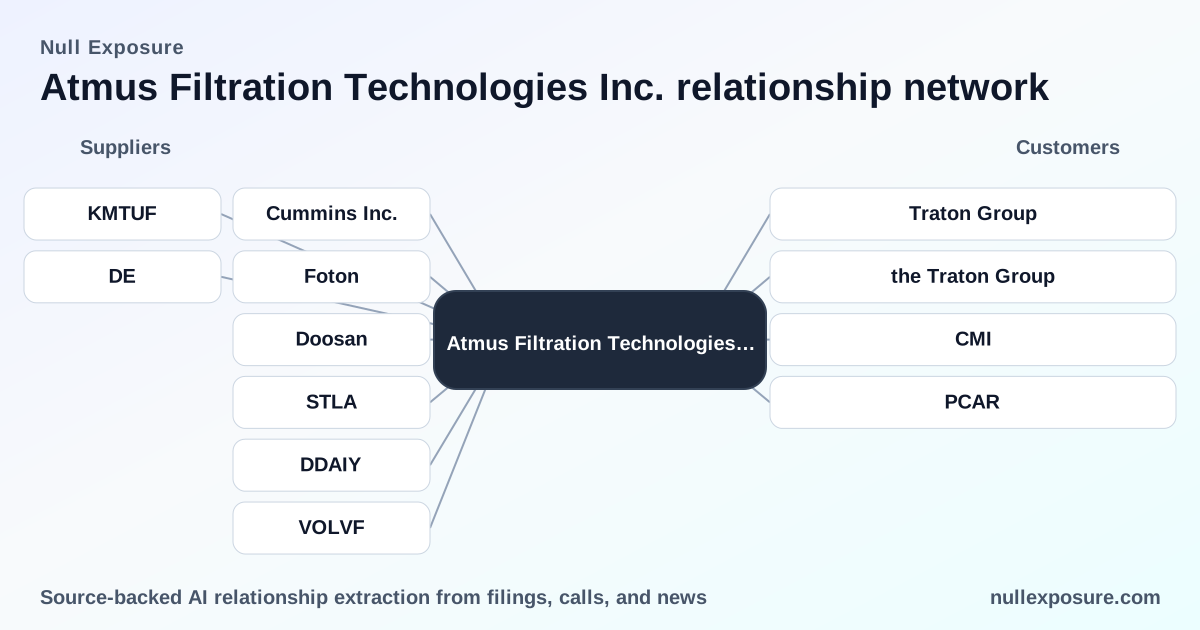
Atmus lists a cohort of global OEMs as customers, spanning heavy-duty engines, construction equipment and passenger vehicle groups. The mix provides diversification across end markets (on‑highway, off‑highway, industrial) while concentrating revenue around a limited set of major platform wins—typical of component suppliers where a handful of OEM contracts drive a large share of volume. Long-term first-fit agreements (explicit in some cases) provide program-level revenue visibility, while the aftermarket delivers recurring, higher-margin replacement part sales once installed base accumulates.
Supplier/customer relationships disclosed in the FY2025 10‑K
Below are every relationship cited in the FY2025 filing, each with a concise plain-English summary and source indication.
Cummins Inc.
Atmus has both an Aftermarket Supply Agreement and a First‑Fit Supply Agreement dated May 29, 2023, establishing formal program-level supply and aftermarket support for Cummins engines—this is a top-tier OEM alignment that brings volume and engineering collaboration to Atmus' core engine filtration business (Atmus FY2025 10‑K).
Foton
Foton is listed among Atmus' leading OEM customers across global transportation and industrial platforms, indicating Atmus supplies filtration components for Foton's commercial vehicle programs (Atmus FY2025 10‑K).
Doosan
Doosan appears in the company roster of OEM customers, reflecting participation in off‑highway and industrial equipment filtration programs where Doosan is an OEM customer (Atmus FY2025 10‑K).
Stellantis (STLA)
Stellantis is identified as a named OEM customer, which signals Atmus' exposure to passenger and commercial vehicle platforms within Stellantis' global production footprint (Atmus FY2025 10‑K).
Daimler (DDAIY)
Daimler is included in Atmus' list of leading OEMs, showing supplier relationships into Daimler’s heavy and commercial vehicle programs and associated aftermarket channels (Atmus FY2025 10‑K).
Volvo (VOLVF)
Volvo is named among the OEM customers, indicating product integration into Volvo’s engine and vehicle programs and aftermarket support in covered regions (Atmus FY2025 10‑K).
Komatsu (KMTUF)
Komatsu is cited as an OEM customer, pointing to exposure in the construction and mining equipment segments, where filtration is a critical maintenance item (Atmus FY2025 10‑K).
Deere (DE)
John Deere is listed as a customer, placing Atmus within the agricultural and heavy equipment supply chain and aligning it with Deere’s global replacement‑parts ecosystem (Atmus FY2025 10‑K).
What these relationships mean for valuation and operational risk
- Revenue visibility versus cyclicality: First‑fit OEM contracts provide program-level bookings and engineering lock‑in, improving forecasting when programs ramp; aftermarket revenue smooths seasonality and stabilizes margins as installed base grows.
- Concentration and criticality: While the customer list spans multiple OEMs and geographies, the supply model is typical of component suppliers where a handful of program wins account for outsized revenue, creating single‑counterparty risk at the program level.
- Margin levers and commodity exposure: With materials representing ~61% of cost of sales, procurement efficiency, hedging and supplier agreements directly drive gross margin; long‑term supply agreements reduce operational delivery risk but do not eliminate raw material price sensitivity (Atmus FY2025 10‑K).
- Contract maturity and defensibility: Named long-term agreements—especially explicit first‑fit and aftermarket contracts like those with Cummins—raise switching costs and provide multi-year revenue backstops, improving the durability of cash flow through product cycles.
Investor implications and headline risks
- Bull case drivers: Continued share gains across OEM platforms, expansion of the installed base fueling aftermarket growth, and effective management of material input inflation would justify multiple expansion relative to peers given Atmus’ high return on equity and improving operating margins.
- Key risks to monitor: Program concentration on large OEMs, commodity-driven margin compression, and cadence risk from OEM production fluctuations. Contract enforcement and the company's ability to convert OEM engagements into sustained aftermarket revenue are primary operational risks.
For investors and operators who need direct access to the primary filing language and relationship mapping, go to https://nullexposure.com/.
Final takeaway and action items
Atmus presents a purchase-and-replace business model anchored by long-term OEM contracts and a material exposure to input costs that investors must price explicitly. The company’s FY2025 disclosures show established program relationships with global OEMs and a procurement-conscious operating model—factors that support predictable revenue but require active monitoring of commodity dynamics and customer program health.
If you want a consolidated view of Atmus' supplier and customer relationships and the contractual language that underpins them, start your review at https://nullexposure.com/.