Agape ATP (ATPC) — supplier footprint and what it means for investors
Agape ATP Corporation operates primarily as a reseller and brand integrator in the health and wellness segment: the company sources finished products from related and unrelated parties in Malaysia, rebrands and markets them, and recognizes revenue through product sales and complementary health therapy services. ATPC’s monetization is driven by merchant purchases rather than manufacturing, resulting in high supplier dependence, concentrated spend, and transactional purchasing behavior that directly influence cash flow and working capital dynamics. For deeper supplier analytics and alerting on counterparties, visit https://nullexposure.com/.
How ATPC buys — a succinct operating model for investors
ATPC’s supplier posture is straightforward and concentrated. The company does not maintain in-house production facilities and instead acquires inventory through purchase orders and single-transaction purchases. According to ATPC’s FY2024 10‑K, the firm “typically make[s] ad hoc purchases through submission of purchase order forms,” which establishes a spot-buying contract type rather than long-term, hedged supply agreements. This contracting posture drives volatility in cost of goods and exposes ATPC to supplier-side availability and pricing swings.
Geographically, sourcing is APAC‑centric: all products are acquired from parties located in Malaysia and then rebranded by ATPC, per the FY2024 filing. Spend concentration is acute and material: two vendors accounted for roughly 59.8% and 17.5% of total purchases in 2024, creating single-counterparty risk that translates into working capital and execution exposure. The company’s supplier relationships are active and transactional, generally in the USD 100k–1M spend band per supplier annually, which is material relative to ATPC’s small revenue base.
Supplier relationships that drive revenue and risk
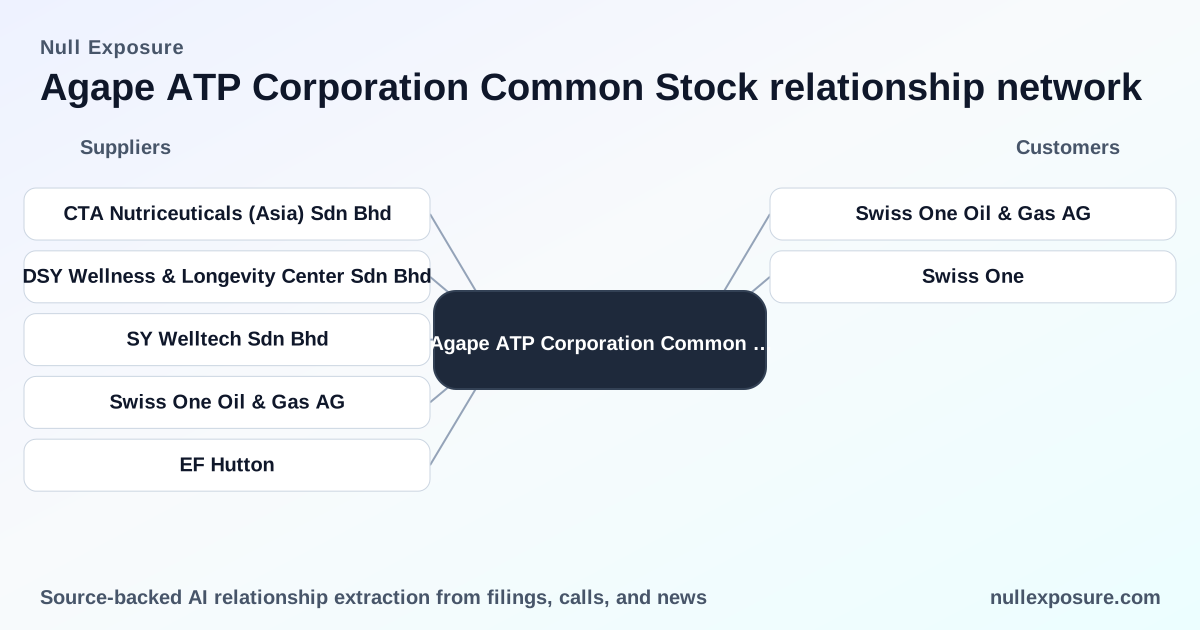
Below are the supplier and partner relationships disclosed in filings and press coverage. Each relationship is summarized in plain English with a direct source reference.
CTA Nutriceuticals (Asia) Sdn Bhd
CTA is a related-party supplier that accounted for a large portion of ATPC’s accounts payable and purchases; CTA represented approximately 22.9% of accounts payable in FY2024 and was a major purchaser counterpart in FY2023–2024. According to ATPC’s FY2024 10‑K, CTA’s directors and shareholders are related to a director of a related group company, underscoring the related-party nature of the relationship (ATPC FY2024 10‑K).
DSY Wellness & Longevity Center Sdn Bhd
DSY Wellness & Longevity Center supplied products for complementary health therapies to ATPC, with purchases recorded in the low six‑figure range, and it is connected by overlapping directors with ATPC’s related parties. The FY2024 10‑K lists DSY Wellness & Longevity Center as a supplier for therapy products (ATPC FY2024 10‑K).
SY Welltech Sdn Bhd
SY Welltech (formerly DSY Beauty Sdn Bhd) provided beauty products to ATPC, with small but recurring purchases disclosed in the FY2024 filing; the company is also described as related through shared directors and shareholders (ATPC FY2024 10‑K).
Swiss One Oil & Gas AG
ATPC signed a strategic partnership with Swiss One Oil & Gas AG to facilitate large‑scale fuel procurement, including EN590 diesel and Jet Fuel A1, marking a commercial push into fuel trading alongside its core wellness business; this deal was reported in a March 2026 press release covered by Yahoo Finance (Yahoo Finance, March 9, 2026).
EF Hutton
EF Hutton acted as sole bookrunner on an ATPC share offering, evidencing institutional placement and underwriting support during ATPC’s capital raise activity, as reported by Renaissance Capital in March 2026 (Renaissance Capital, March 9, 2026).
What the supplier map signals about business constraints and fragility
Taken together, these relationships reveal distinct constraints that shape ATPC’s operating risk profile:
- Contracting posture — spot purchases dominate. The company lacks long-term supply agreements with its largest suppliers and conducts ad hoc purchases via purchase orders (ATPC FY2024 10‑K). This elevates price and availability risk and reduces negotiating leverage.
- Geography concentration — APAC / Malaysia sourcing. All procurement is localized to Malaysia, concentrating regulatory, currency, and supply-chain risk in a single region (ATPC FY2024 10‑K).
- High concentration and criticality. Two suppliers drove nearly 77% of purchases in 2024 (59.8% + 17.5%), which renders operations vulnerable to supplier disruption and related-party governance issues (ATPC FY2024 10‑K).
- Maturity and segmentation — outsourced manufacturing and rebranding. ATPC does not manufacture its goods; it invests primarily in R&D and branding while relying on third‑party production, which reduces capital intensity but increases dependency on suppliers’ operational discipline.
- Spend profile — material but bounded. Individual supplier spend bands sit primarily in the USD 100k–1M range, material relative to ATPC’s roughly USD 1.48M revenue TTM, meaning supplier cost changes have outsized P&L impact.
If you want a concise supplier risk dashboard or deeper counterparty exposure metrics for ATPC, check https://nullexposure.com/ for tailored coverage.
Investor implications — concentrated suppliers, related-party complexity, and earnings leverage
The supplier map creates several clear investment considerations:
- Earnings and cash‑flow are tightly linked to supplier pricing and payment terms. A dominant supplier like CTA represents a single point of failure for payables and inventory replenishment (ATPC FY2024 10‑K).
- Related‑party relationships increase governance and disclosure risk. Multiple suppliers are linked through overlapping directors and shareholders, which requires active governance scrutiny from investors.
- Strategic diversification is limited. Spot purchasing and Malaysia-centric sourcing limit the company’s ability to scale or respond to shocks without securing alternative suppliers or formal long-term contracts.
- Capital markets support exists but is transactional. EF Hutton’s role as sole bookrunner shows access to underwriting for equity raises, while the Swiss One Oil & Gas partnership signals opportunistic diversification into fuel procurement and trading (Renaissance Capital, March 9, 2026; Yahoo Finance, March 9, 2026).
Key risks and mitigants:
- High vendor concentration — risk: supplier disruption; mitigant: negotiate multi‑vendor sourcing or longer-term contracts.
- Related-party governance — risk: unfavorable terms; mitigant: demand full arm’s-length disclosures and audit evidence.
- Spot purchasing — risk: price volatility; mitigant: pursue hedging or framework agreements for critical SKUs.
Explore supplier-level alerting and governance scoring for ATPC on https://nullexposure.com/ to monitor counterparty shifts in real time.
Bottom line and next steps for investors
ATPC runs a highly concentrated, transactional procurement model anchored in Malaysia and reliant on related-party suppliers, which simplifies operations today but creates outsized counterparty and governance risk relative to its modest revenue base. Investors should evaluate the company’s ability to diversify suppliers, formalize contracts, and reduce related-party exposures before assigning a valuation premium.
For a practical next step, review the supplier disclosures in the FY2024 10‑K and monitor the Swiss One partnership and any further capital raises through underwriting channels linked to EF Hutton. To get proactive supplier risk monitoring and tailored reports for ATPC, visit https://nullexposure.com/.