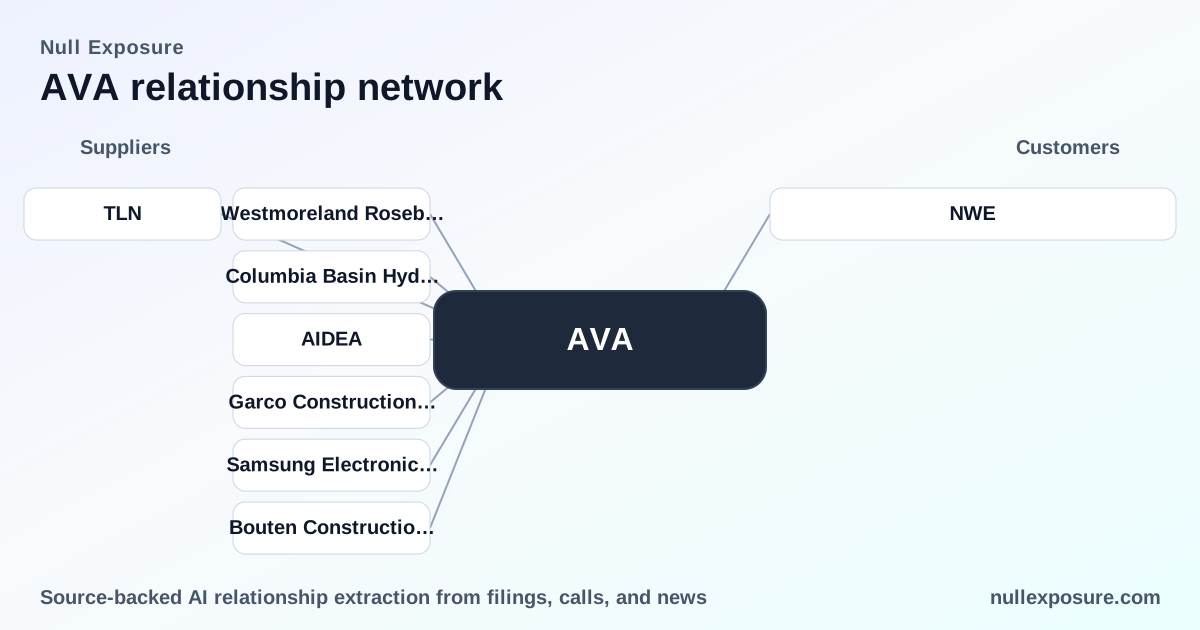
Avista (AVA) — Supplier relationships that shape utility risk and capital deployment
Avista is a vertically integrated natural gas and electric utility that monetizes through regulated distribution, owned generation, and a portfolio of long‑ and short‑term purchase contracts that supply fuel, capacity and energy to meet retail and wholesale obligations. Revenue derives from rate‑regulated customers, supplemented by contractual power purchases and generation output; supplier contracts therefore have direct throughput effects on cash flow and regulatory outcomes. For targeted supplier diligence and monitoring, visit https://nullexposure.com/.
How Avista sources power and why suppliers matter to investors
Avista operates a mixed sourcing model: owned generation plus a blend of long‑term and short‑term purchase agreements for energy, fuel and transportation capacity. The company states that, under normal streamflow and operating conditions, hydroelectric generation and long‑term hydro purchase contracts would supply about one‑half of total average electric requirements, positioning hydro counterparties as strategically important for supply stability (FY2024 Form 10‑K). At the same time, Avista purchases natural gas and fuel in wholesale markets and holds firm pipeline transportation rights across multiple networks, making it a large counterparty to upstream fuel suppliers.
The company’s contracting posture and capital commitments are material to credit and operational risk: Avista discloses future contractual commitments for power and natural gas resources totaling $4,633 million (dollars in millions), and it reported $34 million of capital and $18 million of operating wildfire resilience spend in 2024—numbers that indicate both scale and focused capital allocation toward resiliency (FY2024 Form 10‑K). These commitments create concentration and counterparty exposure that investors must price into forward cash flows.
Contract posture, concentration and maturity — what this tells investors
- Contracting posture: Avista uses a mix of long‑term and short‑term contracts; management explicitly notes contract terms ranging from one month to twenty‑five years and the use of long‑term PPAs to secure generation output (company FY2024 filing).
- Role and counterparty position: The firm acts primarily as a buyer of fuel, capacity and energy, and also engages third‑party service providers for construction and operations where cybersecurity and contract terms are material (company disclosures).
- Spend concentration and criticality: Large, multi‑year power and transportation commitments suggest high dollar exposure to a relatively small set of counterparties and projects, and hydropower agreements account for a meaningful share of supply under normal conditions.
- Maturity and stability: As a regulated utility, Avista’s business model delivers predictable cash flow, but that stability is sensitive to fuel supply disruptions, hydrology and litigation tied to generation assets.
For supplier risk products that map these exposures into investable signals, see https://nullexposure.com/.
Supplier and project relationships you must track
Westmoreland Rosebud Mining — litigation intersection with coal suppliers
Avista is named along with Talen and others in a Montana district court suit (Burnett et al. v. Talen et al.) that involves multiple property owners and Westmoreland Rosebud Mining, indicating legal and reputational exposure tied to coal operations referenced in the FY2024 Form 10‑K.
Source: Avista’s FY2024 Form 10‑K (legal proceedings section, FY2024).
Columbia Basin Hydropower — core hydro purchase counterparty
Avista reports that hydroelectric generation together with long‑term hydroelectric purchase contracts, including agreements with Columbia Basin Hydropower and certain Washington PUDs, would meet about one‑half of average electric requirements under normal streamflow—underlining the supplier’s strategic importance to bulk supply.
Source: Avista’s FY2024 Form 10‑K (power supply and purchases discussion, FY2024).
AIDEA / Snettisham hydroelectric project — contracted PPA capacity in Alaska
The Snettisham hydro project, owned by the Alaska Industrial Development and Export Authority (AIDEA), supplies output under a PPA arrangement referenced in Avista’s filings; the project’s capacity (78.2 MW) is a named source of contracted hydro output in the company’s regional supply mix.
Source: Avista’s FY2024 Form 10‑K (discussion of PPAs and Snettisham project, FY2024).
Garco Construction Inc. — local civil contractor on Spokane Metro Substation
Garco Construction (Spokane) performed in‑street work installing underground infrastructure to connect the new Spokane Metro Substation to the existing underground electrical network, positioning Garco as a critical local contractor for transmission delivery work tied to a multiyear substation program.
Source: Spokane Journal (article on Spokane Metro Substation; March 2026).
Samsung Electronics Co., Ltd. — technology partner for Avista Edge’s last‑mile FWA
Samsung was selected as a CBRS and Compact Core provider for Avista Edge, Avista’s last‑mile fixed wireless access initiative, signaling a supplier relationship that supports broadband and grid‑edge connectivity services rather than core generation or fuel supply (press release, 2022).
Source: Samsung press release (MWC 2022 announcement; Samsung Newsroom).
Bouten Construction Co. — construction partner on Spokane substation exterior works
Bouten Construction (Spokane) is contracted to construct the exterior security wall and undertake internal infrastructure and landscaping at the Spokane Metro Substation, part of a $73 million investment in the downtown substation project that ties contractor delivery to customer service and asset readiness.
Source: Spokane Journal (article on Spokane Metro Substation; March 2026).
Talen (TLN) — operator and fuel supply link at Colstrip
Colstrip, operated by Talen, is supplied with fuel from adjacent coal reserves under coal supply and transportation agreements; Avista’s relationship to Colstrip and Talen therefore creates dependency on third‑party fuel sourcing and transportation arrangements for thermal generation output.
Source: Avista’s FY2024 Form 10‑K (discussion of Colstrip and coal supply, FY2024).
Investment implications — risks to model and monitoring priorities
Avista’s supplier footprint creates four immediate investor takeaways:
- Hydrology and PPA concentration are direct operational risks. With hydro and long‑term hydro purchases supplying about half of average needs under normal flows, prolonged dry conditions or contract disputes would stress marginal supply and regulatory outcomes.
- Fuel and coal counterparties remain relevant where thermal assets operate. The Colstrip/Talen exposure and naming in litigation tied to coal operations require monitoring for supply or transportation disruption and legal liability.
- Capex and local contractors matter for execution risk. Large substation projects ($73 million cited) rely on local contractors (Bouten, Garco); contractor performance, cost overruns and cybersecurity clauses in service agreements are material to schedule and rate recovery.
- Technology partnerships broaden operational scope but add execution vectors. Samsung’s role supporting Avista Edge’s FWA program is strategic for customer services but distinct from core fuel or generation risk.
Active monitoring of these supplier relationships, litigation updates, and contract rollovers is essential to maintain an accurate cash‑flow and regulatory risk model.
For a tailored supplier risk report and continuous monitoring, start here: https://nullexposure.com/.
Bottom line: what investors should do next
Avista is a regulated utility with large, multi‑year supplier commitments that directly influence cash flow and operational resilience. Investors should track hydrology trends, Colstrip/Talen developments, the outcome of the Montana litigation, and execution on major substation projects with Bouten and Garco. Additionally, evaluate how Avista’s procurement mix between long‑ and short‑term contracts affects rate base and volatility.
To get organized supplier intelligence tied to Avista and other utilities, visit https://nullexposure.com/ and begin continuous supplier diligence and monitoring.