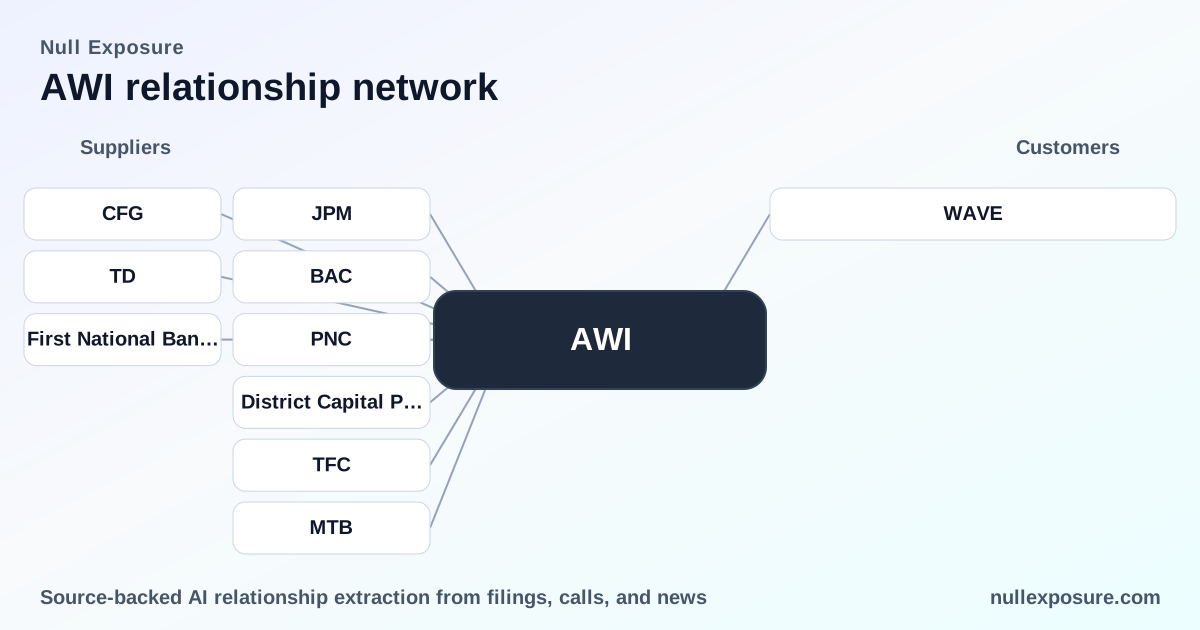
Armstrong World Industries (AWI): what its supplier and bank relationships reveal to investors
Armstrong World Industries designs, manufactures and sells roofing and building envelope products to construction and renovation markets, monetizing through product sales, channel distribution and aftermarket services. The company finances working capital and trade support through a syndicated revolving credit facility that also underpins letters of credit and acquisition activity, while strategic advisers are used for buy‑side transactions. For investors, the mix of strong operating margins and a multi‑bank credit structure is a central thesis: AWI generates durable cash flow but relies on bank credit for liquidity flexibility and trade support.
For a focused view of counterparties and documentary evidence, visit https://nullexposure.com/.
Why the credit amendment matters for suppliers and operators
On December 10, 2025 AWI executed a first amendment to its second amended and restated credit agreement, naming Bank of America as administrative agent and collateral agent, with a syndicate of regional and national banks participating in co‑syndication and documentation roles. According to the company 8‑K reporting that amendment, JPMorgan Chase, PNC, Truist, TD, Citizens, M&T and First National of Pennsylvania all feature in the facility’s agent, documentation or co‑syndication roles — and investment banks including BofA Securities, PNC Capital Markets and Truist Securities acted as joint lead arrangers and bookrunners. This syndicated posture lowers concentration risk for short‑term liquidity while making the revolving credit facility the operational hub for letters of credit and acquisition financing (AWI used available cash plus the revolver to fund a recent acquisition). (See AWI 8‑K filings, Dec 2025 — StockTitan/SEC filings.)
Counterparty-by-counterparty: the relationships you need to know
- Bank of America, N.A. — Serves as AWI’s administrative agent, collateral agent and swing line lender in the amended credit agreement, placing it at the center of the company’s working‑capital and letter‑of‑credit capability. (AWI 8‑K, Dec 10, 2025; StockTitan/SEC filing.)
- JPMorgan Chase Bank, N.A. — Listed as a co‑documentation agent on the amended facility, supporting documentation and operational execution of the credit package. (AWI 8‑K, Dec 10, 2025; StockTitan/SEC filing.)
- PNC Bank, National Association — Participates as a co‑syndication agent and is represented both in lending and capital markets roles in the amendment. (AWI 8‑K, Dec 10, 2025; StockTitan/SEC filing.)
- Truist Bank — Included among co‑syndication agents, reflecting regional bank participation in the revolver and letters‑of‑credit capacity. (AWI 8‑K, Dec 10, 2025; StockTitan/SEC filing.)
- Manufacturers & Traders Trust Company (M&T) — Named in the amendment as a co‑syndication agent, contributing to the revolver’s lender base and diversification. (AWI 8‑K, Dec 10, 2025; StockTitan/SEC filing.)
- Citizens Bank, N.A. — Participates as a co‑syndication agent of the facility, supporting AWI’s syndicated credit line. (AWI 8‑K, Dec 10, 2025; StockTitan/SEC filing.)
- TD Bank, N.A. — Included among the co‑syndication agents, providing another national lender in the syndicate. (AWI 8‑K, Dec 10, 2025; StockTitan/SEC filing.)
- PNC Capital Markets, LLC — Listed among the joint lead arrangers and joint bookrunners, handling the capital markets execution and syndication mechanics for the amendment. (AWI 8‑K, Dec 10, 2025; StockTitan/SEC filing.)
- BofA Securities, Inc. — Acts as a joint lead arranger and joint bookrunner alongside other banks, reaffirming Bank of America’s dual banking and securities role in the financing package. (AWI 8‑K, Dec 10, 2025; StockTitan/SEC filing.)
- Truist Securities, Inc. — Identified as a joint lead arranger and bookrunner, completing the mix of commercial and investment banking partners on the facility. (AWI 8‑K, Dec 10, 2025; StockTitan/SEC filing.)
- First National Bank of Pennsylvania — Serves as a co‑documentation agent, evidencing AWI’s engagement with regional banking partners for documentation and facility support. (AWI 8‑K, Dec 10, 2025; StockTitan/SEC filing.)
- District Capital Partners — Acted as AWI’s buyside adviser on a recent acquisition that was funded with cash and the revolver, indicating the company’s use of external advisory capacity for M&A execution. (AWI 8‑K, FY2026; StockTitan/SEC filing.)
What the listed constraints tell investors about AWI’s operating model
AWI’s filings and disclosures read as a consistent operating playbook rather than a patchwork of one‑offs:
- Counterparty sophistication: AWI restricts derivative counterparties to established, investment‑grade financial institutions — a company‑level policy signaling disciplined financial risk management rather than ad hoc counterparty selection.
- Working capital and trade support centralized: Letters of credit are arranged through the corporate revolver or bilateral facilities and are used to support suppliers and insurers; AWI’s revolver is therefore operationally critical for trade security.
- Procurement scale: Purchases of particular product lines from vendors like WAVE reached roughly $30–35 million annually in recent years, which signals pockets of mid‑sized supplier spend ($10m–$100m band) that can create supplier concentration risk in specific product categories.
None of these constraints names a single bank as the sole dependency; they instead describe company‑level policies and spend dynamics that influence supplier counterparty risk.
For more structured analysis and tailored counterparty maps, explore https://nullexposure.com/.
Investment implications: concentration, resilience, and covenant watch
AWI combines solid margin economics with a banking structure that spreads credit exposure across major national and regional banks. The practical implications for investors:
- Strengths: A multi‑bank syndicate reduces single‑lender concentration and supports robust letters‑of‑credit capacity, which is essential for materials procurement and project continuity. The presence of both commercial bank agents and investment‑bank arrangers signals a mature financing approach to liquidity and M&A.
- Risks: Reliance on the revolver for acquisition finance and LC issuance creates operational concentration around the credit facility: covenant stress, market rate shocks, or reduced bank appetite could tighten working‑capital flexibility. The disclosed $30–$35 million annual purchases from identified suppliers indicate category concentration that could transmit supply shocks to revenue if a key vendor fails or pricing shifts.
- Monitoring points: Investors should track covenant schedules and utilization of the revolver, changes in participating lenders, and any material amendments to letter‑of‑credit mechanics declared in subsequent 8‑Ks or quarterly reports.
Bottom line for investors
AWI operates a profitable building‑products business underpinned by a diversified banking syndicate that centralizes liquidity and trade support. That structure reduces single‑bank dependency but creates an operational reliance on the revolver for letters of credit and opportunistic M&A funding. Investors evaluating supplier relationships should weigh AWI’s solid margins and diversified lender base against the operational concentration inherent in revolving credit reliance and mid‑sized supplier spend pockets. For deeper counterparty detail and to map exposure across suppliers and financiers, visit https://nullexposure.com/.
Key takeaway: AWI’s bank syndicate is an asset that stabilizes operations, but the revolver is a single point of operational importance — monitor covenant health and supplier concentration to judge downside risk.