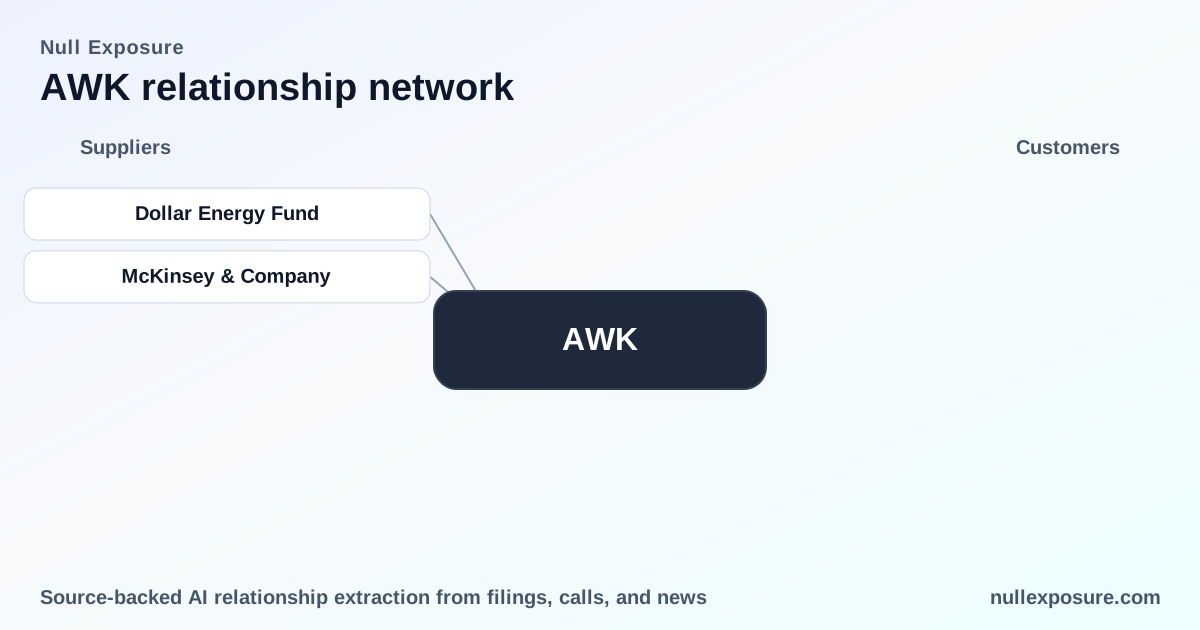
American Water Works (AWK): Supplier and Strategic Partner Landscape for Investors
American Water Works is a rate-regulated utility that operates water and wastewater systems across the United States and Canada and monetizes through regulated rate-base recovery, service fees, and infrastructure investment programs. The company generates recurring cash flow from essential utility services (Revenue TTM ~$5.14B; EBITDA ~$2.79B) and returns capital to shareholders via dividends (yield ~2.33%). For investors evaluating counterparty and supplier risk, the critical issues are contract tenure, vendor concentration, service criticality, and the integration posture tied to corporate transactions.
Explore more supplier and counterparty intelligence at NullExposure.
How American Water’s supplier posture shapes its economics
American Water’s business model is dominated by long-lived capital, regulated returns, and recurring O&M inputs. That operating profile produces three practical supplier constraints:
- Long-term contracting is integral. Filings disclose a nine-year exclusive contract for granular activated carbon (GAC) supply, equipment and reactivation services covering more than 50 treatment sites across 10 states through 2033, and non‑cancelable water purchase commitments. Those arrangements lock in supply continuity for core treatment inputs and shift certain commodity and service risks to contracted vendors.
- The company is principally a buyer of critical inputs. American Water routinely purchases water, power, fuel, chemicals and other services, which creates exposure to supplier pricing and delivery performance as components of rate filings and O&M cost pressures.
- Selective use of external service providers for non-operational mandates. The company engages third-party investment managers for invested assets and uses external integration and consulting partners for major transactions and program rollouts.
These are company-level signals from recent filings and reporting; they reflect a contracting posture that prioritizes continuity and regulatory defensibility over short-term price flexibility.
Supplier and partner relationships investors should track
Below I cover every named external relationship surfaced in recent reporting and news. Each relationship entry is concise and source-linked for verification.
Dollar Energy Fund — program administrator for customer assistance
American Water’s H2O Help to Others assistance program for income‑eligible customers is administered by Dollar Energy Fund, providing a channel for bill assistance for vulnerable customers. According to the company’s disclosures republished as an 8‑K, Dollar Energy Fund administers H2O Help to Others in FY2026, and the same linkage is noted in Maryland rate coverage of the company’s new rates. (Source: 8‑K republished on StockTitan, March 2026; Maryland rate news reported on Finviz and StockTitan, March 2026.)
McKinsey & Company — integration partner for pending merger
American Water selected McKinsey & Company as the integration partner for its pending merger with Essential Utilities, assigning McKinsey responsibility for integration planning and execution. That selection was disclosed in an internal update on the transaction and reported in March 2026. (Source: internal update republished on StockTitan / WTRG, March 2026.)
What those relationships imply for risk and execution
The Dollar Energy Fund arrangement is operationally low-risk but politically and reputationally important: administered assistance programs reduce regulatory pressure and support rate-case defensibility, particularly in jurisdictions sensitive to affordability. The McKinsey engagement signals that American Water is committing external management consulting horsepower to integration execution, which reduces internal execution risk on the merger but introduces program costs and dependency on an external integrator for a transformational event.
From the constraints cited in filings, investors should note three practical implications:
- Maturity and duration reduce short-term procurement volatility. The nine-year GAC contract through 2033 and non‑cancelable purchase commitments for supplemental water indicate stable supplier relationships and predictable O&M inputs.
- Concentration is purposeful and material. Exclusive long-term contracts concentrate vendor risk but also provide price and service certainty that supports regulatory narratives.
- Criticality is high for certain suppliers. Supplies like GAC and purchased water are critical to treatment operations; disruption or contract failure would be immediately operational and regulatory in consequence.
Financial and regulatory angles that matter to investors
American Water’s regulated model buffers some supplier risk because cost pass-through and rate-making processes allow recovery of prudent expenditures, but regulatory approval is neither automatic nor immediate, which creates timing and execution risk on cost recovery. Key items investors should monitor:
- Rate-case outcomes and the regulator’s treatment of large supplier contracts in cost recovery.
- Integration milestones for the Essential Utilities merger and McKinsey’s public deliverables or timelines.
- Any supplier concentration events or notices that would force contract re‑tendering or emergency purchasing.
For quick access to more supplier intelligence and to track changes in counterparties, visit NullExposure.
Practical monitoring checklist for relationship and contract risk
- Track rate-case dockets where GAC, water purchase commitments, or assistance programs are referenced in cost recovery filings.
- Monitor merger integration updates for milestones, synergies realized, and third‑party spend trends tied to consulting and transition services.
- Watch news flow for any service interruptions at treatment sites covered by long-term contracts.
Final takeaways and action items for investors
- American Water’s supplier posture is deliberately long-term and integration-focused. Exclusive multi-year contracts and formal administrator relationships (like Dollar Energy Fund) reduce operational volatility but concentrate supplier risk.
- External integration support (McKinsey) reduces execution risk for the Essential Utilities merger but will be a line item to monitor for realized synergies and cost discipline.
- Regulatory dynamics remain the ultimate arbiter of supplier cost recovery; investors must follow filings and public service commission decisions closely.
If you want structured, searchable supplier intelligence for AWK and peer utilities, start with the centralized resource at NullExposure. For bespoke supplier risk reports and tracking for regulated utilities, contact the team through the homepage to arrange an analyst briefing.