AXIA-P (AXIA Energia): Why a R$247m hydro acquisition matters for suppliers and investors
AXIA Energia operates as an integrated renewable utilities company that monetizes through long‑lived generation assets, wholesale power commercialization and asset-level disposals/acquisitions. The company generates steady cash flow from operating hydro plants and commercial contracts, and deploys capital by acquiring minority ownership stakes to consolidate control of strategic facilities — a clear line to near‑term revenue uplift when control is established. For counterparties and premium finance partners, the combination of utility‑grade cash flow and intermittent transactional activity (asset purchases and disposals) defines both credit opportunity and operational complexity. Learn more at https://nullexposure.com/.
What AXIA’s business looks like in investor terms
AXIA sits in the renewable utilities sector with balance‑sheet scale and operating margins consistent with a mature generator. Key company signals from the latest reported data (latest quarter 2025-12-31):
- Revenue TTM: $41.28 billion and EBITDA: $10.57 billion, demonstrating utility‑scale top line and strong operating cash conversion.
- Operating margin (TTM) 60.9% and profit margin 15.9%, indicating high fixed‑cost leverage typical of generation assets.
- Market capitalization ~$28.1 billion, low beta (0.31) and institutional ownership ~70.7%, all signals of a mature, widely held utility issuer.
- No dividend per share reported; EPS (TTM) $0.43 and Forward PE ~23.6, reflecting a capital‑intensive profile where retained capital supports asset investments.
These metrics show a company that sells predictable kilowatt revenues but funds growth through strategic transactions and capital allocation decisions, which directly affects supplier contracting posture and premium finance exposures.
Deal spotlight — Juno Participações and the Três Irmãos hydro plant
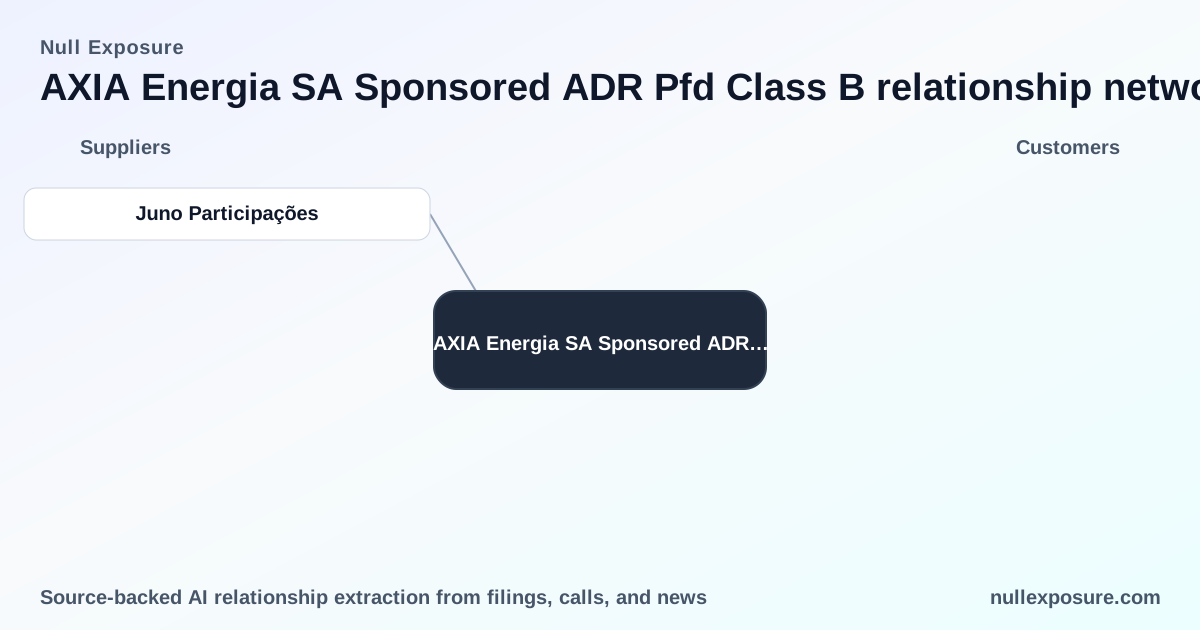
AXIA Energia agreed to acquire 100% control of the Três Irmãos hydro plant by purchasing Juno Participações, the holder of 50.1% of Tijoá Energia, for R$247 million, subject to customary market conditions. According to a StockTitan page republishing SEC‑filing material (FY2026, March 2026), the transaction closes AXIA’s stake consolidation for this asset (https://www.stocktitan.net/sec-filings/EBR/page-6.html).
This move converts a minority economic interest into operational control of a hydro facility, transforming the company’s exposure to that plant’s cash flows, maintenance obligations and supplier relationships (StockTitan, FY2026).
Why the acquisition changes the supplier map
Converting a 50.1% interest into outright control has immediate operational consequences for supply chains and counterparties:
- Contracting posture becomes more direct. With full control, AXIA will assume prime contractor relationships for O&M, spare parts procurement and local services instead of a passive revenue share arrangement.
- Counterparty criticality increases. Suppliers to Três Irmãos move from peripheral vendors to suppliers to a controlled AXIA asset — improving commercial importance and bargaining leverage with AXIA but increasing exposure to AXIA’s operational decisions.
- Capital and maturity signals shift. The R$247m purchase is material at the asset level but small relative to company EBITDA, implying manageable balance‑sheet impact, yet the deal requires integration and short‑term contracting changes that suppliers must price.
These are company‑level operating model implications driven by the acquisition; they reflect how AXIA structures supplier risk and contract terms post‑close.
Read more about AXIA’s supplier risk posture at https://nullexposure.com/ — the site provides structured analysis for counterparties and premium financiers.
Practical takeaways for investors, operators and financers
For those evaluating supplier relationships or underwriting exposure to AXIA, focus on the following actionable points:
- Contract certainty and change‑orders. Expect renegotiation of O&M and service contracts following control transfer; AXIA will favor vendors who can demonstrate scale, compliance and rapid mobilization.
- Integration risk over execution risk. The primary near‑term risk is operational integration (handover of maintenance records, workforce alignment, spare parts inventories), not the macro viability of hydropower revenue.
- Credit and liquidity context. AXIA’s size, strong EBITDA and institutional ownership support a stable counterparty profile, but acquisitions create pockets of concentrated working capital demand at the asset level — suppliers need clarity on payment terms and escrow mechanics.
- Regulatory and market conditions. The transaction is subject to market conditions and approvals; counterparties should monitor regulatory filings and closing confirmations to time contract milestones.
Monitoring checklist for premium finance underwriters
Use this checklist to convert thematic risk into underwriting actions:
- Confirm transaction closing and effective date via public filings and company notices.
- Request updated counterparty master services agreements and assess re‑pricing or novation clauses.
- Validate asset performance history and maintenance backlog to quantify near‑term capex exposure.
- Assess FX and settlement mechanics if supplier invoicing or vendor payments are in Brazilian reais.
Focus on contract continuity, asset operational readiness, and the supplier’s position in the restructured counterparty hierarchy.
Closing assessment and risk summary
The Juno Participações purchase for R$247 million is a targeted, asset‑level consolidation that strengthens AXIA’s generation control while creating discrete supplier and integration risks. AXIA’s operating profile — large revenue base, strong margins and high institutional ownership — supports continuity for counterparties, but asset acquisitions reorder supplier criticality and contractual posture.
- Upside: Greater control over plant cash flows increases predictability for primary suppliers and simplifies invoicing and credit arrangements.
- Risk: Short‑term integration and possible contract renegotiations increase execution risk for smaller vendors and premium financiers.
For counterparties and investors who underwrite supplier exposure, the core action is to seek clarity on post‑close contracting and payment mechanics before committing liquidity.
Explore structured supplier risk reports and transaction monitoring at https://nullexposure.com/ to convert these observations into underwriting decisions. For a direct view of AXIA’s regulatory filings and related disclosures, review the referenced filing coverage (StockTitan, March 2026) at https://www.stocktitan.net/sec-filings/EBR/page-6.html.
Final note: track closing confirmations and any published O&M novation clauses; those details will determine whether suppliers retain existing terms or face commercial reset under AXIA’s control. For further briefings and tailored exposure analysis, visit https://nullexposure.com/.