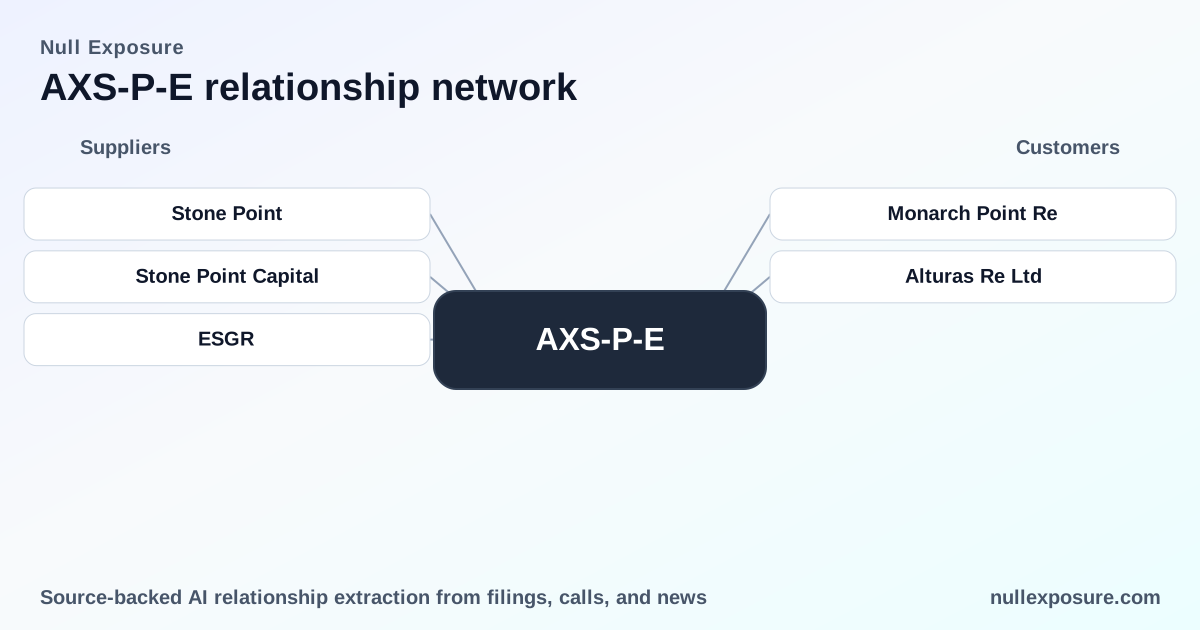
AXS-P-E (Axis Capital Depositary Shares Series E): Counterparty map and what it means for investors
Axis Capital monetizes as a specialty insurer and reinsurer that combines underwriting margins, investment returns, and structuring/fee revenue from capital market partnerships to scale capacity. The company leverages strategic third‑party capital and reinsurance structures to transfer volatility and extract fee income while preserving balance‑sheet capacity for core underwriting. For holders of the AXS‑P‑E preferred line, counterparty arrangements that affect capital, reserve volatility and fee streams directly inform preferred equity credit stability and residual optionality.
For a practical, relationship‑level view and benchmarking tools, visit the NullExposure homepage: https://nullexposure.com/
Why counterparties matter for preferred investors
Axis’s economic model depends on two levers beyond underwriting: access to external capital that reduces balance‑sheet strain, and reinsurance structures that materially change reserve risk profiles. Counterparty partnerships that inject capital or retrocede legacy liabilities are therefore credit‑critical and directly influence preferred security cushions. In this note I map the supplier relationships identified in public reporting, summarize their economic terms in plain language, and draw out the operating implications for investors and operators.
Visit NullExposure for a consolidated risk view and supplier scoring: https://nullexposure.com/
What the public record shows — the relationships you need to know
Stone Point / Stone Point Capital — partner in capital vehicles and buyback counterparty
Axis Capital partnered with Stone Point to launch Monarch Point Re in 2023 after a capital raise in excess of $400 million, positioning Axis to monetize with fee income and transfer underwriting exposure to a collateralized reinsurance vehicle. Source: Artemis news report (March 2026) — https://www.artemis.bm/news/axis-earned-54m-of-ils-fees-in-2025-sets-up-monarch-point-re-2026-collateralized-insurer/
Axis also executed a targeted common‑share repurchase program that involved a Stone Point Capital–managed vehicle, with approximately US$238 million planned repurchase consideration reported in FY2025 public coverage. This transaction reflects a closer strategic financing relationship where private capital is deployed to support equity actions. Source: SimplyWallSt coverage (FY2025) — https://simplywall.st/stocks/us/insurance/nyse-axs/axis-capital-holdings/news/does-axiss-q3-beat-and-targeted-buyback-shift-the-bull-case/amp
Enstar — loss portfolio transfer counterparty that materially reshaped reserves
Axis completed a loss portfolio transfer (LPT) with Enstar that retroceded a portfolio of reinsurance business for a consideration of $2,039 million, shifting pre‑existing reserve exposure off Axis’s balance sheet and providing significant protection against prior‑year reserve development. Source: TradingView summary of Axis SEC filing (FY2026) — https://www.tradingview.com/news/tradingview:09b330c7bdd2f:0-axis-capital-holdings-ltd-sec-10-k-report/
Operating model and company‑level constraints (signals for investors)
There are no explicit constraint excerpts in the supplier relationship feed, so the following are company‑level signals drawn from the relationship patterns and public deal sizes:
- Contracting posture: active use of bespoke capital and reinsurance solutions. Axis demonstrates a preference for structured, counterparty‑driven solutions (collateralized reinsurers, LPTs) rather than one‑off market purchases. This posture accelerates de‑risking but ties outcomes to partner execution and documentation.
- Counterparty concentration: focused but diversified partner set. A handful of large, strategic counterparties (private equity capital managers and legacy reserve acquirers) appear as principal counterparties; that implies material concentration risk if a primary partner withdraws or re‑prices.
- Criticality: these relationships are balance‑sheet critical. Large LPTs and capital vehicles directly impact statutory surplus and reserve volatility, so counterparty performance and credit quality are functionally critical to preferred security protection.
- Maturity and sophistication: deals reflect matured capital‑markets techniques. Use of collateralized reinsurers and structured LPTs signals advanced financial engineering that reduces raw underwriting exposure but adds legal and operational complexity.
What investors and operators should watch next
- Monitor counterparties’ credit and liquidity: partner funding stress or repricing has immediate implications for Axis’s capital cushions and preferred credit metrics.
- Track fee income and recurring economics from capital vehicles: consistent fee streams from collateralized platforms support preferred dividend coverage more reliably than one‑off equity actions.
- Follow reserve development on retroceded portfolios: LPTs remove direct reserve exposure, but indemnity structures and contingent obligations can re‑emerge under adverse loss scenarios.
For ongoing supplier diligence and early alerts on relationship changes, use our monitoring tools at NullExposure: https://nullexposure.com/
Bottom line — read relationships as balance‑sheet levers
The documented supplier relationships show Axis is deliberately exchanging raw underwriting volatility for structured counterparty solutions: capital provided by private investors and loss portfolios ceded to specialized acquirers. That strategy reduces headline reserve volatility and can stabilize preferred‑class risk, but concentrates dependence on a small set of counterparties and introduces legal/operational execution risk that investors must price. Preferred equity holders should treat these relationships as first‑order credit variables and integrate counterparty surveillance into any valuation or risk model.
If you want a deeper counterparty scorecard or to model the credit impact of additional LPTs and capital‑vehicle fees, start with NullExposure’s home page to engage analyst tools and alerts: https://nullexposure.com/
Key relationship takeaways in brief:
- Stone Point / Stone Point Capital: Partnered to launch Monarch Point Re (2023) after >$400M capital raise; also involved in a ~$238M common‑share repurchase arrangement (FY2025). Source: Artemis (Mar 2026) and SimplyWallSt (FY2025).
- Enstar: Executed a $2,039M loss portfolio transfer to retrocede reinsurance business and materially protect Axis from prior‑year reserve development (FY2026). Source: TradingView summary of Axis SEC filing (FY2026).
These specific counterparties and transactions define how Axis shifts risk off its books and monetizes fee income — critical inputs for any investor assessing AXS‑P‑E exposure.