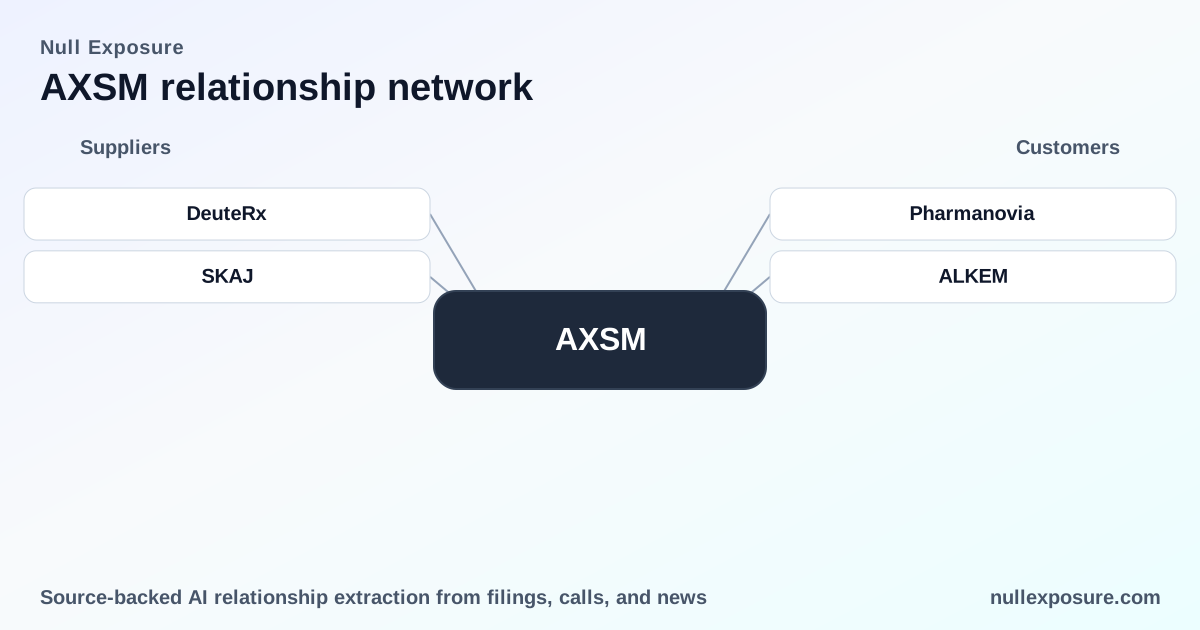
Axsome Therapeutics (AXSM): supplier relationships, licensing posture, and what it means for investors
Axsome Therapeutics develops and commercializes central nervous system therapies and monetizes through product sales, licensing arrangements, milestone receipts and royalty flows tied to in‑licensed assets. The company combines a commercial franchise (material revenue and gross profit in 2025) with an active licensing strategy and outsourced manufacturing/services, creating a hybrid operating model where supplier and partner contracts directly influence revenue cadence and risk. For a deeper look at supplier exposure and partner concentration, visit https://nullexposure.com/.
How Axsome runs the business and where value is created
Axsome generates revenue from its marketed therapies and strengthens its pipeline by acquiring or licensing clinical-stage assets; it then pays or receives milestones and royalties according to contract terms. The company’s RevenueTTM of $638.5M and GrossProfitTTM of $591.0M indicate a commercial product base supporting continued R&D and licensing activity. At the same time, Axsome explicitly outsources manufacturing and many essential services, so supplier arrangements are both operationally critical and commercially material.
- Contracting posture: Licensing is central — Axsome is both a licensee and a licensor in multiple arrangements, with precedent deals (e.g., Pfizer license for reboxetine) including upfront payments, milestone schedules and tiered royalties.
- Supply model: Axsome does not manufacture products internally and relies on third parties for production and trial services, which makes supplier reliability a gating factor for sales and regulatory deliverables.
- Commercial leverage and spend: Historical licensing economics show high potential contingency payments; for example, a Pfizer arrangement included $3M upfront and up to $323M in milestones plus royalties, signaling large-dollar contingent obligations and outsized upside for licensors.
If you are evaluating AXSM supplier risk or partner opportunities, see https://nullexposure.com/ for additional supplier intelligence.
Direct partner relationships in public filings and coverage
DeuteRx — deuterium‑stabilized S‑bupropion (FY2026)
Axsome acquired global rights to deuterium‑stabilized S‑bupropion from DeuteRx, expanding its pipeline of CNS candidates and consolidating global commercial and development control for that asset. This was reported in market news in March 2026 (TradingView coverage of Axsome disclosures, FY2026).
SK — originator for Sunosi (FY2024)
Axsome’s FY2024 Form 10‑K states the company assumed commitments of Jazz to SK and Aerial, and that SK is the originator of Sunosi and retains rights in 12 Asian markets including China, Korea and Japan, indicating segmented territorial rights and legacy obligations that transfer with corporate arrangements (Axsome 10‑K, FY2024).
Operating constraints and what they reveal about supplier risk
The company‑level constraints pulled from filings and disclosures paint a clear picture of Axsome’s business model and supplier posture. Presenting these as company signals clarifies decision points for investors:
- Licensing is core (contract_type = licensing). Axsome acts as both licensee and licensor. For example, Axsome licensed Pfizer’s clinical and nonclinical data for reboxetine under an exclusive U.S. license announced in January 2020; Axsome also entered exclusive license agreements in 2012 with Antecip (an entity tied to its CEO) for AXS‑05 intellectual property. These arrangements drive milestone and royalty flows and shape future revenue visibility.
- Geographic focus for some licenses is North America (geography_region = na). Several licenses, including the Pfizer reboxetine arrangements, emphasize U.S. rights, whereas other deals (e.g., SK retaining Asian rights) show territorial fragmentation that affects Axsome’s addressable market per asset.
- Relationship roles are multiple — licensee and licensor (relationship_role = licensee/licensor). This two‑way posture means Axsome pays contingent consideration on some assets while capturing royalties or sales on others, creating asymmetric cash flow profiles by asset.
- Outsourced manufacturing and services are standard (manufacturer/service_provider). Axsome explicitly states it does not manufacture products internally and relies on third parties for manufacturing, clinical services, distribution and safety reporting. This centralizes operational risk in contract counterparties and their capacity/quality.
- Material contingent spend is possible (spend_band = $100M+). Historical license economics, such as the Pfizer deal that provided $3M upfront and up to $323M in milestones plus tiered royalties, indicate potential for large contingent cash flows either as payables or receivables depending on role.
These constraints are company‑level signals unless an excerpt explicitly names a relationship; where specific entities are named (Pfizer, Antecip, SK), that attribution is drawn directly from the company filing.
Commercial and supply implications for investors
Axsome’s operating model produces several investment‑relevant dynamics:
- Revenue resilience vs. supply dependence: The company’s revenue and gross profit figures demonstrate commercial traction, but outsourced manufacturing and third‑party clinical services are single points of failure if capacity or quality problems arise. Contracts with suppliers therefore carry operational criticality disproportionate to their common perception.
- License economics drive valuation inflections: Licensing transactions create step functions in valuation through milestone realization or royalty streams; the Pfizer example shows how contingent payments can materially affect cash flows and valuations when milestones are achieved or missed.
- Territorial complexity influences upside: Deals where other parties retain regional rights (SK’s rights in 12 Asian markets for Sunosi) limit Axsome’s addressable revenue for a given product and create reliance on partner performance in those markets for overall brand value.
Key investor checklist:
- Verify milestone schedules and counterparty credit for major licenses.
- Monitor contract length and exclusivity terms with third‑party manufacturers.
- Track territorial carve‑outs that reduce Axsome’s direct commercial upside.
For structured supplier intelligence and to compare AXSM’s partner exposure against peers, visit https://nullexposure.com/.
Investor takeaway and next steps
Axsome’s hybrid model — commercial revenues today, licensing and in‑licensing as growth engines, and outsourced execution for manufacturing and trials — creates a mix of predictable product cash flows and event‑driven upside or downside from partner deals. The two explicit relationships in recent disclosures (DeuteRx and SK) show active pipeline expansion and legacy territorial arrangements; company‑level constraints underscore that licensing and third‑party service reliance are structural features of the business.
Actionable next steps for investors:
- Prioritize diligence on milestone timing and counterparty performance for large licensing contracts.
- Evaluate supplier concentration for manufacturing and clinical support to quantify operational risk.
- Reconcile territorial licensing maps to revenue forecasts for each marketed product.
To explore detailed supplier profiles, contractual exposure and comparative analytics for AXSM and peers, go to https://nullexposure.com/.