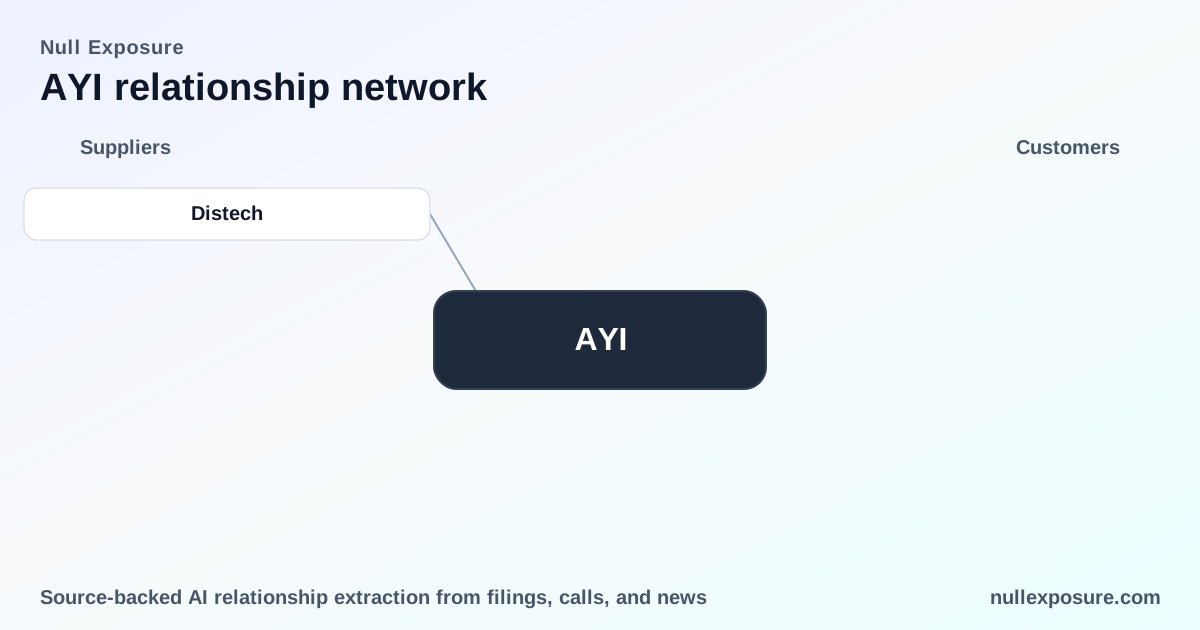
Acuity Brands (AYI) — supplier relationships and operational constraints that matter to investors
Acuity Brands operates as a vertically integrated lighting and building management solutions provider that monetizes through product sales, recurring service contracts, and channel distribution across commercial, institutional, industrial and residential end markets. Revenue derives from branded fixtures and controls, contract-manufactured components, and higher-margin lighting controls and software services that drive aftermarket revenue and margin expansion. For investors and operators, the core thesis is simple: Acuity’s profitability hinges on product mix (hardware vs. controls/software), the efficiency of its contract-manufacturing footprint, and the company’s ability to convert acquisitions and channel partnerships into sustained operating leverage. Visit https://nullexposure.com/ for deeper supplier intelligence and ongoing monitoring.
How Acuity makes money and why supplier posture matters
Acuity sells hardware and integrated systems and captures value by combining manufacturing scale with differentiated controls software and services. Hardware drives revenue scale and working capital needs; controls and software deliver higher margins and recurring revenue. Supplier relationships therefore influence gross margin, inventory turns, and time-to-market for new controls-enabled products. Acuity’s FY2025 financials show revenue of roughly $4.54 billion and operating margin near 14%, so modest shifts in supply cost or component availability can have outsized effects on profitability and cash flow.
Acuity’s market position is also capital-intensive: product lead times and contractual procurement choices set the company’s inventory posture and exposure to price volatility. For actionable supplier monitoring and relationship analysis, see https://nullexposure.com/ for supplier mappings and alerts.
Relationships on the record: Distech
Distech — TradingView reported that Acuity’s AIS segment operating profit surged by 242.6% to $37.0 million in FY2026, driven by the QSC acquisition and higher sales of Distech products, indicating that Distech-branded controls and systems contributed materially to near-term margin expansion. (TradingView news item, March 2026: Acuity Inc. SEC 10-Q coverage)
What the constraints tell investors about Acuity’s operating model
A set of company-level constraints extracted from filings and disclosures illuminates how Acuity manages procurement and international production:
-
Short-term contracting posture: Acuity discloses that it does not engage in significant commodity hedging and typically commits to purchase certain materials generally for periods up to 12 months. This indicates a procurement stance that favors flexibility over long-duration fixed-price protection, exposing margins to short-term commodity and input cost cycles while reducing long-term supplier lock-in.
-
Distributed contract manufacturing footprint: The company uses contract manufacturing across North America, Asia-Pacific, and Europe, signaling a geographically diversified sourcing strategy that balances cost, capacity and geopolitical exposure. That diversification reduces single-country concentration risk but creates complexity in logistics, trade compliance and lead-time variability.
These constraints imply four operational characteristics that investors should factor into exposure analysis:
- Contracting posture (flexibility vs. cost certainty): Short-term purchase commitments provide agility to adapt pricing into product cycles but leave Acuity exposed to input cost spikes that can compress margins quickly.
- Supplier concentration and geographic diversification: Use of contract manufacturers in multiple regions mitigates single-sourcing risk but increases dependency on third-party capacity, quality control, and cross-border logistics.
- Criticality of suppliers: Components tied to lighting controls and software interfaces carry higher criticality because they directly affect higher-margin product lines; any disruption in control-module supply is more consequential than a setback in commodity fixture parts.
- Maturity of relationships and cadence: The disclosures suggest transactional, near-term procurement commitments rather than deep multi-year, vendor-managed inventory arrangements—this reduces capital commitment but limits guaranteed capacity and negotiated price advantages.
Implications for investors and procurement teams
Acuity’s mix of in-house and contract-manufactured production, combined with a short-term purchasing posture, creates a profile where margin sensitivity to commodity cycles and logistics is elevated relative to firms with longer hedging horizons or captive manufacturing. For investors, the levers to watch are product mix (increasing share of controls/software), operating leverage from acquisitions (as seen with QSC), and the trend in gross margin and working capital.
Operators should prioritize:
- Monitoring lead times and inventory days of supply for control-system components.
- Assessing supplier financial health in APAC and EMEA contract manufacturers given their role in capacity.
- Tracking commodity input pricing and any changes in Acuity’s procurement language that would indicate a shift to longer-term commitments.
For continuous supplier visibility tied to investment decisions, visit https://nullexposure.com/ to subscribe for relationship risk signals and supplier-level detail.
Risks and upside drivers tied to supplier relationships
- Upside: If Acuity scales higher-margin controls and software sales (as with Distech product growth), operating margin and return on invested capital increase without commensurate incremental supply-chain capital. The QSC-related uplift in AIS operating profit illustrates this pathway.
- Downside: Short-term procurement commitments expose gross margins to raw-material price inflation and logistics volatility. Contract-manufacturing across multiple regions reduces concentration risk but increases execution risk in the event of synchronized disruptions (ports, tariffs, pandemic-related outbreaks).
What to watch next — data points that will move the stock
- Quarterly reporting on AIS segment margins and the contribution from controls/software lines (the path of Distech-led sales).
- Changes in procurement language or disclosure that indicate extension of purchase commitments beyond the current ~12-month horizon.
- Inventory turns and capex guidance that would signal either a move to insource capacity or a heavier reliance on contract manufacturers.
- Macro signals around freight and input costs in APAC and EMEA that would compress near-term gross margin.
Bottom line and next steps
Acuity Brands’ supplier architecture balances flexibility and globalization. Short-term purchasing and a diversified contract-manufacturing footprint enable nimble product cycles but create margin sensitivity to commodity and logistics shocks. Recent results tied to Distech and the QSC acquisition validate the strategic path of shifting mix toward higher-margin control solutions, which is the clearest route to durable improvement in profitability.
For portfolio managers and procurement leaders who need ongoing, supplier-level intelligence tied to investment decisions, start with an assessment of supplier criticality and contract tenors at https://nullexposure.com/. For bespoke monitoring and to map Acuity’s supplier exposure against your portfolio, learn more at https://nullexposure.com/ and subscribe for alerts that matter to both investors and operators.