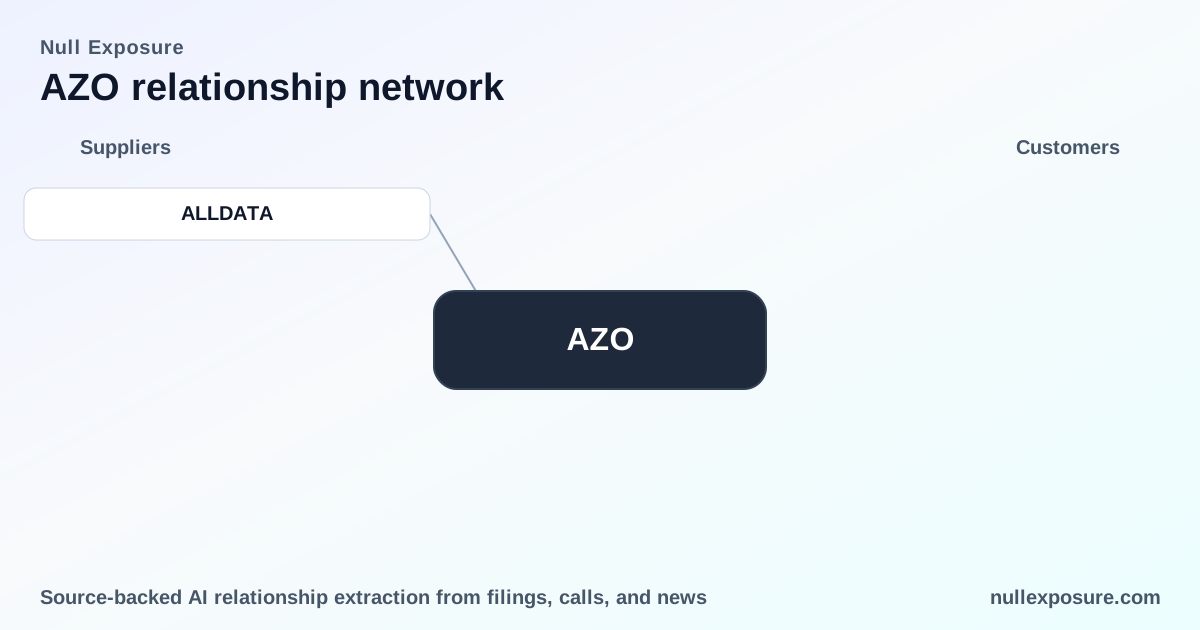
AutoZone (AZO): Supplier Relationships, Concentration and Operational Implications for Investors
AutoZone is the largest U.S. retailer of aftermarket automotive parts and accessories and monetizes through a high‑volume retail and commercial sales network that sources and sells branded parts, private‑label lines and software products. The company centralizes purchasing through regional store support centers and funds merchandising and supply commitments through significant confirmed supplier obligations disclosed in its filings. If you evaluate supplier risk, sourcing concentration or contracting posture for operating or investment decisions, these supplier signals are fundamental.
Learn more at https://nullexposure.com/
One‑line investment thesis: durable retail moat, centralized procurement, measurable supplier exposure
AutoZone converts national buying scale and proprietary distribution into margin and cash flow; the company’s centralized procurement and confirmed multi‑year supplier obligations create both negotiating leverage and concentrated vendor risk that investors should monitor relative to category revenue mix and international sourcing footprints.
How AutoZone organizes buying and where supplier risk lives
AutoZone runs procurement as a centralized function: merchandise for all stores is selected and purchased through store support centers in Memphis, Monterrey, Chihuahua, São Paulo and Gurugram. Centralized buying drives scale benefits but concentrates vendor exposure, and the filings disclose that in fiscal 2025 one class of products generated ~14% of revenues while one vendor accounted for 13% of purchases — a clear concentration signal for procurement risk. According to company filings for FY2026, AutoZone reported supplier obligations outstanding of $5.4 billion (as of August 30, 2025) and confirmed obligations included in accounts payable and long‑term liabilities, indicating active, material commitments to suppliers over time. (Company filing, FY2026; consolidated balance sheet commentary.)
These operating characteristics imply:
- Contracting posture: Centralized, large‑volume negotiations with multi‑year confirmed obligations — AutoZone acts as a buyer with scale leverage but also as a party to binding purchase commitments.
- Concentration: A relatively small number of product classes and vendors account for meaningful shares of revenue and purchases, elevating supplier concentration risk.
- Criticality and maturity: Confirmed obligations reported on the balance sheet and inclusion in long‑term liabilities point to mature, ongoing supplier relationships rather than ad‑hoc transactions.
- Geographic sourcing footprint: The company maintains offices in Shanghai and Istanbul to support sourcing and other functions, indicating active APAC and EMEA sourcing channels that diversify supplier origin but introduce cross‑border supply chain complexity. (Company filing, FY2026.)
Explore supplier intelligence and risk signals at https://nullexposure.com/
What the record shows about counterparties (every relationship disclosed)
Below I cover every supplier relationship called out in the available results.
ALLDATA — software brand sold through AutoZone channels
AutoZone sells the ALLDATA brand of automotive diagnostic, repair, collision and shop management software through www.alldata.com as part of its product mix, integrating a software offering into its parts and service ecosystem. This was disclosed in an 8‑K filing reported on March 9, 2026. (StockTITAN capture of AutoZone 8‑K, FY2026.)
Note: the filing language shows ALLDATA as a product/brand AutoZone sells rather than a simple third‑party supplier contract; the single mention in the results focuses on the company selling the ALLDATA brand through its web channel. (StockTITAN 8‑K, March 2026.)
Why these signals matter for investors and operators
AutoZone’s procurement and supplier disclosures create a clear scorecard for risk and operational strategy:
- Leverage vs. dependence. Centralized buying gives AutoZone negotiating power with large vendors, improving gross margin and inventory flow, but the disclosure that one vendor provided 13% of purchases and one product class formed ~14% of revenues highlights single‑source exposure that can amplify supplier disruption impact. (Company filing, FY2026.)
- Balance sheet commitments. The presence of confirmed supplier obligations of multiple billions (reported $5.4B outstanding as of Aug 30, 2025) and the fact that obligations appear in both accounts payable and other long‑term liabilities signal contractual, non‑transitory commitments to suppliers; these are not easily reversible short‑term purchase decisions. (Company filing, FY2026.)
- Global sourcing footprint. Offices in Shanghai and Istanbul provide APAC and EMEA sourcing or support functions, which diversifies supplier pools but requires active management of geopolitical, logistics and quality control risk across regions. (Company filing, FY2026.)
- Operational maturity. Confirmed obligations and centralized support centers in multiple countries indicate AutoZone’s supplier base is established and contractual, which improves predictability but raises the importance of vendor continuity planning.
Practical checklist for investor due diligence
- Confirm which vendors correspond to the 13% of purchases and assess their financial and operational health. The filings identify the aggregate concentration; investors should press for counterparty names in commercial diligence or proxy filings.
- Monitor the scale and maturity of confirmed obligations in subsequent quarters to detect any change in contract duration or termination exposure.
- Evaluate supply‑chain resilience given APAC and EMEA sourcing nodes — understand inventory buffers, lead times and alternative sourcing strategies.
- Track product‑category concentration (the ~14% class) to test sensitivity of revenue and margin to supply interruption or vendor price increases.
Actionable takeaway and next steps
AutoZone’s supplier profile is a story of scale and contractual commitment: centralized buying and large confirmed obligations deliver margin and merchandising control, while vendor and category concentration represent the primary supply risk to monitor. For investors and operators, the work is straightforward — map counterparty exposure, stress the confirmed‑obligation timeline, and test contingency sourcing for the concentrated product classes.
If you want a structured view of supplier commitments and concentration metrics for AutoZone, start here: https://nullexposure.com/
Final recommendation: treat supplier disclosures as a forward‑looking risk factor in valuation and operational plans — Active obligations and concentrated vendor share require targeted diligence to quantify downside under supply stress. For deeper supplier mapping and exposure analysis, visit https://nullexposure.com/ and connect with specialized coverage.