Bank of America (BAC-P-L) as a Supplier: What investors and operators need to know
BAC-P-L is a non‑cumulative perpetual convertible preferred series issued by Bank of America Corporation. The issuer monetizes through a diversified mix of interest income, fee income from wealth and investment services, and corporate lending; preferred securities like BAC‑P‑L are capital instruments that fund the bank’s franchise and deliver fixed-income characteristics to investors. For investors and counterparties evaluating supplier exposures, the relevant lens is the bank’s role as a large, integrated financial counterparty that bundles banking, lending and Merrill wealth capabilities for corporate clients and their employees. If you want a consolidated view of supplier relationships and counterparty intelligence, visit https://nullexposure.com/.
Quick thesis: why the supplier angle matters for BAC‑P‑L holders
BAC‑P‑L holders are indirectly exposed to Bank of America’s commercial relationships because the bank’s balance sheet, fee streams and capital management are driven by client engagement across corporate banking and wealth channels. The supplier relationship set — particularly integrated offerings with Merrill — contributes to recurring fee income, deposit stability and distribution channels that support capital and dividend capacity. Understanding these relationships informs credit sensitivity and operational concentration risk for preferred instruments.
How Bank of America operates as a supplier to corporate clients
Bank of America operates as a full‑service financial supplier: it provides deposit taking and lending, treasury and payments, investment banking, and wealth management through Merrill. Contracting is standardized at scale for core banking products, but bespoke for investment banking and large corporate deals. That combination produces predictable, fee‑driven revenue from routine services and episodic, higher‑margin revenues from capital markets activity. For counterparties and vendors, this means a contracting posture that balances standardized SLAs for high‑volume services with bespoke negotiation where revenue is concentrated.
Company‑level operational signals and constraints
No supplier constraint documents were provided for BAC‑P‑L, so the following observations are company‑level signals rather than relationship‑specific findings:
- Scale and diversification reduce single‑supplier concentration risk. Bank of America services a broad client base across commercial banking, wealth, and markets, which lowers dependence on any single counterparty for revenue.
- Criticality is high. Core banking services and wealth distribution represent critical infrastructure for client payroll, lending and investment needs; operational outages would have systemic effects.
- Contracting maturity is advanced. As one of the Big Four banks, Bank of America operates mature legal and operational frameworks for vendor and client contracts, enabling rapid onboarding for routine services and well‑documented escalation paths.
- Counterparty risk is credit‑sensitive. While diversified, the bank’s balance sheet and capital management decisions directly influence payments on preferred shares and dividend policy.
These are company‑level risk drivers investors should fold into preferred‑security credit assessments.
What the relationships tell us (complete list and takeaways)
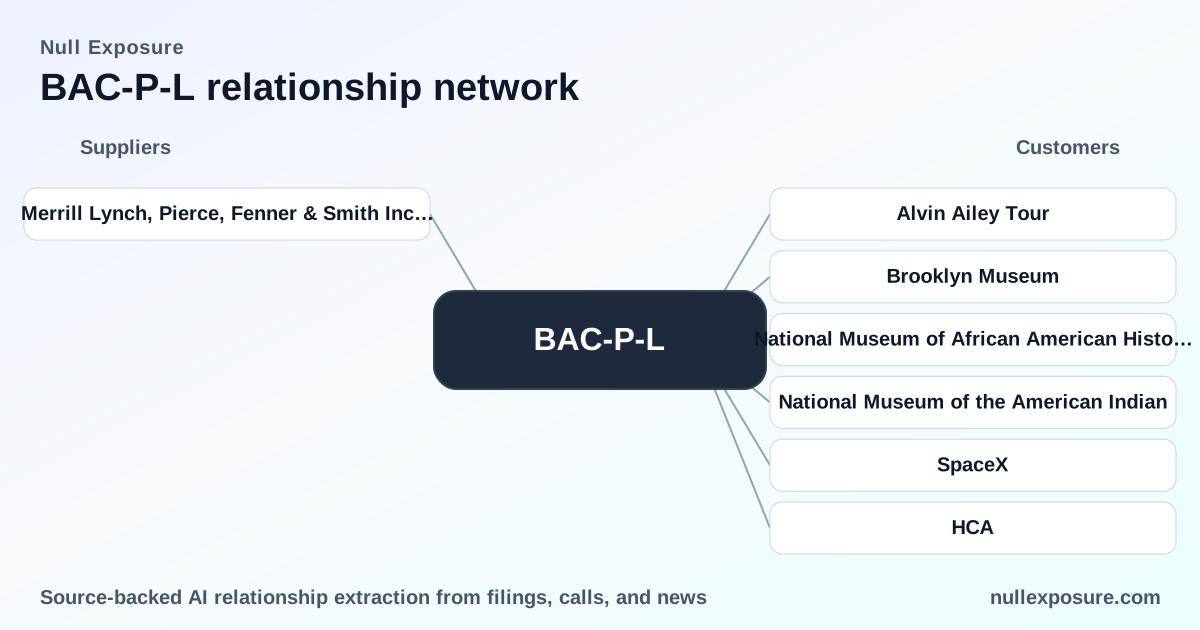
Below is every supplier relationship found in the coverage for BAC‑P‑L, with plain‑English summaries and source notes.
Merrill Lynch, Pierce, Fenner & Smith Incorporated (Merrill)
Bank of America leverages Merrill to deliver integrated employee banking and investing programs to corporate clients; the offering bundles retirement plans, health savings accounts, equity compensation and non‑qualified deferred compensation with Bank of America’s banking and lending capabilities and Merrill’s investing services. This relationship strengthens deposit and fee channels by embedding wealth management into corporate employee benefit flows, which supports recurring revenue and client stickiness. According to a PR Newswire release (March 9, 2026), the program is active across more than 200 companies and highlights the combined product set of Bank of America and Merrill for employee financial needs: https://www.prnewswire.com/news-releases/bank-of-america-helping-employees-at-more-than-200-companies-manage-everyday-financial-needs-through-corporate-employee-banking-and-investing-program-301479748.html.
Operational and strategic implications for investors and operators
The Merrill relationship is functionally significant for three reasons:
- Revenue stickiness: Embedding wealth services into payroll and benefits increases customer lifetime value and stabilizes fee income, which underpins capital planning relevant to preferred security holders.
- Deposit quality and duration: Employee banking programs increase low‑cost deposit balances and transactional activity, improving net interest margins and liquidity profiles that support payout capacity on capital instruments.
- Distribution and scale: Merrill provides a distribution channel for investment products and capital markets access that drives ancillary fee revenue without proportionate balance‑sheet strain.
These are structural positives for BAC‑P‑L holders because they reduce volatility in core earnings and support predictable capital allocation.
Risk considerations operators should track
Even with structural benefits, several risk factors require monitoring:
- Concentration in client segments: While scale is large, revenue tied to corporate employee programs concentrates exposure to employer health; large employer exits or program repricing could reduce deposit inflows.
- Regulatory and conduct risk: Integrated employee benefit offerings attract regulatory scrutiny and conduct risk; adverse findings could trigger fines or remediation costs that affect capital buffers.
- Operational resilience: Programs that span payroll, investing, and lending increase operational complexity; outages or security incidents would have reputational and financial consequences.
These risks are manageable but trackable items for counterparty diligence.
How to use this intelligence operationally
Operators and investor analysts should incorporate supplier relationship signals into credit models, stress scenarios and vendor monitoring routines:
- Adjust deposit stability assumptions to reflect employee program penetration.
- Model fee durability from wealth distribution channels under adverse market conditions.
- Include scenario stress tests for regulatory fines or remediation costs tied to integrated benefit programs.
If your team needs consolidated counterparty views or a deeper supplier map, visit https://nullexposure.com/ for a full product tour and to request customized reporting.
Final read: what this means for BAC‑P‑L stakeholders
Bank of America’s integrated relationship with Merrill is a clear strategic asset that strengthens deposit bases and recurring fee income — both positive for preferred‑security holders. The relationship concentrates certain operational exposures but does so within a diversified, mature franchise that manages large‑scale contracts and distribution effectively. Monitor client program penetration, regulatory developments and operational resilience as primary indicators that will move credit spreads or capital decisions.
For a deeper dive into counterparty relationships and tailored exposure analysis, explore https://nullexposure.com/ — the next step for investors and operators who require actionable supplier intelligence.