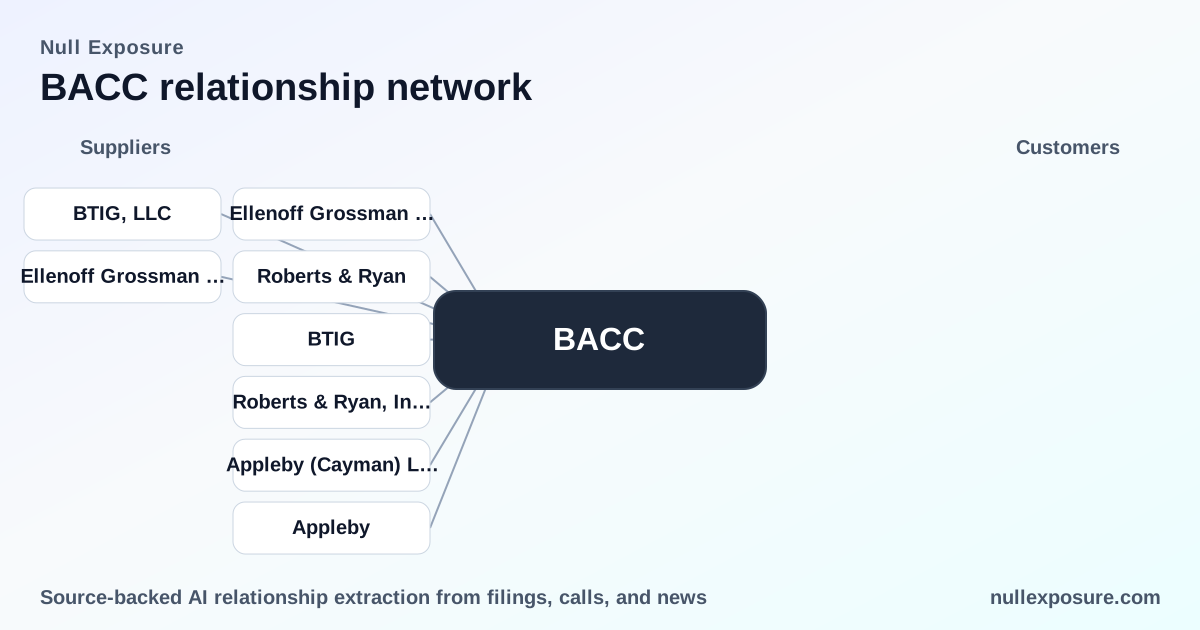
Blue Acquisition Corp (BACC): Advisor-centric SPAC economics and what that means for counterparties
Blue Acquisition Corp is a classic blank‑check vehicle: it generates no operating revenue and monetizes through a single transactional event — completing a business combination and capturing the economics that flow from sponsor equity, PIPE placements, and ancillary fees associated with a de‑SPAC. Investors should view BACC as a deal‑execution play rather than an operating company: advisory relationships, placement capabilities and legal counsel are the company’s principal value drivers. For deeper supplier and counterparty due diligence, visit https://nullexposure.com/.
What the operating model looks like for investors
Blue Acquisition is structured to be a short‑duration financial sponsor: it holds trust assets until a target is identified, negotiates a definitive business combination, and relies on capital markets intermediaries and legal counsel to syndicate and close the transaction. The balance sheet signals this posture: reported revenue and operating income are zero, book value is negative (-0.266), and the company’s public float and share structure are concentrated — institutions hold 96.45% of the stock, with insiders at 1.872%. Market capitalization sits at roughly $285 million, and the equity trades tightly around the $10 level (50‑day MA $10.22, 200‑day MA $10.12). These characteristics translate into a contracting posture that is transactional and time‑sensitive, with a high premium on advisor execution and placement capacity.
- Contracting posture: short lifecycle, event‑driven, contracts are typically fixed‑term engagement letters tied to a deal.
- Concentration: the company uses a small, repeatable set of capital markets and legal advisors, increasing operational dependency on those firms.
- Criticality: advisors are critical — failures in placement or legal clearance directly threaten deal completion and shareholder value.
- Maturity: as a SPAC, the firm is structurally immature as an operating enterprise; its success metric is the completion and terms of the business combination.
For ongoing supplier analysis and real‑time relationship tracking, see https://nullexposure.com/.
Deal execution relies on a tight advisor roster
News coverage around BACC’s announced combination with Blockfusion underscores the centrality of its advisor roster. Blue Acquisition has engaged established boutique and middle‑market capital markets firms alongside specialized legal counsel in the U.S. and Cayman Islands — a conventional structure for cross‑border or sponsor‑led deals. That advisor mix is an explicit signal that the company places priority on placement capabilities and cross‑jurisdictional legal clearance. Institutional ownership supports the hypothesis that the market prices these advisory relationships as part of deal credibility; however, the company’s economic upside remains binary and concentrated on the transaction outcome.
If you are evaluating counterparty risk for underwriting, legal services, or capital markets syndication, these relationships define where the deal’s execution risk lives and where counterparties will capture fees.
Advisor and counterparty roll call (every relationship reported)
- Ellenoff Grossman & Schole — Identified as legal counsel advising Blue Acquisition in coverage of the Blockfusion SPAC transaction; the firm is positioned as U.S. legal advisor for the deal. Source: ConnectMoney report on the Blockfusion merger (reported March 2026).
- Roberts & Ryan — Named alongside BTIG as a capital markets advisor and co‑placement agent to Blue Acquisition for the announced combination. Source: ConnectMoney coverage of the Blockfusion transaction (March 2026).
- BTIG — Cited as serving as a capital markets advisor and co‑placement agent to Blue Acquisition, indicating responsibility for placement and syndication activity. Source: ConnectMoney story on the Blockfusion SPAC merger (March 2026).
- Roberts & Ryan, Inc. — Reported in market announcements as co‑placement agent and capital markets advisor to Blue Acquisition, reinforcing the firm’s role in distribution and fundraising for the transaction. Source: Yahoo Finance press coverage of the Blockfusion deal (March 2026).
- Appleby (Cayman) Ltd. — Serving as Cayman Islands legal counsel to Blue Acquisition in the context of the Blockfusion combination, a routine appointment for cross‑jurisdictional SPAC structures. Source: Yahoo Finance press release on the transaction (March 2026).
- Appleby — The firm publicly announced acting as Cayman Islands counsel for Blue Acquisition in the definitive business combination with Blockfusion USA, Inc.; this repeats and confirms the Cayman counsel engagement. Source: Appleby/Mondaq advisory note on the transaction (March 2026).
- BTIG, LLC — Reported specifically as BTIG, LLC in filings and releases as co‑placement agent and capital markets advisor, clarifying the entity executing placement tasks. Source: Yahoo Finance transaction release (March 2026).
- Ellenoff Grossman & Schole LLP — Also cited in press coverage as U.S. legal advisor to Blue Acquisition, reiterating the U.S. counsel appointment for the business combination. Source: Yahoo Finance press coverage (March 2026).
Each of the above relationships is documented in contemporaneous press coverage of Blue Acquisition’s definitive business combination with Blockfusion USA, Inc., which was reported publicly in March 2026 and carried a reported transaction value of roughly $450 million according to firm announcements.
What investors and counterparties should watch next
- Execution is the principal risk and value lever. Given the SPAC structure, any delay or failure in placement, legal clearance, or closing directly destroys the sponsor economics and leaves the stock trading as a cash trust proxy. Monitor announcements from BTIG, Roberts & Ryan and the named legal counsel for material milestones.
- Fee concentration and counterparty dependency are real. A small set of advisors will capture underwriting and placement economics; counterparties should price for concentration risk and contract for clear success‑fee and expense allocation.
- Market liquidity is narrow and institutionalized. With institutions holding over 96% of the float, secondary liquidity is limited; investors looking for entry or exit should account for that structure when assessing execution risk and price impact.
- Financials reflect a non‑operating vehicle. Zero revenue and a negative book value are consistent with SPAC accounting; the investment thesis is entirely transactional and tied to the announced Blockfusion combination (reported in March 2026).
For a structured supplier risk assessment tied to these advisor relationships, visit https://nullexposure.com/ for tailored analytics and continuous monitoring.
Conclusion — read the counterparty map, price the execution risk
Blue Acquisition is not a traditional operating company; it is an execution engine whose value is a function of deal completion. Advisor appointments to BTIG, Roberts & Ryan, Ellenoff Grossman & Schole, and Appleby are the operational levers that determine whether the merger with Blockfusion delivers shareholder value. For investors and counterparties, that means due diligence should be focused on placement capacity, legal clearance timelines, and the allocation of fees and liabilities in the definitive agreement. To evaluate supplier exposure or to monitor these relationships dynamically, go to https://nullexposure.com/.