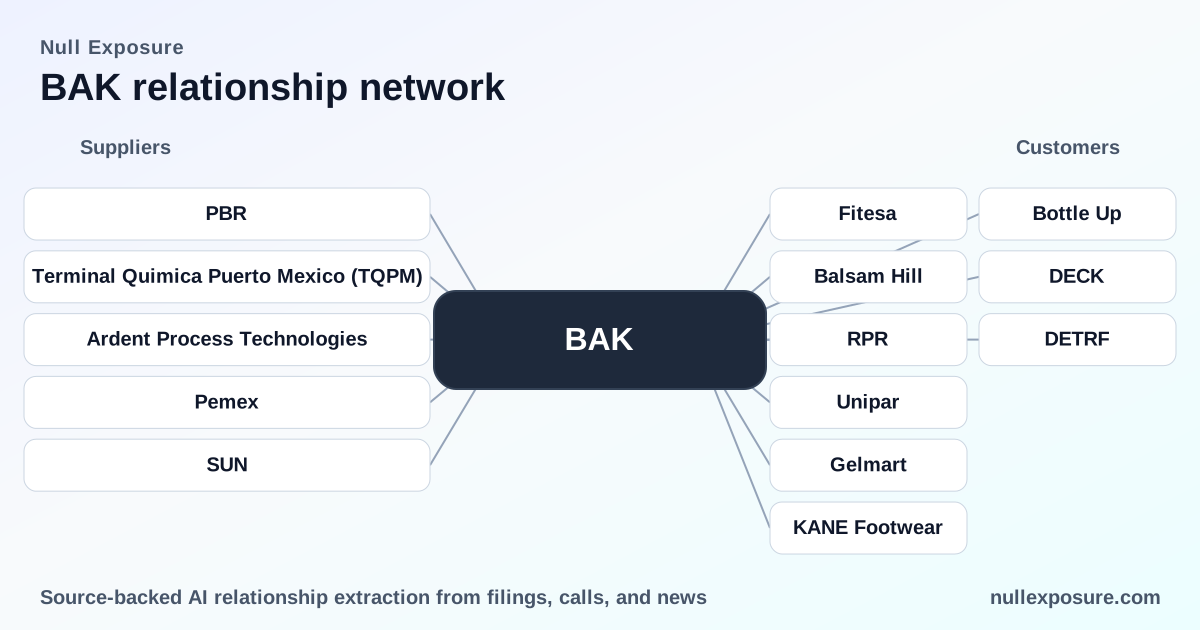
Braskem (BAK) supplier relationships: feedstock control, strategic partners, and what investors should price
Braskem is a vertically integrated petrochemical producer that monetizes by converting hydrocarbon feedstocks (naphtha, ethane) into polymers and specialty resins sold to industrial and consumer-facing customers across the Americas. The company secures margins through long‑term feedstock contracts, production scale at Brazilian and Mexican complexes, and selective technology partnerships that lower processing costs. For investors, the supplier map defines both earnings leverage and downside: feedstock concentration and related‑party contracting drive operational risk, while infrastructure diversification and tech collaborations offset some of that exposure. Learn more at https://nullexposure.com/.
Why supplier relationships matter for Braskem’s earnings
Braskem’s input costs are the primary lever on margins in a commodity‑driven business. When raw materials are contracted on long tenors with a dominant national producer, Braskem locks price and availability terms that shape cash flow stability and capital planning. Conversely, new terminals and joint ventures that diversify feedstock routes change the company’s bargaining position and cost curve. Investors should read supplier contracts as both cost hedges and strategic commitments.
Explore deeper company supplier intelligence at https://nullexposure.com/ to inform sourcing, credit and counterparty analysis.
The supplier network, in plain English
Below I list every supplier relationship surfaced in the available results and summarize each in 1–2 sentences with the source cited.
-
Petrobras (PBR) — Braskem has executed multiple long‑term supply and storage contracts with Petrobras to secure naphtha and ethane for its Brazilian complexes through multi‑year tenors, and Petrobras retains rights tied to shareholder arrangements. According to Braskem’s December 18, 2025 press release, the contracts cover naphtha supply and storage capacity for 2026–2030; Brazilian press coverage also notes Petrobras’ right of first refusal over Novonor shares in the broader ownership context (Braskem press release, Dec 18, 2025; Valor/Globo, May 26, 2025). https://www.theglobeandmail.com/investing/markets/stocks/BAK-N/pressreleases/36824156/braskem-seals-five-year-petrobras-naphtha-supply-and-storage-deals-for-brazilian-complexes/ and https://valorinternational.globo.com/business/news/2025/05/26/banks-and-petrobras-to-play-key-role-in-braskem-sale.ghtml
-
Terminal Quimica Puerto Mexico (TQPM) — A new ethane import terminal in Veracruz developed by TQPM will supply ethane via an 11 km pipeline to Braskem Idesa’s polyethylene plant, reducing logistics and import bottlenecks for Mexican operations. BNamericas reported the terminal entering commissioning/pre‑operation phases in late 2025 as it prepares to feed Braskem Idesa (BNamericas, coverage Dec 2025). https://www.bnamericas.com/en/news/commissioning-starts-at-braskem-idesas-us580mn-mexico-ethane-import-terminal
-
Pemex — Historically a primary ethane supplier for Braskem Idesa, Pemex’s role is being reduced as the TQPM terminal comes online; industry reporting highlights a decline in dependence on Pemex feedstock for the Mexican JV. BNamericas noted the terminal will allow Braskem Idesa to reduce reliance on state oil company Pemex and increase plastic resin output (BNamericas, Dec 2025). https://www.bnamericas.com/en/news/commissioning-starts-at-braskem-idesas-us580mn-mexico-ethane-import-terminal
-
Ardent Process Technologies — Braskem has an ongoing collaboration to scale Ardent’s Optiperm™ membrane technology for olefin separation, with demonstration testing conducted at Braskem facilities as part of a multi‑year development effort that began in 2020. Braskem’s corporate news notes progress toward commercial implementation, signaling a technology pathway to reduce energy intensity and operating cost (Braskem corporate release, 2025). https://www.braskem.com.br/news-detail/braskem-and-ardent-advance-breakthrough-olefin-separation-technology-towards-commercial-implementation
-
Sunoco Inc. (SUN) — Braskem acquired the polypropylene business of Sunoco Chemicals for approximately $350 million, a closed transaction that expands Braskem’s North American asset footprint and product mix. Reliable Plant reported the April 1, 2025 completion of the sale of Sunoco Chemicals’ polypropylene business to Braskem (Reliable Plant, Apr 2025). https://www.reliableplant.com/Read/23781/Sunoco-sells-polypropylene-business
What these relationships say about Braskem’s operating model and business constraints
The available evidence contains no explicit contractual constraints filed or excerpted in the supplied data; therefore this is a company‑level signal rather than a relationship‑level legal limit. Interpreting that absence:
-
Contracting posture: Braskem uses long‑tenor, related‑party contracts with Petrobras to secure primary feedstocks and storage, revealing a preference for contractual stability over spot sourcing when possible. That posture reduces short‑term volatility but increases tied exposure to one major domestic producer.
-
Concentration: Feedstock procurement is concentrated geographically and counterparty-wise—Brazilian complexes remain heavily linked to Petrobras—while targeted investments (TQPM) reduce concentration for Mexican operations.
-
Criticality: Supplier relationships are operationally critical; feedstock interruptions or adverse repricing at Petrobras or Pemex would directly impair production and margins. Technology partners like Ardent are strategically important to improve margins but are not substitutes for feedstock supply.
-
Maturity and optionality: Contracts described are multi‑year (2026–2030), indicating a mature supply footprint with limited short‑term re‑pricing optionality; simultaneously, infrastructure additions (TQPM) and M&A (Sunoco buy) add optionality and geographic diversification over the medium term.
Mid‑article takeaway: what investors should price in now
- Price in meaningful counterparty concentration risk for Brazilian feedstock supply given Petrobras’ central role, balanced against medium‑term de‑risking actions in Mexico and selective technology adoption that reduce cost intensity.
- Value the Sunoco acquisition as incremental scale in North America, not a cure for feedstock concentration but a meaningful product‑portfolio and market diversification move.
If you’re modelling supplier shocks or counterparty credit exposure, use supplier contract tenors and the TQPM commissioning timeline as primary scenario levers. For detailed supplier contract timelines and impact modeling, visit https://nullexposure.com/ for structured supplier intelligence.
Practical implications for portfolio and operations teams
- For equity investors: stress‑test margins under alternative Petrobras pricing scenarios and simulate delayed commissioning at TQPM to see downside to volumes and operating leverage.
- For credit and counterparty managers: monitor Petrobras political and corporate governance signals closely because they directly affect both supply and Braskem’s shareholder dynamics.
- For operations and procurement: accelerate contingency logistics and storage planning where possible; Ardent’s membrane work is a tactical lever to lower energy costs if scaled.
Final verdict and next steps
Braskem’s supplier profile is textbook for an integrated petrochemical producer: dominant domestic supplier relationships that lock in feedstock and storage, complemented by targeted infrastructure and technology investments that diversify risk over time. The net risk‑adjusted outlook hinges on Petrobras’ commercial posture and the pace of TQPM/Ardent rollouts.
For ongoing supplier monitoring and to convert these relationship signals into actionable counterparty models, return to https://nullexposure.com/ and subscribe for issuer‑level supplier intelligence and alerts.