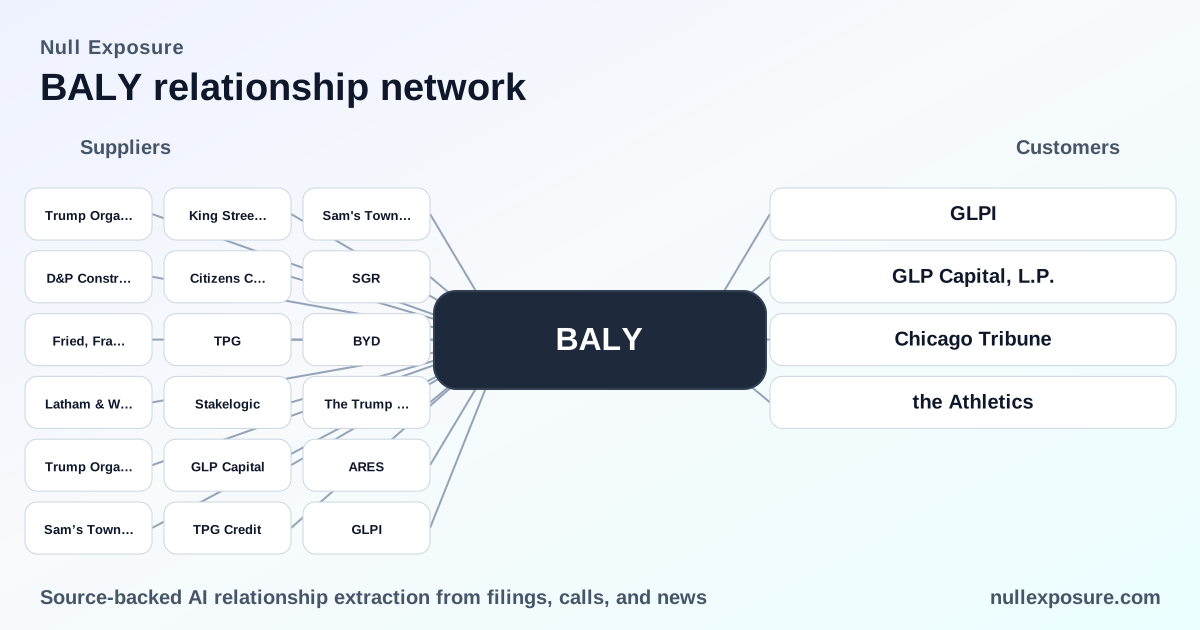
Bally’s Corporation (BALY) — supplier and counterparty map for investors
Bally’s Corporation operates and monetizes a geographically expanding portfolio of casinos and racing venues through a mix of owned operations, sale‑and‑leaseback real estate structures, long‑term master leases with REITs, and recurring platform and content fees for its iGaming and sportsbook operations. Revenue derives from gaming and hospitality operations plus structured financing and licensing agreements that convert property ownership into predictable cash rents and recurring service fees. For deeper supplier and counterparty intelligence, visit the NullExposure homepage: https://nullexposure.com/.
How Bally’s partners fit into the operating model
Bally’s financial strategy blends asset‑light real estate tactics with heavy third‑party reliance for capital and operating services. Company disclosures and press reporting show long‑dated lease arrangements and multi‑year credit facilities, a concentrated set of financing partners and REIT counterparties, and recurring vendor relationships for platform, content and payment services. These structures turn real estate and financing decisions into operating leverage: long leases stabilize rent flows but raise fixed obligations; third‑party service providers are operationally critical and relatively concentrated across markets.
Key company‑level signals:
- Long‑term contracting posture: filings and reporting document multi‑decade and 15‑year master lease terms that create fixed rent burdens and lender visibility into cash flows.
- Service‑provider reliance: Bally’s requires third‑party gaming platforms, content and payment processing across states, which increases operational concentration risk.
- Active relationship stage: the company is executing on acquisitions, sale‑leasebacks and new credit facilities, indicating near‑term integration and refinancing activity.
- Material multi‑year spending: sponsorship and platform guarantees total into the tens — and in some commitments the hundreds — of millions, indicating locked‑in cash commitments that influence free cash flow.
If you want a concise supplier risk brief or a counterparty exposure report, start here: https://nullexposure.com/.
Catalogue of counterparties and supplier relationships (what the press reports)
Below is a plain‑English summary of every relationship referenced in recent reporting, with source attribution.
-
Sam’s Town Shreveport / Sam’s Town Hotel & Casino — Bally’s agreed to acquire Sam’s Town in Shreveport from Boyd Gaming as part of its U.S. expansion, adding a regional property to its portfolio. (PR Newswire and local KSLA reporting, February 2026)
-
Boyd Gaming Corporation (BYD) — Boyd agreed to sell Sam’s Town Shreveport to Bally’s under a definitive agreement, representing a divestment by Boyd and an opportunistic asset pickup for Bally’s. (PR Newswire; Gaming Intelligence; March 2026)
-
Star Entertainment (SGR) — Bally’s completed a controlling stake acquisition in Australia’s Star Entertainment for approximately A$300 million, extending its international footprint. (Casino.org reporting, March 2026)
-
The Trump Organization — As part of Bally’s Bronx site activity and earlier lease buyouts, Bally’s committed approximately $115 million as a payout tied to prior lease arrangements linked to the Trump Organization. (Casino.org; 6sqft; March 2026)
-
Ares Management Credit funds (ARES) — Ares was a lead lender in a $1.1 billion term loan facility due 2031 that Bally’s secured to shore up liquidity and fund transactions. (Yogonet; The Gaming Boardroom; February 2026)
-
King Street Capital Management — King Street joined Ares and others as a lender in the term loan syndicate that provided Bally’s with a $1.1 billion facility. (Yogonet; February 2026)
-
TPG Credit (TPG) — TPG Credit participated in the term loan financing alongside Ares and King Street, supplying institutional credit capacity for Bally’s near‑term capital needs. (InterGame; Yogonet; February 2026)
-
Citizens Capital Markets — Citizens acted as financial advisor to Bally’s on recent capital and real estate transactions, providing advisory services around the term loan and sale‑leaseback activity. (Yogonet reporting, February 2026)
-
GLP Capital, L.P. / Gaming and Leisure Properties, Inc. (GLPI) — GLP Capital (a GLPI subsidiary) completed a $700 million sale‑and‑leaseback of the Twin River Lincoln Casino Resort, and GLPI has been a committed financing partner across multiple Bally’s projects. This relationship includes long master leases and significant rent coverage expectations. (The Gaming Boardroom; Yogonet; IGamingBusiness; February–March 2026)
-
Gaming and Leisure Properties (GLPI) — More broadly, GLPI is a principal REIT partner for Bally’s, providing financing and acquiring property interests under multi‑property master lease frameworks that create fixed rent requirements. (IGamingBusiness; March 2026)
-
Stakelogic — Bally’s partnered with Stakelogic to supply live table‑game software and studio technology ahead of iGaming launches in new states such as Rhode Island. (Gambling Insider, 2026)
-
Fried, Frank, Harris, Shriver & Jacobson LLP — Fried Frank served as legal counsel to Bally’s in connection with recent financing and transaction activity. (Yogonet, February 2026)
-
Latham & Watkins LLP — Latham & Watkins acted as co‑counsel for Bally’s on the same set of financing and real estate transactions. (Yogonet, February 2026)
-
D&P Construction — Construction work on Bally’s Chicago project experienced a halt when a subcontractor (D&P Construction) raised regulatory and reputation concerns tied to prior alleged associations; this highlights on‑site contractor risk. (Casino.org reporting, 2026)
Each of the above summaries is sourced to contemporary trade and news coverage from February–March 2026; primary articles include Yogonet, Casino.org, The Gaming Boardroom, PR Newswire and regional outlets such as KSLA.
What the relationship map means for investors
- Concentration with REIT financing is a structural feature: GLPI/GLP Capital plays a central role in Bally’s real estate financing through sale‑leasebacks and master leases, producing stable rent streams for landlords but fixed obligations for Bally’s that compress operating flexibility. Evidence in filings and reporting documents shows 15‑year master lease terms and multi‑decade land leases.
- Debt maturity and liquidity posture are immediate monitors: the $1.1 billion term loan due 2031 pooled across Ares, King Street and TPG creates a defined refinancing horizon; investors must track covenant and coverage metrics as cap markets change. (Yogonet; The Gaming Boardroom, February 2026)
- Operational criticality of third‑party service providers: Bally’s relies on third‑party gaming platforms, content suppliers and payment processors—relationships that are active and material to revenue generation and customer experience. Contractual minimums and guarantee commitments indicate mid‑to‑long run locked‑in spending obligations.
- Project execution and reputational risk tied to contractors: construction interruptions and contractor vetting issues (e.g., D&P Construction) translate to schedule risk and potential cost overruns on marquee projects like Chicago and the Bronx. (Casino.org, 2026)
Major takeaway: Bally’s is executing an acquisitive, capital‑intensive strategy that converts property ownership into long‑term contractual rent and financing obligations; investors should treat GLPI/credit syndicate exposure, term loan maturity and vendor concentration as the most material counterparties to monitor.
For a focused counterparty exposure report or a tailored supplier risk memo, engage here: https://nullexposure.com/.
Bottom line and next steps for analysts
Bally’s growth plan is financed through a combination of asset sales, REIT master leases and institutional credit — a model that improves balance sheet liquidity but introduces fixed cost and refinancing concentration risk. Analysts should monitor: lease coverage ratios and master lease escalators with GLPI; covenant terms and upcoming maturities on the 2031 term loan; and operational continuity with key platform and payment vendors.
If you want prioritized counterparty scoring or contractual summary pages for GLPI, Ares, TPG and key vendors, start your request at NullExposure: https://nullexposure.com/.